At a Glance
This page answers the 25 most common questions about bulk transloading, big-bag logistics, and working with SMIALA terminal. Topics range from basic process questions (what is transloading?) through technical questions (gravity vs pneumatic, polymer quality preservation) to practical questions (how to start, what documents are issued, how to get from Germany to the terminal). If your question is not answered here, contact SMIALA directly — phone +48 664 135 005 or email biuro@magnumchorula.pl .
About the transloading process
1. What is big-bag transloading to a silo trailer?
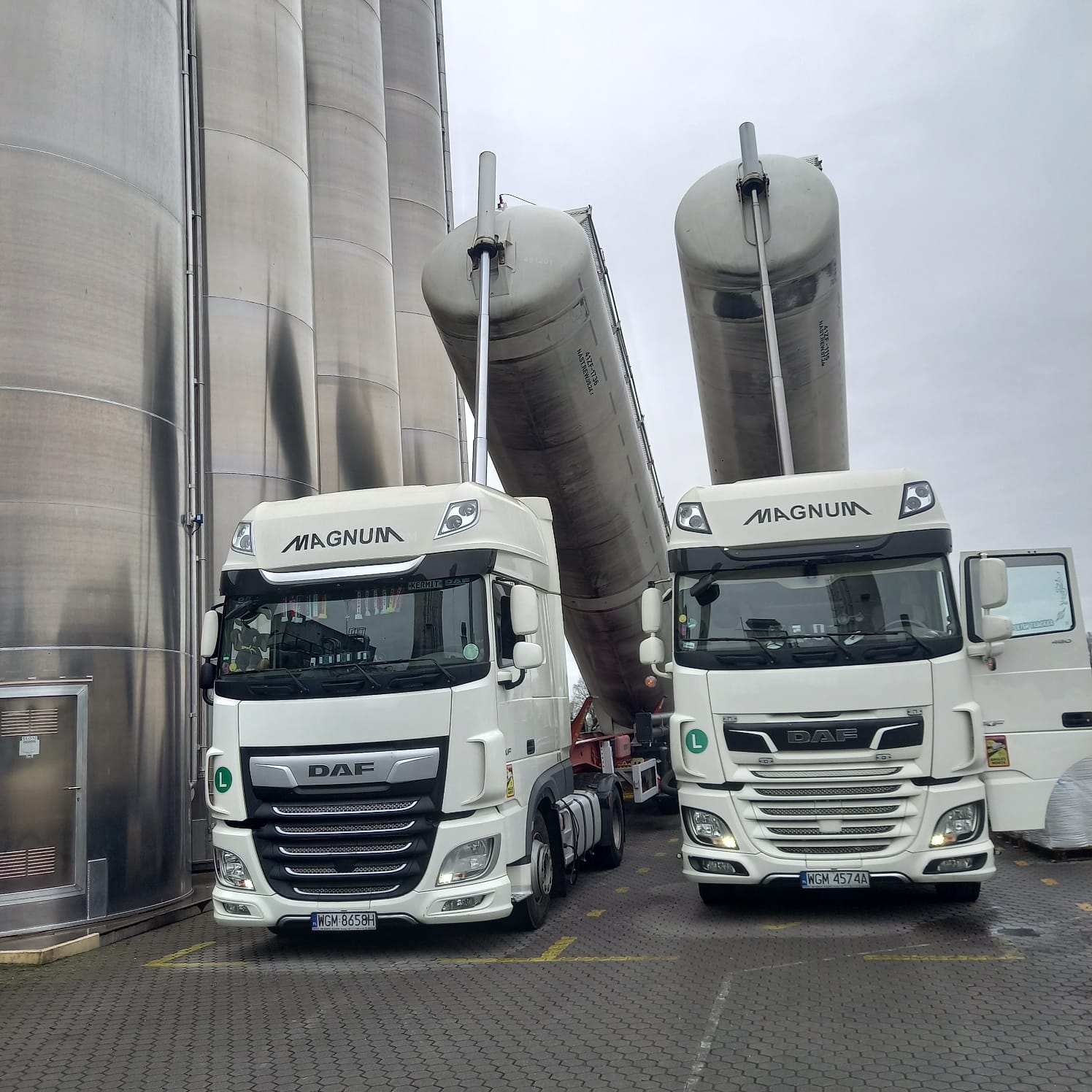
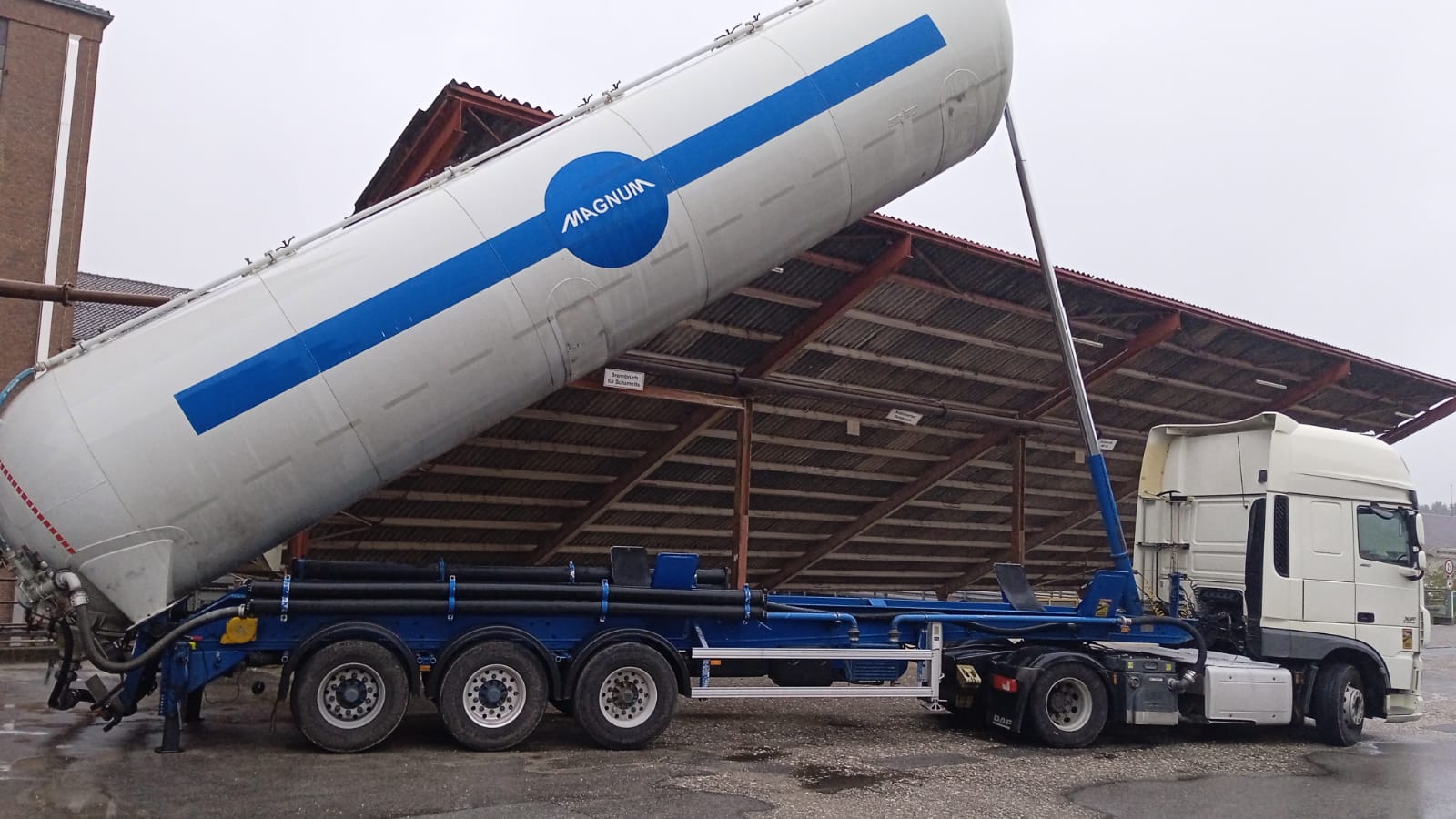
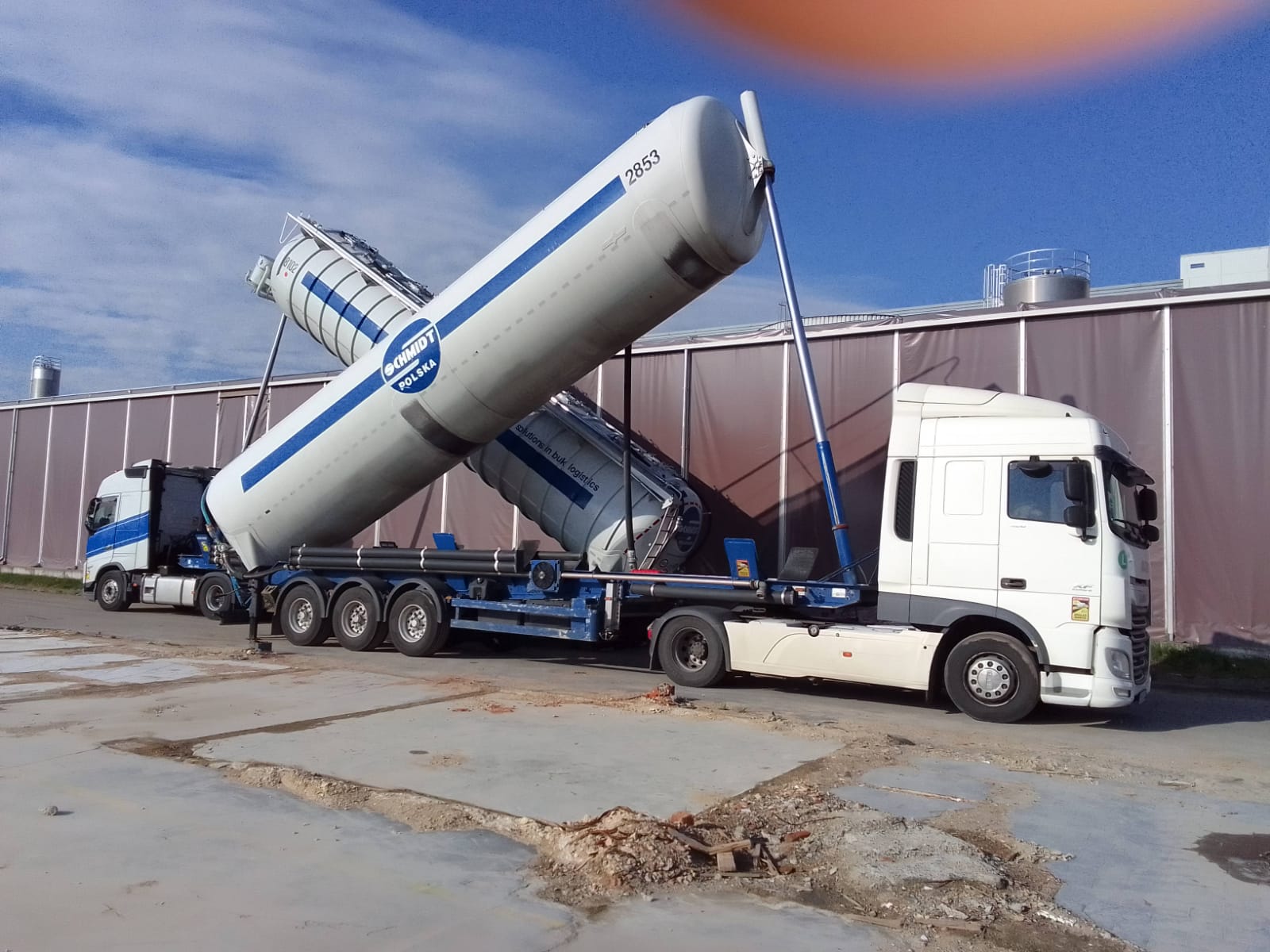
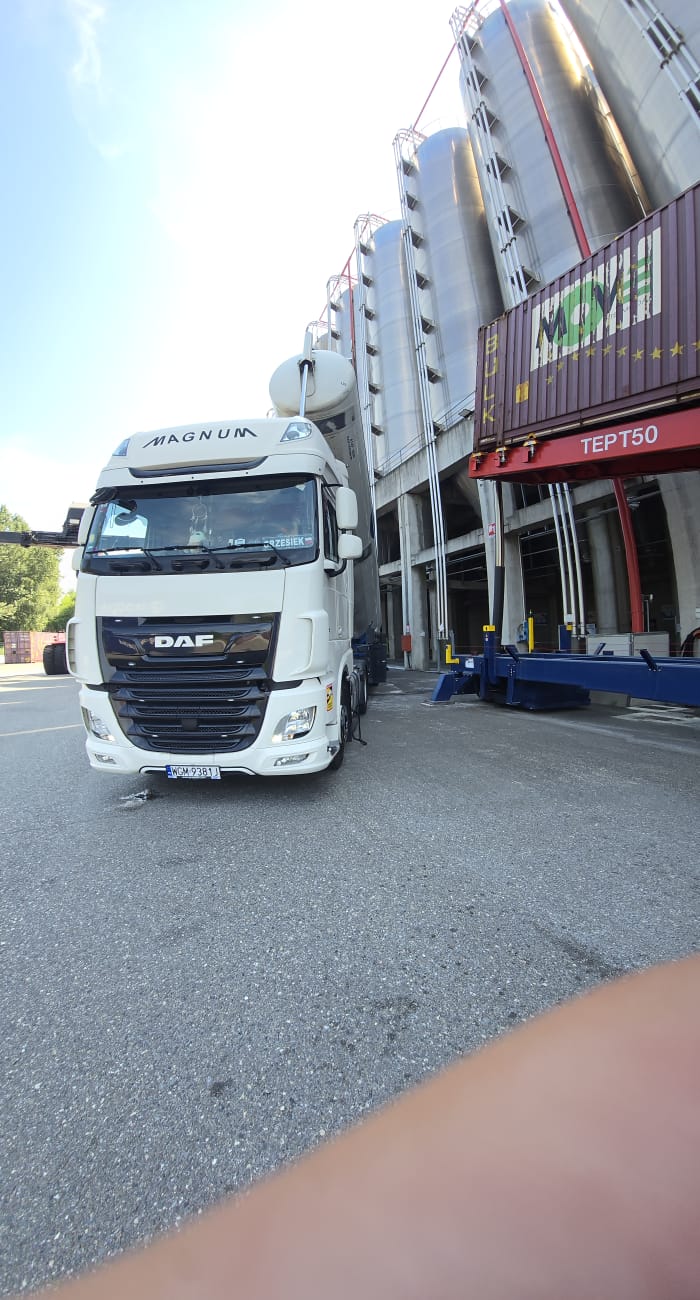
Transloading is the transfer of bulk material from one packaging format to another. At SMIALA, the primary operation is from flexible intermediate bulk containers (FIBCs / big-bags, typically 500–1,250 kg each) into silo trailers (60 m³ pressurised tanks). The silo trailer then delivers directly to the converter’s plant, where the material is pneumatically discharged into a production silo.
2. Why gravity and not pneumatic?
Gravity transloading — lifting the big-bag above the trailer’s filling hatch and opening the bottom valve — introduces no air pressure, no mechanical contact, and no risk of contamination from compressor oil. Pneumatic systems can fractionate the granulate (separate particles by size/mass), build electrostatic charge, and allow trace oil from compressors to contact the product. For specification-critical polymer grades, gravity is the only acceptable method.
3. How long does transloading take?
A standard silo trailer (60 m³) is typically filled in 1–3 hours depending on the number of big-bags, the flow characteristics of the material, and whether weighing is required per bag. SMIALA handles up to 200 tonnes per day across multiple loading bays.
4. Can multiple lots be transloaded into the same trailer?
Not recommended, and SMIALA’s standard procedure is single-lot loading. Mixing lots violates the batch traceability chain that corporate polymer buyers require. For specific operational reasons (e.g. partial fill), lot mixing may be possible — discuss with SMIALA operations team.
5. What happens to the empty big-bags?
Empty big-bags are collected and disposed of or returned to the supplier according to the client’s instructions. Costs for disposal of single-use bags are agreed as part of the service contract.
About the warehouse
6. How large is the SMIALA warehouse?
The SMIALA warehouse holds 2,000 big-bags. At an average of 800 kg per bag, this represents approximately 1,600 tonnes of stored material.
7. How long can big-bags remain in the warehouse?
SMIALA accommodates short-term buffer storage (days to weeks) and long-term storage (months). Storage pricing is agreed per the cooperation contract. There is no arbitrary time limit — contact us to discuss your specific storage requirements.
8. How are different polymer grades segregated?
Each lot/grade is assigned a dedicated warehouse zone. Physical separation prevents co-mingling. FIFO (first in, first out) management ensures that the oldest lot of each grade is dispatched first. Lot-level records link every big-bag to its warehouse zone, inbound date, and subsequent transloading.
9. What if a container arrives with a damaged big-bag?
Damaged bags are flagged at reception under SMIALA’s ISO 9001:2015 incoming inspection procedure. The damage is photographed and documented. The client and carrier are notified. Depending on damage extent, options include: re-bagging (material transferred to a new big-bag), segregated storage pending client instruction, or disposal.
10. Can SMIALA receive containers 24/7?
Standard reception hours are Monday to Friday, with Saturday available. For 24/7 reception or after-hours arrival of time-sensitive containers, please discuss in advance — special arrangements may be possible for high-volume framework clients.
About documentation
11. What documents does SMIALA issue per transloading?
Every transloading generates:
- Transloading protocol: lot number(s), big-bag count, gross weight, net weight, trailer registration, date, time, operator
- CMR (consignment note): for road transport, accompanying the silo trailer
- Copies are emailed to the client the same business day
12. Does SMIALA include the original Certificate of Analysis (CoA)?
CoA passthrough is available — the original lot CoA from the polymer producer (e.g. LG Chem batch reference) can be referenced in the transloading protocol and a copy transmitted to the end customer. This is configured per client during cooperation setup.
13. For how long are transloading records retained?
Minimum 5 years. Records are available for client audit or quality investigation within this period.
14. Can I receive reports on inbound/outbound stock?
Yes. Monthly or on-demand warehouse reports summarising inbound lots, current stock, and outbound loads by lot are available for clients with active warehouse arrangements. Format (PDF / Excel / EDI) by agreement.
About the silo trailer fleet
15. How many silo trailers does SMIALA own?
30+ owned silo trailers, each with 60 m³ tank capacity.
16. Are the trailers TDT-certified?
Yes. All SMIALA silo trailers are subject to TDT (Polish Transport Technical Inspection) certification — the Polish equivalent of the mandatory technical inspection for pressurised road transport tanks.
17. How is the silo trailer cleaned between different polymer grades?
Each trailer undergoes a documented cleanout procedure between product/grade changes. This includes physical cleaning of the tank interior and a visual inspection. The cleanout record is part of the transloading documentation chain.
18. What is the maximum delivery distance from SMIALA?
SMIALA silo trailers regularly deliver to Germany, Austria, Czech Republic, Slovakia, and other Central European destinations. Maximum practical one-way delivery distance is approximately 800–1,000 km (e.g. Frankfurt, Vienna area). For destinations beyond this range, discuss with SMIALA’s logistics team.
About working with SMIALA
19. Is there a minimum order volume?
No. SMIALA handles both single-container spot shipments and large-volume framework contracts. Pricing and service terms differ by volume — contact us for a quote.
20. How quickly can cooperation start?
After a cooperation agreement is signed, the first container can typically be handled within 1–2 weeks. For urgent first shipments, SMIALA can often accommodate faster timelines.
21. Does SMIALA handle Korean-language documentation?
SMIALA issues standard logistics documentation in English and Polish. For Korean-language documentation or translation requirements, discuss with the SMIALA team during setup — some adaptations are possible for framework clients.
22. Can I do a quality audit before signing a framework agreement?
Yes. SMIALA welcomes supplier qualification audits. Contact us to schedule. The ISO 9001:2015 documentation is maintained and accessible for audit purposes. How to arrange a site visit
23. What are SMIALA’s operating hours?
Reception and transloading: Monday to Friday 06:00–20:00, Saturday 07:00–15:00. The phone line (+48 664 135 005) is staffed during these hours.
24. Is SMIALA open to clients from China importing to Europe?
Yes. SMIALA serves import flows from China, Korea, and other origins. Chinese-origin polymer granulates (PE, PP, PVC, PS, ABS) in big-bags are handled under the same service terms as other polymer imports. More on polymer imports from China
25. What is the contact for urgent shipment queries?
For urgent operational queries (e.g. container arriving tomorrow, documentation needed urgently):
- Phone (best for urgent): +48 664 135 005
- Email: biuro@magnumchorula.pl
Still have questions?
Contact SMIALA directly · Facility specifications · Reference clients · Request a quote process · PHS Magnum Chorula full service range