In Brief
Octabins and flexible IBCs (big-bags) are both common packaging for polymer granulate, but require different unloading procedures at the transloading terminal. Octabins are discharged by tipping or bottom-spout gravity flow; big-bags are lifted over the trailer inlet. The key contamination risk with octabins is liner damage leading to cardboard fibre ingress. SMIALA terminal (PHS Magnum Chorula) handles both formats under ISO 9001:2015 with liner inspection before each discharge. Contact: +48 664 135 005 .
Octabins vs big-bags: understanding the packaging
European polymer logistics uses several intermediate bulk container formats. The two most common at transloading terminals are big-bags (FIBCs) and octabins. Understanding the differences helps importers plan handling requirements.
Big-bags (Flexible Intermediate Bulk Containers — FIBC)
Big-bags are woven polypropylene sacks with a capacity of 500–2000 kg. They have four lifting loops at the top and typically a discharge spout at the bottom (bottom spout) or a full-open bottom. They are flexible — when empty, they collapse flat.
Advantages: lightweight (2–5 kg empty), low cost, easily stored flat when empty, flexible capacity range. Limitations: cannot be stacked without a frame, require four lifting loops and a compatible forklift attachment.
Standard polymer big-bag: 1000–1250 kg, 90×90×110 cm or 90×90×120 cm (Q-bag).
Octabins (Composite Intermediate Bulk Containers)
An octabin is constructed from:
- Outer octagonal shell: corrugated cardboard (typically triple-wall)
- Inner liner: PE film (prevents moisture ingress and product contamination from cardboard)
- Pallet base: wooden or plastic
- Lid: cardboard or PE film
Capacity: 200–1200 kg. Common for polymer powder, PVC, and some speciality granulates. Octabins are rigid and self-supporting — they can be stacked 2–3 high on a pallet without additional frames.
Key difference from big-bags: octabins are not lifted by loops. They are handled by:
- Fork pockets in the base (for transport)
- Clamp attachment on forklift (for tipping)
- Crane with frame attachment (for overhead lifting)
Octabin discharge methods at SMIALA
Method 1: Bottom-spout gravity discharge (preferred)
Many octabins are fitted with a PE discharge spout at the bottom of the liner — similar in principle to a big-bag bottom spout. The procedure:
- Octabin is placed on the unloading platform next to the trailer
- Forklift (with spreader bar or frame attachment) lifts the octabin by its base fork pockets to the required height
- The spout is opened and material flows by gravity into the trailer inlet below
- When empty, the octabin is set down and the spout sealed
This method is preferred because it keeps the cardboard shell intact and minimises dust generation.
Method 2: Top tipping (for octabins without discharge spout)
Some octabins have no bottom discharge feature and must be emptied by inverting them:
- Forklift with clamp attachment grips the octabin sides
- The octabin is lifted, inverted 180°, and positioned with its open top facing the trailer inlet
- The lid (if present) is removed during inversion or beforehand
- Material flows by gravity into the trailer
Tipping generates more dust and requires dust extraction at the unloading station. It also stresses the cardboard more, increasing the risk of liner separation.
Method 3: Cut-and-empty (for damaged or no-spout octabins)
For octabins that cannot be tipped safely or have a damaged base:
- The octabin is placed on its side
- The liner is cut and material is transferred to a hopper
- The hopper discharges to the trailer
This method is last-resort because it exposes material to the open environment and generates maximum dust.
Liner integrity: the critical inspection
The PE inner liner is the only barrier between the cardboard outer shell and the polymer granulate. Cardboard fibre is a known contamination source in PE and PP production — even small quantities of cellulose fibres can cause inclusion defects in thin-wall injection moulding or film extrusion.
Before any octabin is discharged at SMIALA, a liner inspection is performed:
- Outer cardboard condition checked (wet spots → possible liner damage underneath)
- Top lid removed, liner top examined
- Bottom spout (if present) checked for tears or unsealed areas
- Any crease lines where liner could have separated from cardboard are palpated
If liner is damaged:
- Octabin is quarantined
- Customer is notified with photos
- No discharge without written customer instruction
Documentation: each octabin reception gets a condition code (A: intact, B: minor outer damage/liner OK, C: liner breach). Code B and C octabins are tracked separately in the reception protocol.
Compatibility with silo trailers
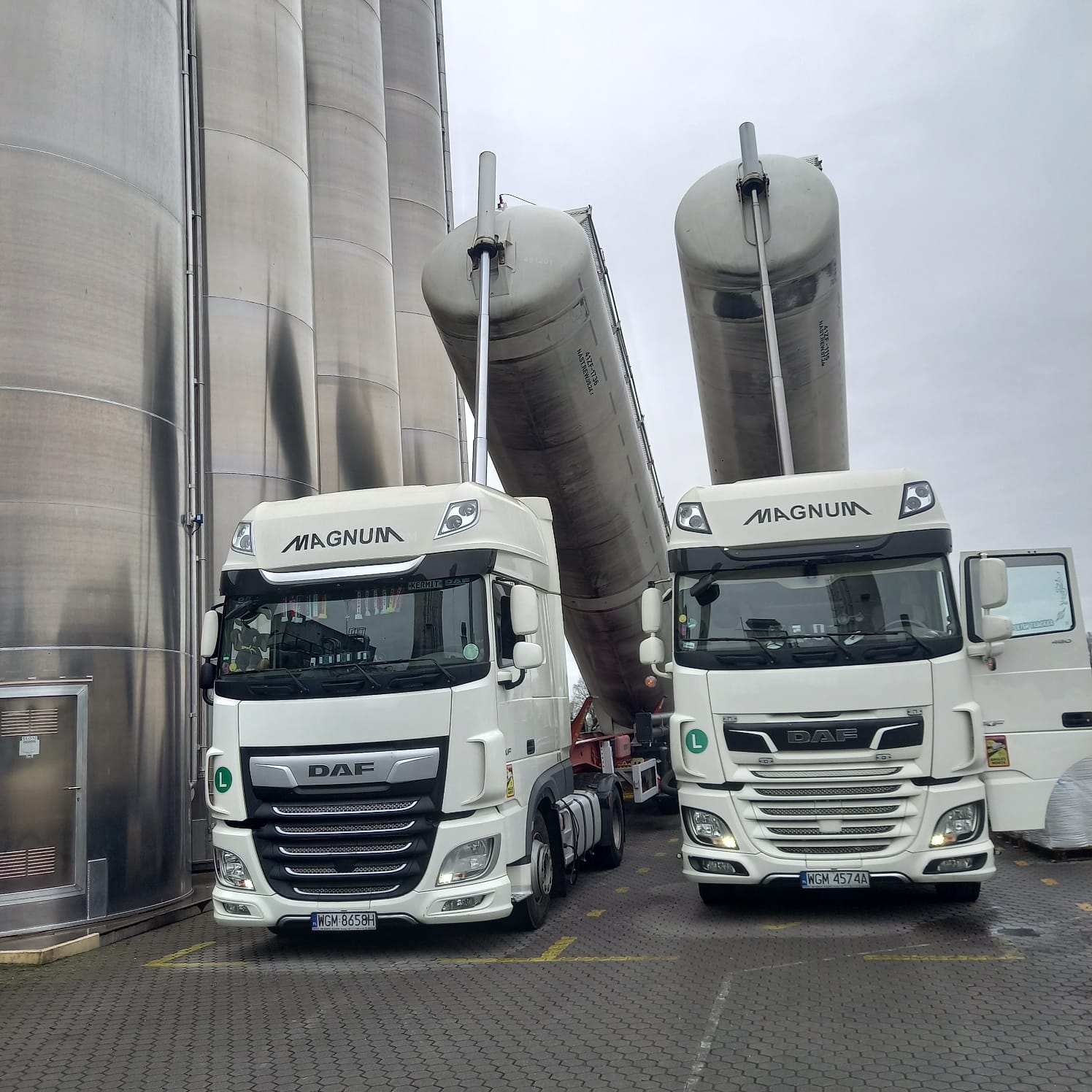
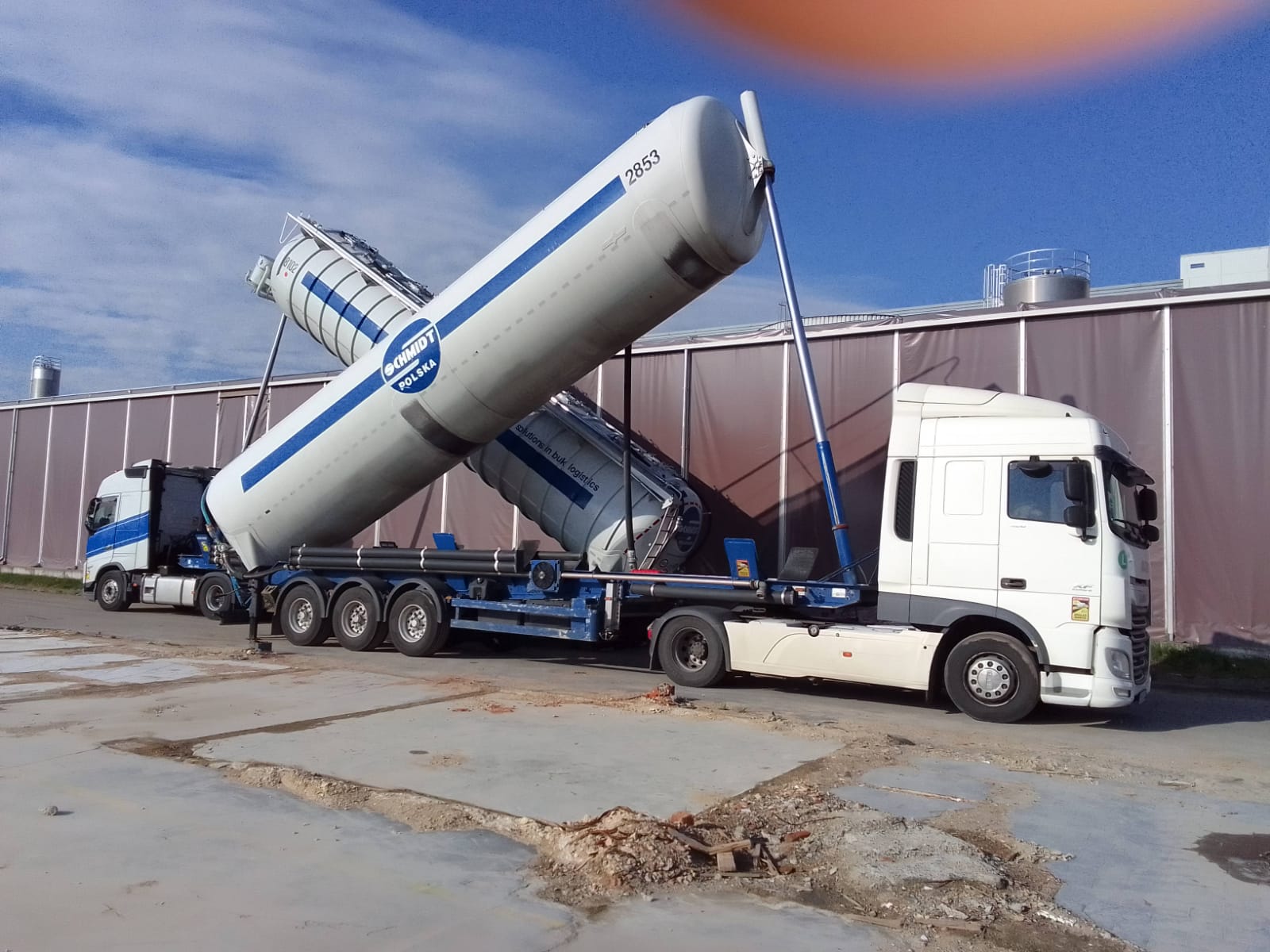
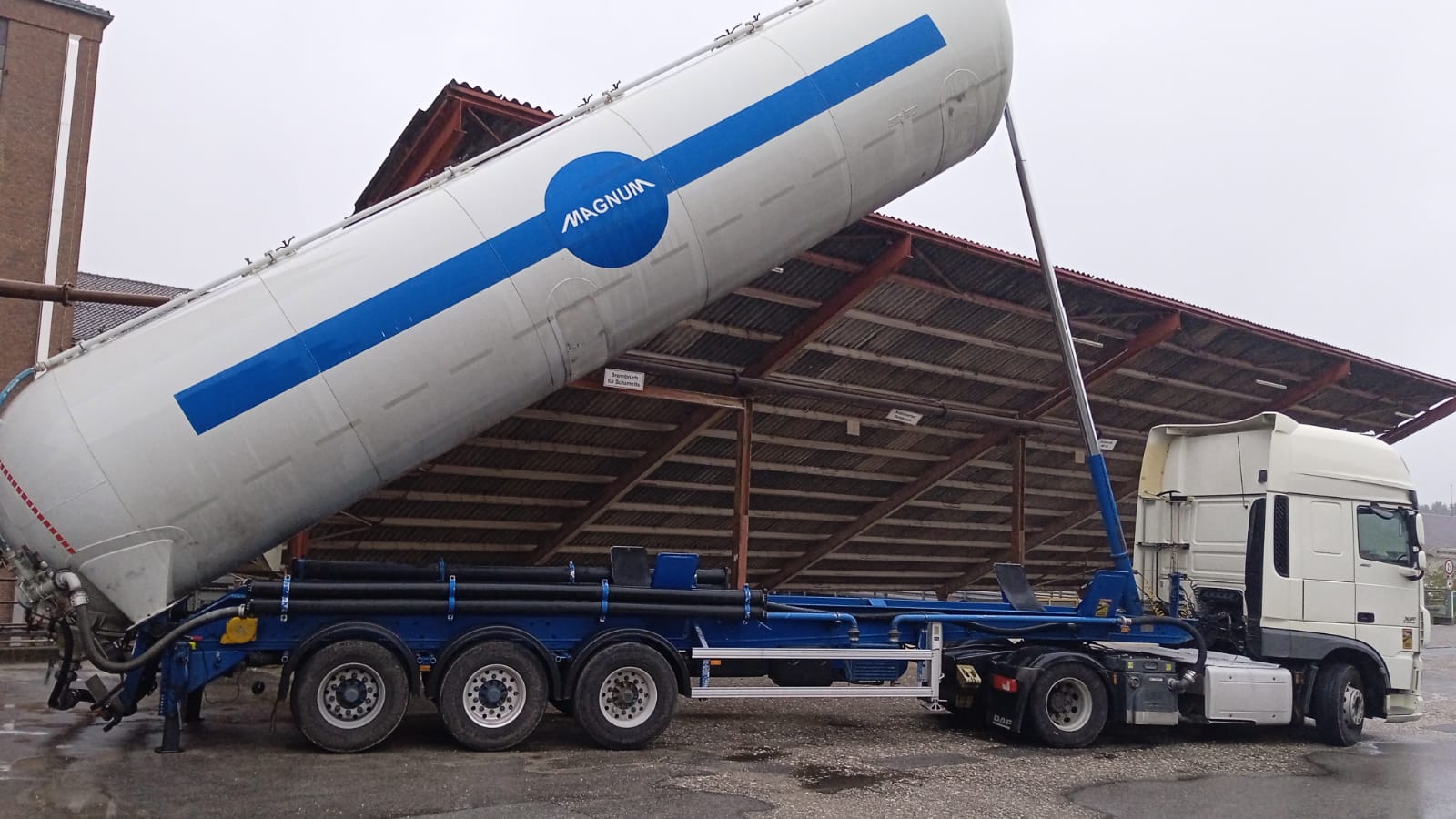
Both big-bags and octabins discharge through the same silo trailer inlet (typically DN200–DN400 top manhole). The main difference is discharge spout diameter:
- Big-bag bottom spout: 25–35 cm — typically fits inside the manhole opening
- Octabin bottom spout: 20–30 cm — compatible with most inlets
- Tipping octabin: the open end may be wider than the inlet — a funnel adapter is used
At SMIALA, we maintain a set of funnel adapters for different inlet/spout size combinations. This means we can accept any standard big-bag or octabin format without the customer needing to pre-arrange compatibility.
ISO 9001:2015 in the octabin transloading process
Every octabin processed at SMIALA is logged in the reception protocol with:
- Container type (octabin model, if known)
- Condition code at reception
- Liner inspection result
- Material: grade, batch/lot number, supplier
- Discharge method used
- Date, time, operator
This documentation is archived under ISO 9001:2015. For clients with traceability requirements (e.g., LG Chem or HTNS quality procedures), we can provide the full discharge log for any given date or lot on request.
Mixed-format loads: octabins and big-bags in the same trailer
In practice, it is common for a shipment to arrive with both octabins and big-bags — for example, 10 octabins of a speciality grade and 20 big-bags of a standard grade, all of the same polymer type. This is handled at SMIALA by:
- All containers from the same lot are discharged sequentially into the same trailer
- Each container type is logged separately in the loading protocol (octabin serial numbers + big-bag serial numbers)
- Net weight is calculated from the trailer gross weight difference
The key requirement is material compatibility: mixing different polymer types in the same trailer is not permitted. Mixing different grades of the same polymer is done only on explicit customer instruction with documented approval.
Contamination control: summary
| Risk | Prevention at SMIALA |
|---|---|
| Cardboard fibre ingress | Liner inspection before discharge; tipping only if liner intact |
| Cross-contamination (different polymer) | Strict lot segregation; no mixed-grade loads without customer approval |
| Moisture | Enclosed warehouse; liner inspection for wet spots before discharge |
| Foreign objects | Visual inspection of discharge spout area before opening |
| Previous cargo residue | Cleaning certificate checked; trailer inspection before loading |
Contact SMIALA:
+48 664 135 005
· biuro@magnumchorula.pl
Services: uslugi
· Materials: materialy
Operator: PHS Magnum Chorula
| spitzer.pl
· feldbinder.pl