In Brief
Silo trailer cleanliness is critical for polymer granulate quality. Any residue from a previous cargo — whether a different polymer grade, a mineral material, or a pigmented compound — can contaminate the new cargo and cause production defects at the receiving factory. The ECTA/CEFIC “Polymer Industry Cleaning Specification” (Issue 5, November 2024) defines the minimum cleaning standard for polymer transport tanks: water spin, drying, visual inspection, and cleaning of all ancillaries. At SMIALA (PHS Magnum Chorula), cleaning certificates are verified before every cargo-type change, and our own fleet follows documented ISO 9001:2015 cleaning procedures. Contact: smiala.com or +48 664 135 005 .
Why silo cleanliness is critical for polymer granulate
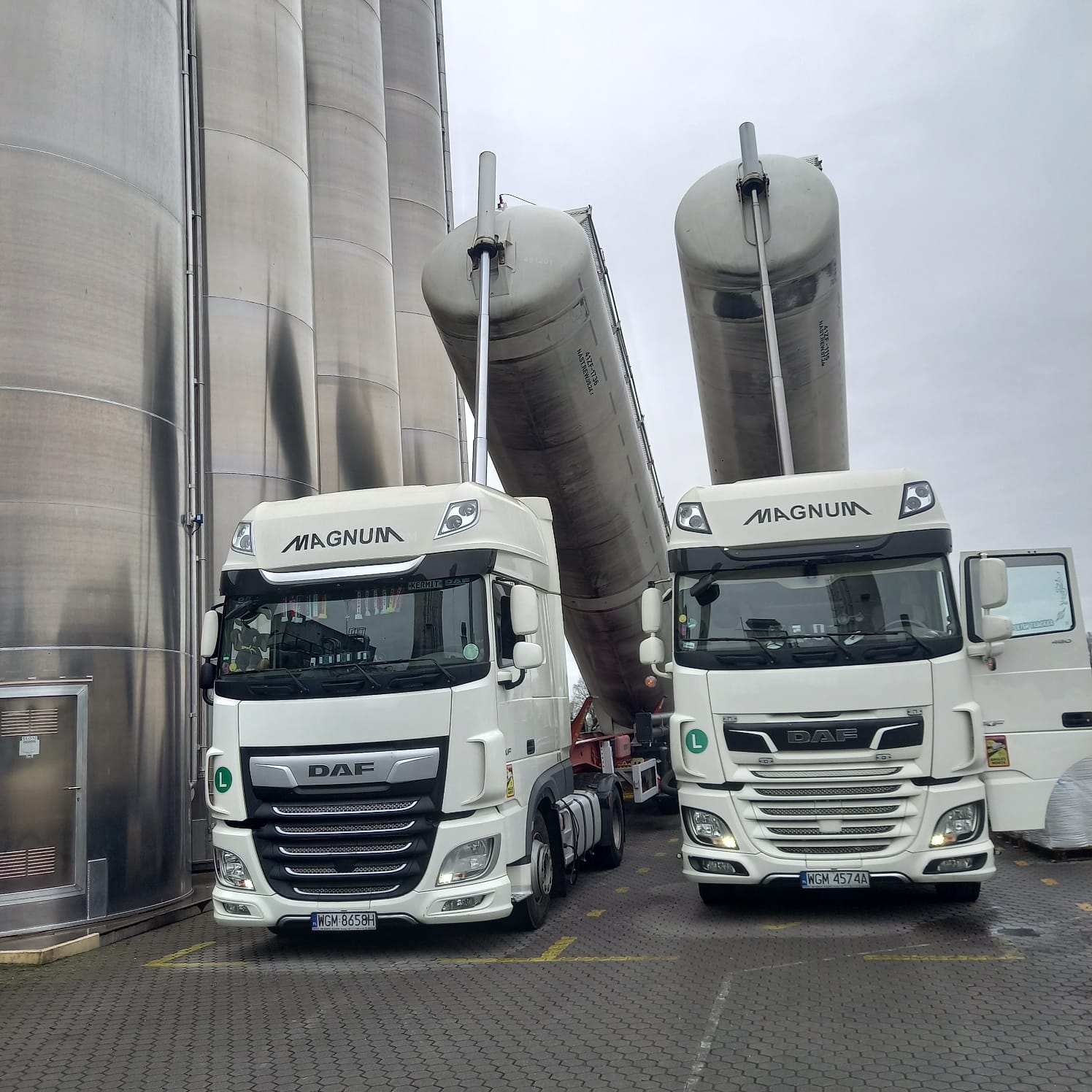
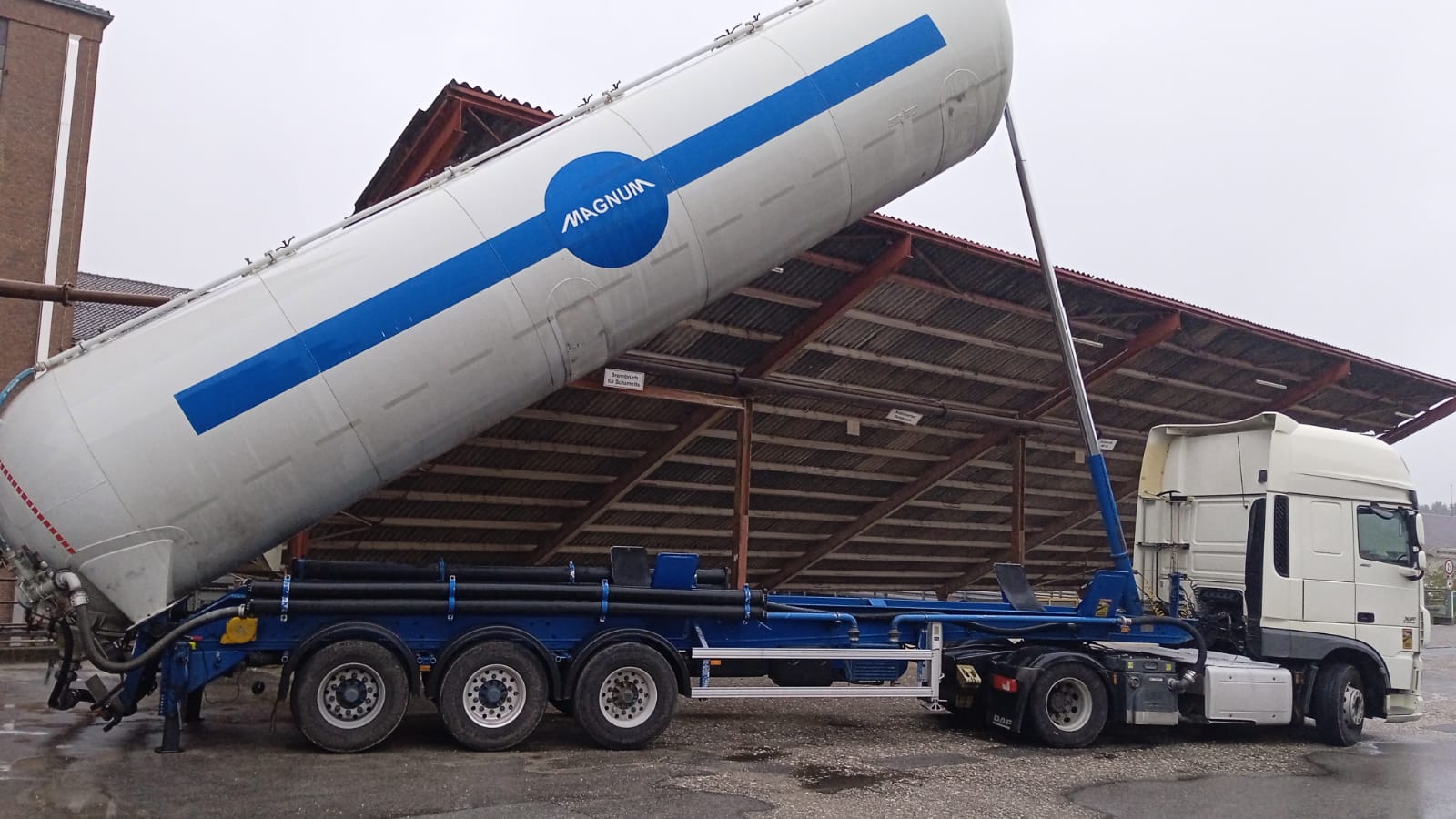
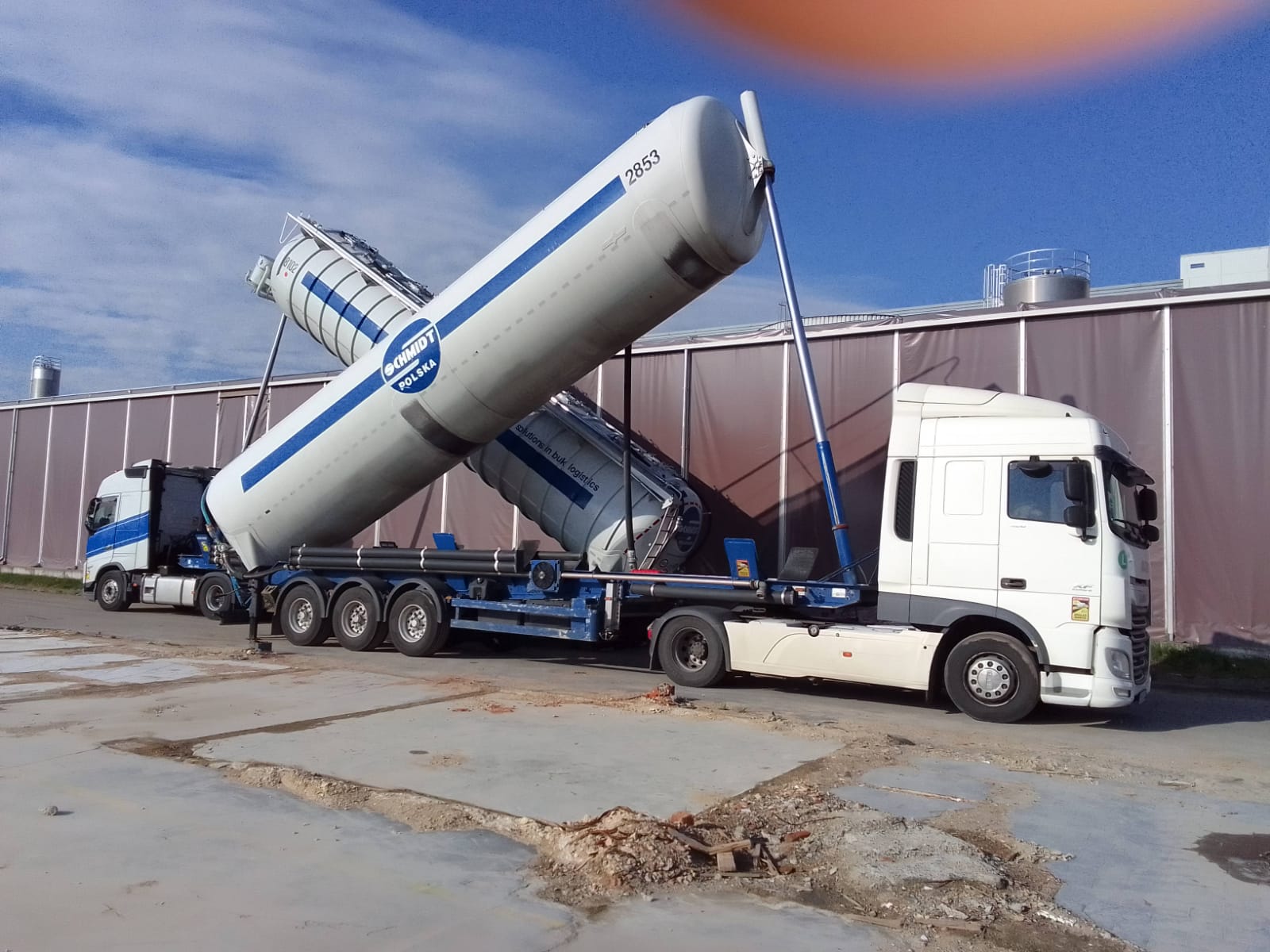
A silo trailer is a reusable vessel that carries many different loads during its service life. Unlike a tank truck (where liquids are relatively easy to rinse), a dry bulk silo trailer has complex internal geometry: conical bottom sections, pneumatic conveying pipes, valves, filters, and vent points. Residue can accumulate in any of these areas.
For polymer granulate, the contamination risk is specific:
From a different polymer family: PP residue in a PE load, or vice versa. PP and PE are incompatible in some applications (PE film with PP contamination shows inclusion marks). In compounding, even 0.5% of the wrong polymer type can cause batch failure.
From a coloured or pigmented compound: Colour masterbatch residue, even in trace quantities, can discolour a natural (natural-coloured) polymer batch. Black masterbatch is particularly persistent and difficult to detect in incoming QC until moulded parts show black specks.
From a mineral material: Cement dust, gypsum, lime, or calcium carbonate in a polymer silo trailer is a serious contamination event. These materials are highly alkaline or acidic, react with some polymer types at processing temperature, and their presence in sufficient quantities can cause screw and barrel wear in extruders.
From a previous polymer of the same type but different grade: HDPE grade A in a trailer loaded with HDPE grade B can alter the melt flow index (MFI) of the blend, making the combined load outside specification for the customer’s product. For tight-tolerance applications (medical tubing, optical film), this is a rejection event.
ECTA guidelines: the industry framework
The European Chemical Transport Association (ECTA) publishes guidelines on cleaning and inspection of road tanks and silos used for chemical and polymer transport. The relevant document is the ECTA “Guidance on Quality and Safety for Dry Bulk Transport” and the complementary cleaning and inspection guidance.
ECTA/CEFIC compatibility matrix for polymer granulate (simplified):
| Previous cargo | Next cargo | Minimum cleaning required |
|---|---|---|
| PE (natural) | PE (same grade, natural) | Polymer Industry Cleaning Specification (water spin + drying + inspection) |
| PE (natural) | PE (different grade, natural) | Polymer Industry Cleaning Specification + EFTCO Cleaning Document |
| PE (natural) | PP (natural) | Polymer Industry Cleaning Specification + EFTCO Cleaning Document required |
| PE/PP (natural) | PE/PP (coloured or black) | Polymer Industry Cleaning Specification + EFTCO Cleaning Document |
| Coloured compound | Natural PE/PP | Full cleaning + EFTCO Cleaning Document; additional wet cleaning recommended |
| Mineral bulk (gypsum, lime) | Any polymer | Full wet cleaning + drying + EFTCO Cleaning Document |
| Any polymer | Mineral bulk | Full cleaning + EFTCO Cleaning Document |
This matrix is a simplified summary based on the ECTA/CEFIC Polymer Industry Cleaning Specification (Issue 5, November 2024). Actual requirements depend on the specific materials, customer specifications, and carrier quality programme.
Standard cleaning: the Polymer Industry Cleaning Specification
The ECTA/CEFIC “Polymer Industry Cleaning Specification” (Issue 5, November 2024) defines the minimum cleaning standard for all polymer silo trailers. It covers four areas: inside the tank, outside the tank (fill and discharge openings), hoses and hose boxes, and ancillaries. The standard procedure involves:
Water spin of the tank interior (P01/P10): Cold or hot water is spun through the tank to remove residual product and fine dust. This is the baseline — not a dry air purge.
Drying (P30/E35): The tank interior is dried with air or hot air. For pipework and airlines, residual water is blown out with compressed air.
Visual inspection (T01): A technician inspects the tank interior through the manhole for cleanliness, odour, and absence of residue.
Cleaning of fill/discharge openings, gaskets, airlines, valves, hoses, and filters: All components in contact with product are cleaned according to the EFTCO codes (E61–E79).
Documentation: An EFTCO Cleaning Document (ECD) is issued, stating the previous cargo, all cleaning codes executed, and the statement “Tank and ancillaries cleaned to the Polymer Industry Cleaning Specification.”
Time required for standard cleaning: 1–3 hours depending on tank size and previous material. For a ~60 m³ silo trailer: typically 2 hours for a standard clean.
Cost: varies by cleaning station and location. As a rough benchmark, a thorough dry clean of a silo trailer in Poland costs between 400–900 PLN depending on complexity. This should be compared against the cost of a contaminated batch at the receiving factory.
Wet cleaning: when it is required
Wet cleaning is required when dry methods cannot guarantee removal of the previous cargo. This applies primarily to:
- Mineral bulk materials (gypsum, lime, calcium carbonate) — these can bind to surfaces and are difficult to fully remove by a standard water spin alone
- Highly pigmented compounds — especially carbon black, which adheres electrostatically to surfaces
- Materials with specific chemical requirements (certain food-contact or pharmaceutical applications — not applicable at SMIALA, which does not handle food-grade material)
Wet cleaning procedure:
- Hot or cold water flush through the tank and all pipework
- Where necessary: mild detergent solution, followed by clean water rinse
- Compressed air drying — the tank must be fully dry before loading any polymer
- Documentation and certificate
Time required for wet cleaning: 4–8 hours including drying time. Some materials require overnight drying.
Critical point: a silo trailer that has been wet-cleaned must be fully dry before accepting polymer granulate. Moisture in contact with hygroscopic polymers (PA, PET) causes immediate degradation during processing. For PE and PP, moisture causes surface pitting in injection moulded parts.
Documentation required by importers and brand owners
Major polymer producers and brand owners (LG Chem, BASF, Borealis) often have their own quality requirements for the silo trailers receiving their material. Common requirements include:
Cleaning certificate: issued within a defined time before loading (typically within 48 hours), naming the previous cargo and cleaning method.
Trailer inspection record: confirmation that the trailer was inspected before loading, by whom, and that no defects were found.
Loading protocol: issued by the transloading terminal, confirming the trailer registration, loading date, material lot number, and net weight.
Batch/lot traceability: the receiving factory needs to be able to trace every big-bag or container lot to the corresponding silo trailer load. SMIALA’s documentation covers this: big-bag numbers → trailer registration → delivery date.
How SMIALA verifies and documents cleanliness
At SMIALA terminal (PHS Magnum Chorula), the following cleaning verification procedure is applied:
For trailers from PHS Magnum’s own fleet (31 silo trailers):
- Cleaning log maintained per trailer, updated after every load
- If previous cargo is different type: cleaning performed at PHS Magnum’s own facility using documented procedure
- Certificate issued internally, archived under ISO 9001:2015
- Trailer inspection before loading: inlet, valves, visible internal surface
For external trailers (customer’s or contractor’s vehicles):
- Cleaning certificate requested if cargo type is changing
- Certificate checked for: trailer registration match, previous cargo named, cleaning method, date (within 48 h of loading)
- If no certificate: trailer refused until documentation provided
- Visual inspection of inlet performed regardless
Loading documentation:
- Every trailer loaded at SMIALA receives a weighing protocol signed by the terminal operator
- Protocol includes: trailer number, material grade, lot number, net weight, date, operator
- Copy to driver, original archived
Practical advice for polymer importers
Specify your trailer cleanliness requirements in the transport contract. Don’t assume — state the acceptable previous cargo and cleaning level explicitly.
Request cleaning certificates before each load. For regular relationships, a rolling cleaning log from the carrier is acceptable; for new carriers, always request certificate per load.
Include trailer inspection in your delivery receipt. The receiving factory should note the trailer number, and if possible check the inlet at unloading for visible contamination.
Know your contamination threshold. For PE natural-colour film, any PP contamination above 0.1% is typically a rejection criterion. For PE pipe compound, 0.5% PP may be tolerable. Knowing your threshold helps you specify the right cleaning level.
Use a terminal with documented cleaning procedures. SMIALA (ISO 9001:2015) documents every cleaning event and provides a chain of custody from the big-bag lot to the trailer load to the factory delivery.
Contact SMIALA:
+48 664 135 005
· biuro@magnumchorula.pl
Services: uslugi
· Materials: materialy
Operator: PHS Magnum Chorula
| Trailer service: spitzer.pl
· feldbinder.pl
Related: Big-Bag to Silo Transfer Guide · Polymer Transport in Europe