In Brief
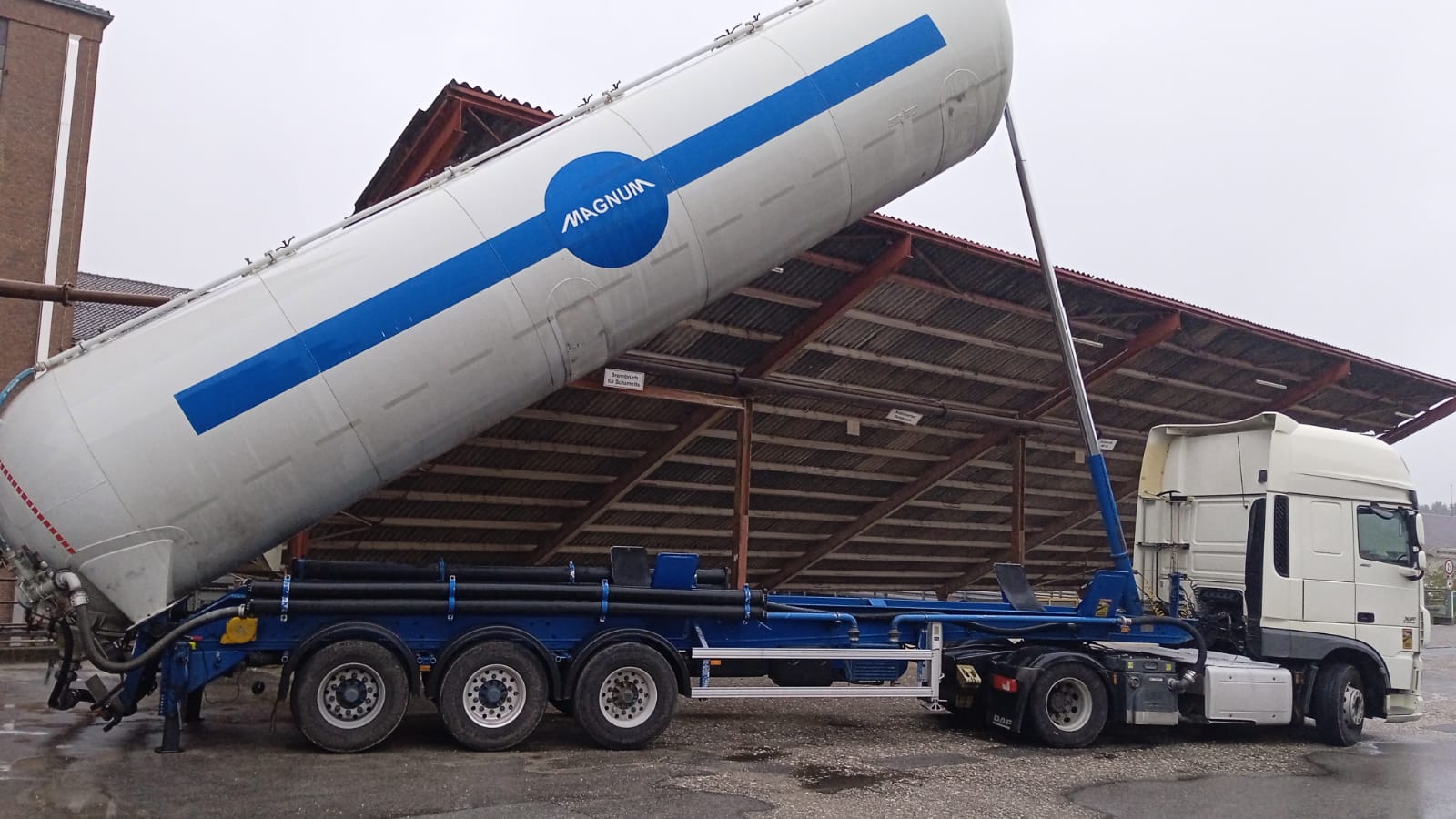
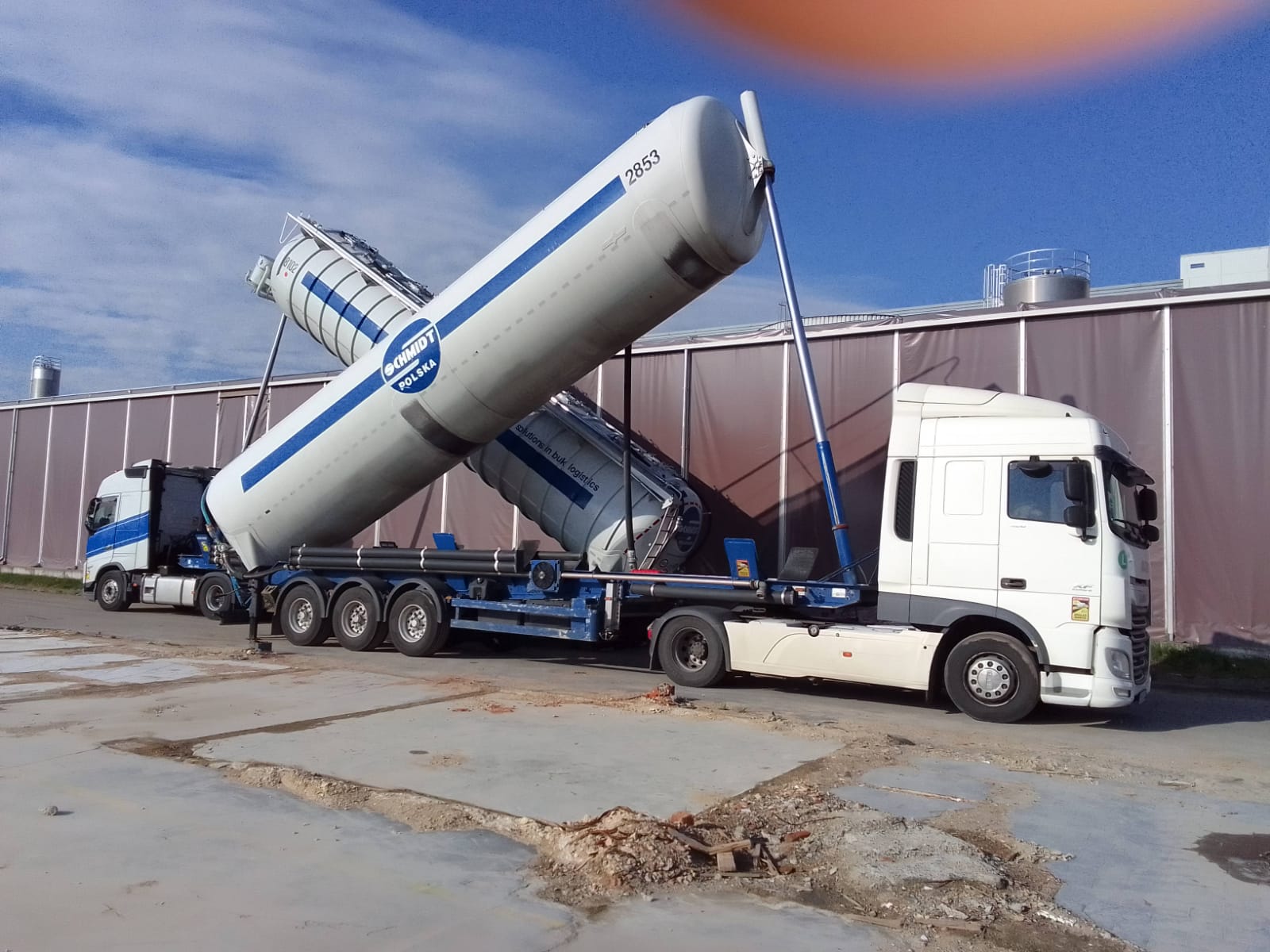
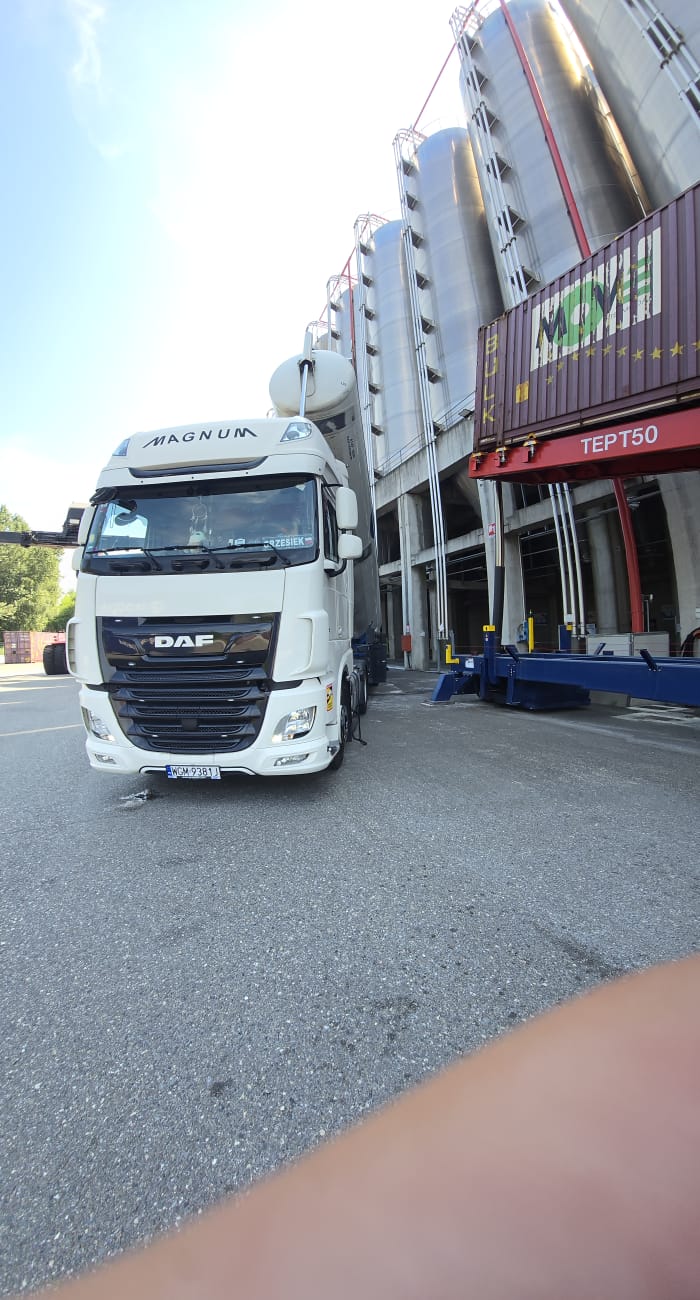
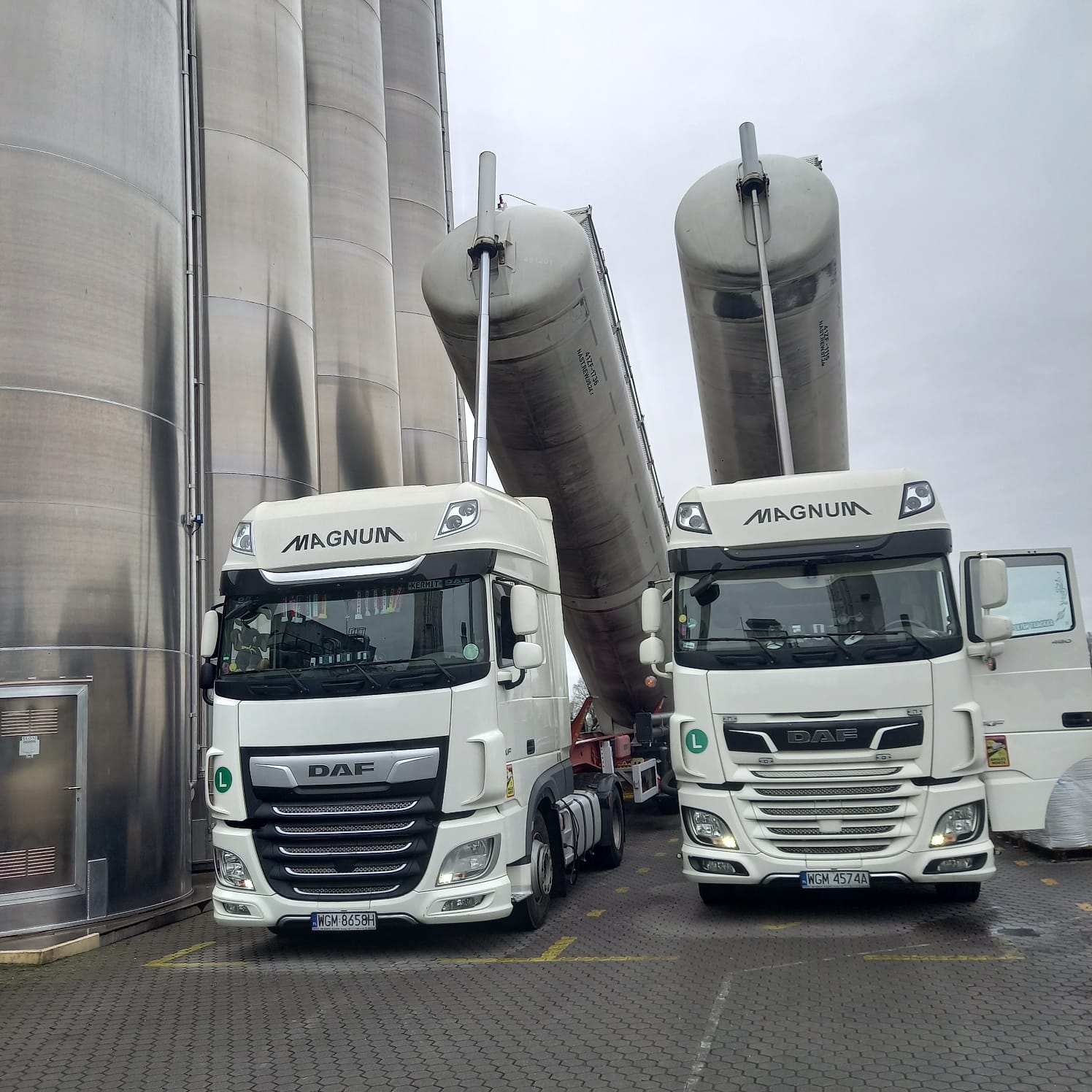
Big-bag to silo trailer transloading is the gravity-fed transfer of polymer granulate from FIBCs into bulk silo trailer tanks. It eliminates the risks of pneumatic conveying — fractionation, static charging, compressor contamination — that affect PE/PP quality. SMIALA terminal (PHS Magnum Chorula, Poland) processes up to 200 tonnes per day with full ISO 9001:2015 documentation. Contact: smiala.com or +48 664 135 005 .
What is big-bag to silo trailer transloading?
Every year, millions of tonnes of PE, PP, PVC and other polymer granulates travel from Asia and the Middle East to European processing factories. The journey starts in a factory in Korea, China or Saudi Arabia, where granulate is packed into flexible intermediate bulk containers — big-bags — and loaded into sea containers. After 20–35 days at sea, the container arrives at a European port.
The challenge: the polymer needs to reach the factory in bulk form, typically fed directly into a silo above the extruder or injection moulding machine. But it arrives in individual bags of 1000–1250 kg. Someone has to make the transfer.
This operation is called big-bag to silo trailer transloading. It takes place at a specialist intermodal terminal, where the container is received, big-bags are unloaded from it, and the material is transferred into a silo trailer that delivers it to the factory in bulk form.
Step-by-step: how the transfer works at SMIALA
Step 1: Container reception
The container (20’, 40’ or 40’HC) arrives at the SMIALA terminal in Chorula by road. The loaded truck is weighed on the entry scale — gross weight recorded. The CMR document and packing list are verified. The container is assigned a reception protocol number.
Step 2: Container unloading into the warehouse
The container is opened and big-bags are unloaded by forklift into the warehouse. Each pallet position is photographed. Any bag with visible damage (torn woven fabric, wet patches, torn bottom spout) is identified, photographed and recorded in the reception protocol separately from undamaged bags.
Big-bags are stacked in the designated batch zone, max 2–3 layers high depending on the bag’s SWL (safe working load) rating and material bulk density. Each zone is labelled with: material type, grade, supplier batch number, and date of reception.
Step 3: Silo trailer arrival and inspection
The silo trailer arrives at the unloading station. The driver and terminal staff verify:
- Trailer cleanliness (visual inspection of filling inlet and internal tank)
- Filling inlet size compatibility with the unloading frame
- Trailer registration and driver documentation
If the trailer is being loaded with a different material than its previous cargo, a cleaning certificate is required. SMIALA does not accept trailers without appropriate cleaning documentation when changing material types.
Step 4: Big-bag lifting and gravity discharge
The big-bag is picked up by the forklift (via its lifting loops) and positioned above the silo trailer’s open filling inlet. The bottom discharge spout is untied or cut (depending on bag design) and the material flows by gravity into the trailer tank.
Key technical parameters:
- Lifting height: 3.5–5.5 m to the inlet (varies by trailer design)
- Discharge spout diameter: 25–50 cm (standard FIBC)
- Discharge time per bag: 3–8 minutes (1000 kg, PE granulate)
The empty bag is set aside. For each bag: the serial number (if printed on the bag) is recorded. If bags are unmarked, count sequence is maintained.
Step 5: Weighing and documentation
When the trailer is full (or the batch is complete), the trailer is weighed at the exit scale. Net weight = exit weight minus tare weight. The weighing protocol is generated: it includes gross weight per trailer, net material weight, number of big-bags loaded, batch/lot numbers, and time of loading completion.
A copy of the protocol is given to the driver; the original is archived at SMIALA under ISO 9001:2015.
Step 6: Trailer dispatch
The sealed trailer departs for the customer’s factory. PHS Magnum Chorula operates 31 silo trailers that can transport from SMIALA directly; alternatively, the customer’s own or contracted trailer can be used.
Types of big-bags and their impact on transfer
Not all big-bags are equal. The bag type affects how cleanly and quickly material transfers.
Type A (plain woven PP): Most common for PE/PP granulate. No antistatic properties. Suitable for non-flammable, non-explosible materials. Good flow characteristics.
Type B (woven PP with low surface resistivity): Used when there is a risk of ignition from static spark (e.g., PE in fine powder form). Breaks down static charges on the bag surface.
Type C (conductive fabric, earth bonding required): For flammable solvents or flammable dusts. The bag must be earthed during filling and emptying. PE/PP granulate rarely requires this.
Type D (antistatic, no earth bonding): More convenient in environments where earthing is impractical. Used for some polymer powders.
Q-bag / cross-corner loop bags: Designed to hang square during discharge, which reduces bridging and ensures clean emptying. Preferred for materials prone to arching in standard round spout bags.
Bottom-spout vs full-open bottom: Bottom spouts (25–35 cm diameter) give controlled flow. Full-open bottoms (matching the bag base width) give faster discharge but require a frame adapter to the trailer inlet.
Silo trailer inlet requirements
For gravity big-bag loading to work, the silo trailer must have accessible, properly sized filling inlets on its top dome:
- Manhole diameter: Standard inlets range from DN200 to DN500. The big-bag discharge spout (typically 25–35 cm in diameter) must fit through or over the inlet. Adapters are available for most configurations.
- Inlet height: The trailer’s inlet must be reachable by the loaded forklift. Most silo trailers have dome inlet height of 3.5–4.5 m from ground. For high-cube trailers (over 4 m to inlet), overhead crane or adjustable-height forklift attachment is used.
- Inlet cleanliness: The inlet must be free of previous cargo residue. For polymer-to-polymer transfers of the same type (e.g., PE to PE), a quick air purge is standard. For grade changes (e.g., HDPE to LLDPE), a physical inspection and documented purge is required.
More on cleaning standards: Silo Cleaning Standards for Polymer Granules
Quality control during transfer
Quality control at SMIALA covers three areas:
Visual inspection at reception: bag integrity, absence of moisture or discolouration, bottom spout condition. Damaged bags are quarantined, photographed, and documented before any transfer.
Weighing: calibrated truck scale at entry and exit gate. Weighbridge certificate is current and available for review. Net material weight is calculated per ISO 9001:2015 procedure.
Material sampling: on customer request, representative samples can be taken during transfer: one sample per big-bag lot (or every N-th bag as agreed). Samples are sealed and labelled with batch number, date, and sample point. Customer can use their own laboratory or commission accredited analysis.
Throughput and scheduling
SMIALA terminal handles up to 200 tonnes per day of big-bag to silo trailer transloading. At a typical PE granulate bulk density of 560 kg/m³, that corresponds to approximately 356 m³ per day, or 5–7 standard silo trailers (~60 m³).
Multiple trailers can be loaded simultaneously at separate unloading stations, which means that time from first bag to last bag of a 65 m³ trailer load is typically 2–3 hours including setup and documentation.
Scheduling: Customers with regular deliveries book time windows weekly in advance. One-off transloads are confirmed within 2 business hours of enquiry. Phone: +48 664 135 005 .
Location and logistics
SMIALA terminal is operated by PHS Magnum Chorula — the same facility that has been servicing Spitzer and Feldbinder silo trailers for over 30 years.
Location: Chorula, Opole region, Poland. 4 km from A4 motorway junction Gogolin (east–west corridor). 180 km from the German border. Direct access for container trucks and silo trailers up to 25.25 m length.
Container routing from ports:
- Hamburg → Chorula: ~650 km, 1 transit day
- Rotterdam → Chorula: ~900 km, 1 transit day
- Gdańsk → Chorula: ~450 km, 1 transit day
More: Dry Bulk Polymer Transport in Europe · Why Chorula?
Contact: biuro@magnumchorula.pl
· +48 664 135 005
Silo trailer service: spitzer.pl
· feldbinder.pl