At a Glance
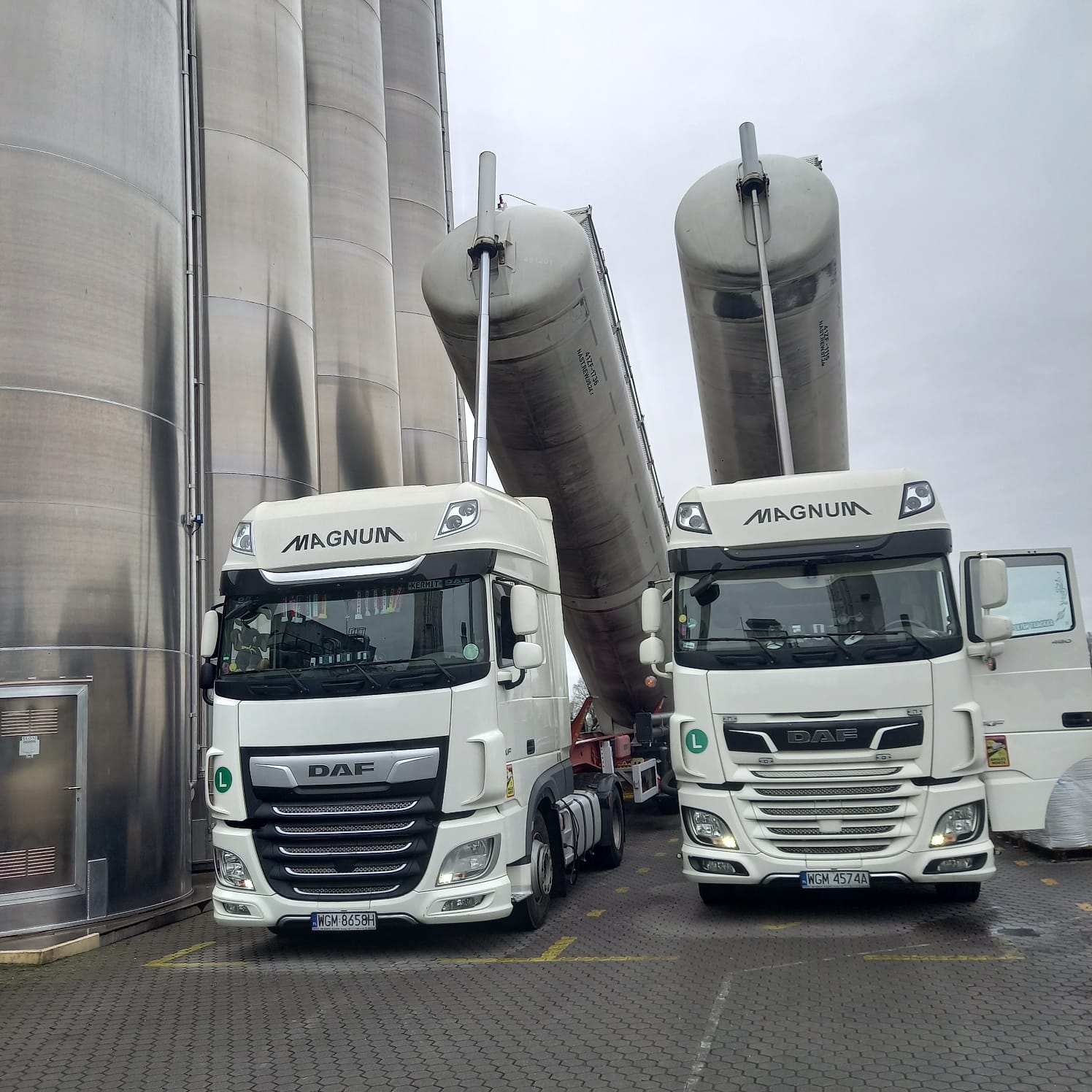
A silo trailer is a specialised semi-trailer with a cylindrical tank for transporting dry bulk materials — including PE/PP granulate, flour and chemical powders. Discharge takes place through bottom outlets by gravity or pneumatic pressure. SMIALA terminal in Chorula operates over 30 silo trailers handling up to 200 tonnes of granulate per day.
Silo trailer construction
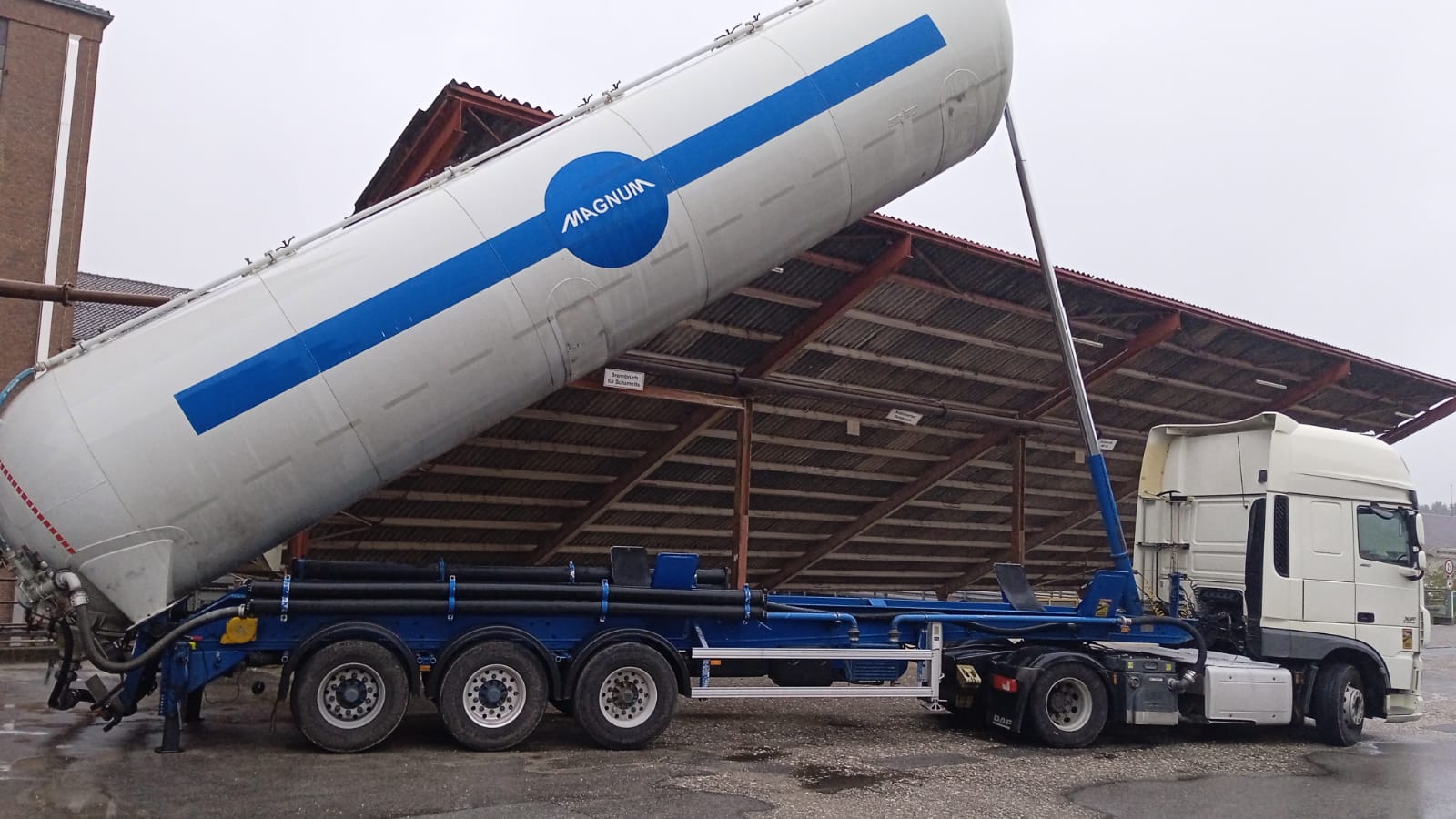
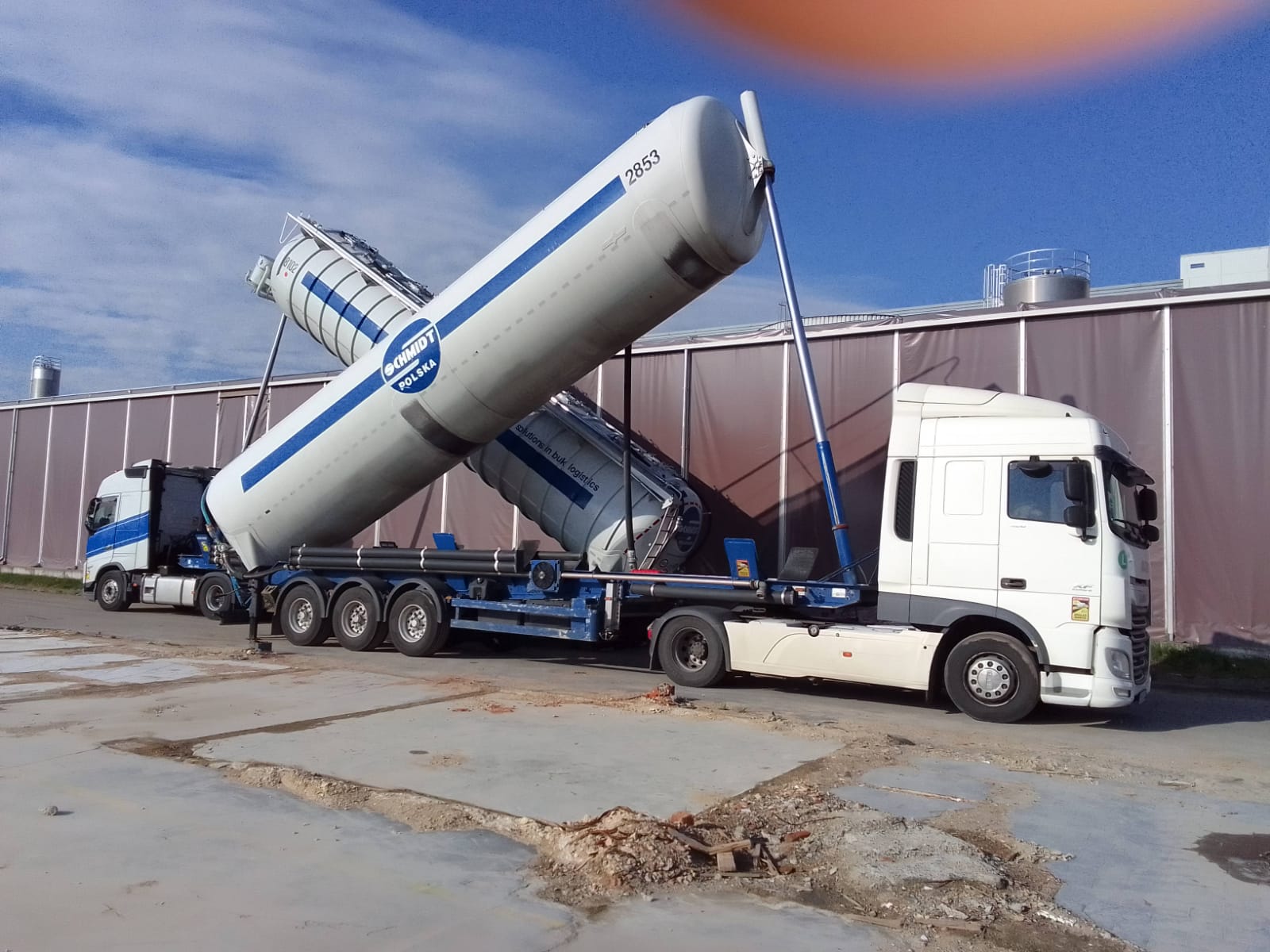
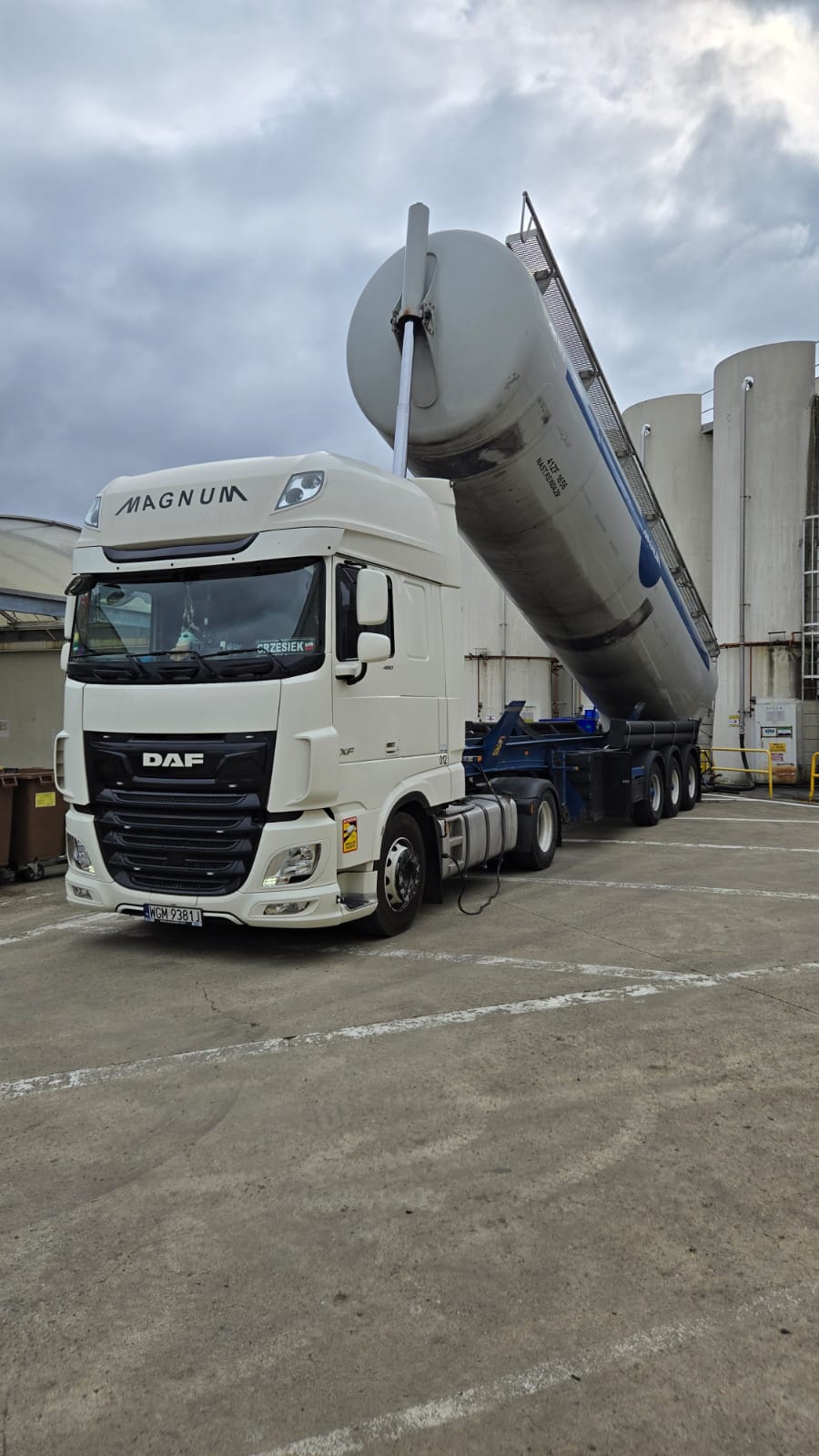
From the outside a silo trailer looks like a large steel cylinder mounted horizontally on a semi-trailer chassis. In practice it is a precisely engineered transport vessel where every component serves a specific function.
The tank
The tank (or vessel) is the main structure. It is usually manufactured from structural steel S355 or stainless steel 304/316 (for food-grade and pharmaceutical applications). Wall thickness is typically 4–6 mm. For dry bulk materials no pressure rating is needed — the tank is vented through a fabric filter fitted at the top.
The tank floor is shaped as a cone or ellipse sloped at 45–60° towards the discharge outlets. This geometry allows free-flowing materials such as PE/PP granulate to slide naturally towards the discharge valves without mechanical assistance.
Filling hatches and inlet nozzles
On top of the tank there are filling hatches — openings of 400–500 mm diameter sealed by steel or aluminium lids. Material is loaded through these hatches at the transloading terminal. The number of hatches varies by tank volume and manufacturer configuration — typically 1–3 hatches per trailer.
Some trailers are also equipped with side inlet nozzles or top pneumatic connections for loading from a stationary pneumatic fill station.
Discharge valves
At the bottom of the tank — typically on the rear or central conical wall — butterfly valves are mounted, operated pneumatically or manually. Opening the valve gives the material a path to the discharge pipe.
A typical silo trailer for polymer granulates has 1–2 discharge nozzles of 100–200 mm diameter. The connection to the receiver’s plant inlet is made via a flexible hose or quick-release coupling.
Discharge system
Silo trailer discharge operates in two ways:
Gravity discharge — after opening the bottom valve the material flows by its own weight through the pipe into the customer’s conveyor or silo. Used for free-flowing materials (PE/PP granulate, sugar, soda ash). Requires no compressed air and does not fractionate the material.
Pneumatic pressure discharge — compressed air (0.2–0.3 bar) is introduced into the tank, fluidising the material and pushing it through the pipeline to the receiver. Used for cohesive or poorly flowing materials (flour, carbon black, fine powders).
Chassis and suspension
The silo trailer frame is built from high-strength steel sections. Suspension is usually air suspension (pneumatic bags), ensuring a smooth ride and adjustable coupling height. Silo trailers typically have 2–3 axles.
Maximum gross weight of a silo trailer with cargo is 24–27 tonnes (full truck and trailer combination: max 40 tonnes GVW). At a bulk density of 520 kg/m³ for PE granulate, a 60 m³ tank accommodates approximately 24–25 tonnes of payload.
Silo trailer capacities and types
Silo trailers are primarily divided into single-compartment and multi-compartment types.
Single-compartment silo trailer
One undivided tank from 35 to 65 m³. Designed to carry one material type in the entire tank space. Widely used for plastics (PE, PP, PVC), flour and animal feed.
Advantages:
- Full use of capacity for a single material
- Simpler cleaning between different grades
- Lower purchase and service cost
Multi-compartment silo trailer (two or more compartments)
The tank is divided by a partition into 2 or more independent compartments. Each compartment has its own filling hatch and discharge valves. Enables simultaneous transport of two different materials, or two batches of the same material under separate documentation.
Advantages:
- Flexibility for delivering to multiple receivers in a single run
- Separate documentation per compartment
- Zero risk of material cross-contamination
Typical capacities
| Trailer type | Tank volume | Payload (PE/PP granulate) |
|---|---|---|
| Small | 35–40 m³ | 15–20 t |
| Medium | 45–55 m³ | 20–25 t |
| Large | 60–65 m³ | 22–28 t |
Silo trailer vs chemical tanker – key differences
Silo trailers are often confused with chemical tankers. Here are the essential differences:
| Feature | Silo trailer | Chemical tanker |
|---|---|---|
| Cargo | Dry bulk (granulate, powder, flour) | Liquid or gas |
| Tank | Vented, atmospheric pressure | Sealed, may be pressure-rated |
| Tank material | Carbon steel or stainless steel | Stainless steel, aluminium, FRP |
| Discharge | Gravity or pneumatic pressure | Pump, gravity, N₂ pressure |
| Cleaning | Dry (air blow), occasional wet | Water or steam wash |
A silo trailer cannot transport liquids. A chemical tanker is not suitable for dry bulk — the lack of a conical bottom and the sealed design prevent efficient loading and discharge of granulates.
Silo trailers in the plastics supply chain
In polymer logistics, the silo trailer is the primary means of transporting finished resin from producer to converter. A typical supply chain looks like this:
- The producer (e.g. LG Chem Korea, Borealis Austria, Orlen Poland) fills the silo trailer directly at the production plant.
- The trailer is driven to the plastics converter (e.g. film plant, pipe extrusion, injection moulding facility).
- The converter discharges the granulate to their own in-plant silo via the trailer’s bottom outlets.
When the raw material arrives in big-bags (e.g. import from Korea or China), a transloading terminal — such as SMIALA — performs the intermediate step: big-bag to silo trailer transloading , after which the filled trailer drives directly to the converter.
Silo trailers at SMIALA terminal
PHS Magnum operates a fleet of more than 30 silo trailers — single and multi-compartment, 45–65 m³ tanks — on a rotation system ensuring continuous supply.
SMIALA’s core service is gravity transloading of big-bags into silo trailers for polyethylene (PE) and polypropylene (PP) granulates. The gravity method protects material quality: no fractionation, no electrostatic charging, zero risk of compressor oil contamination.
The terminal is open six days a week (Mon–Fri 06:00–20:00, Sat 07:00–15:00). Located in Chorula near Opole, 4 km from motorway A4 and 180 km from the German border, SMIALA provides direct access to the Central European industrial distribution network.
Learn more about the process: Big-bag transloading to silo trailer
Need warehousing between deliveries? Big-bag warehousing
Full service overview: SMIALA services
Get in touch
- Phone: +48 664 135 005 (Mon–Fri 06:00–20:00, Sat 07:00–15:00)
- Email: biuro@magnumchorula.pl
Tell us: volume in tonnes, material type (PE/PP grade), delivery region. We respond within 2 business hours.
SMIALA terminal / PHS Magnum – Chorula near Opole, 4 km from motorway A4
Related: Transloading | Services | Big-bag warehousing