At a Glance
Big-bag transloading to a silo trailer is a gravity transfer of PE/PP granulate from bags (1000–1250 kg each) into a trailer tank — without pneumatics, without fractionation. The SMIALA terminal in Chorula handles up to 200 tonnes per day.
What is big-bag transloading?
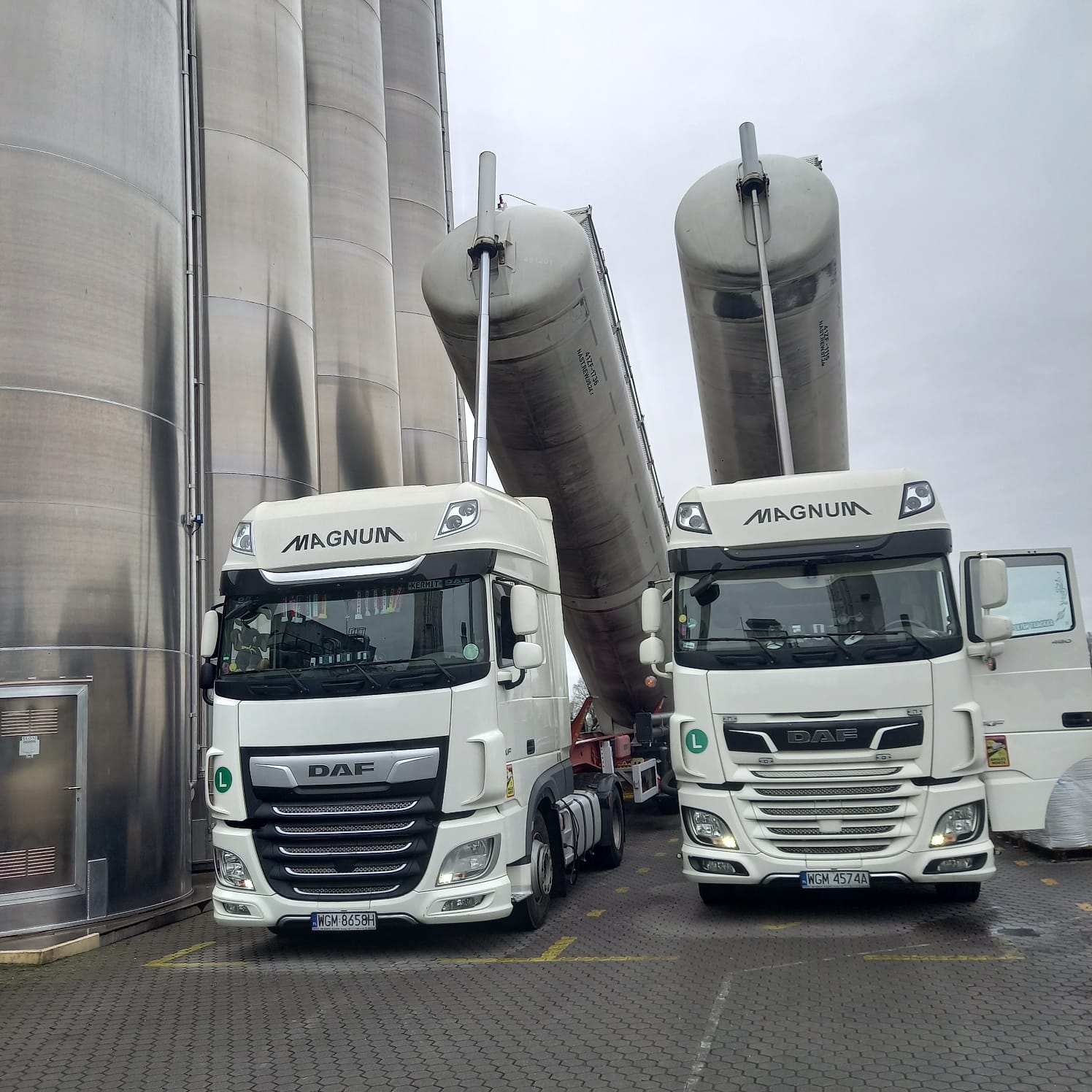
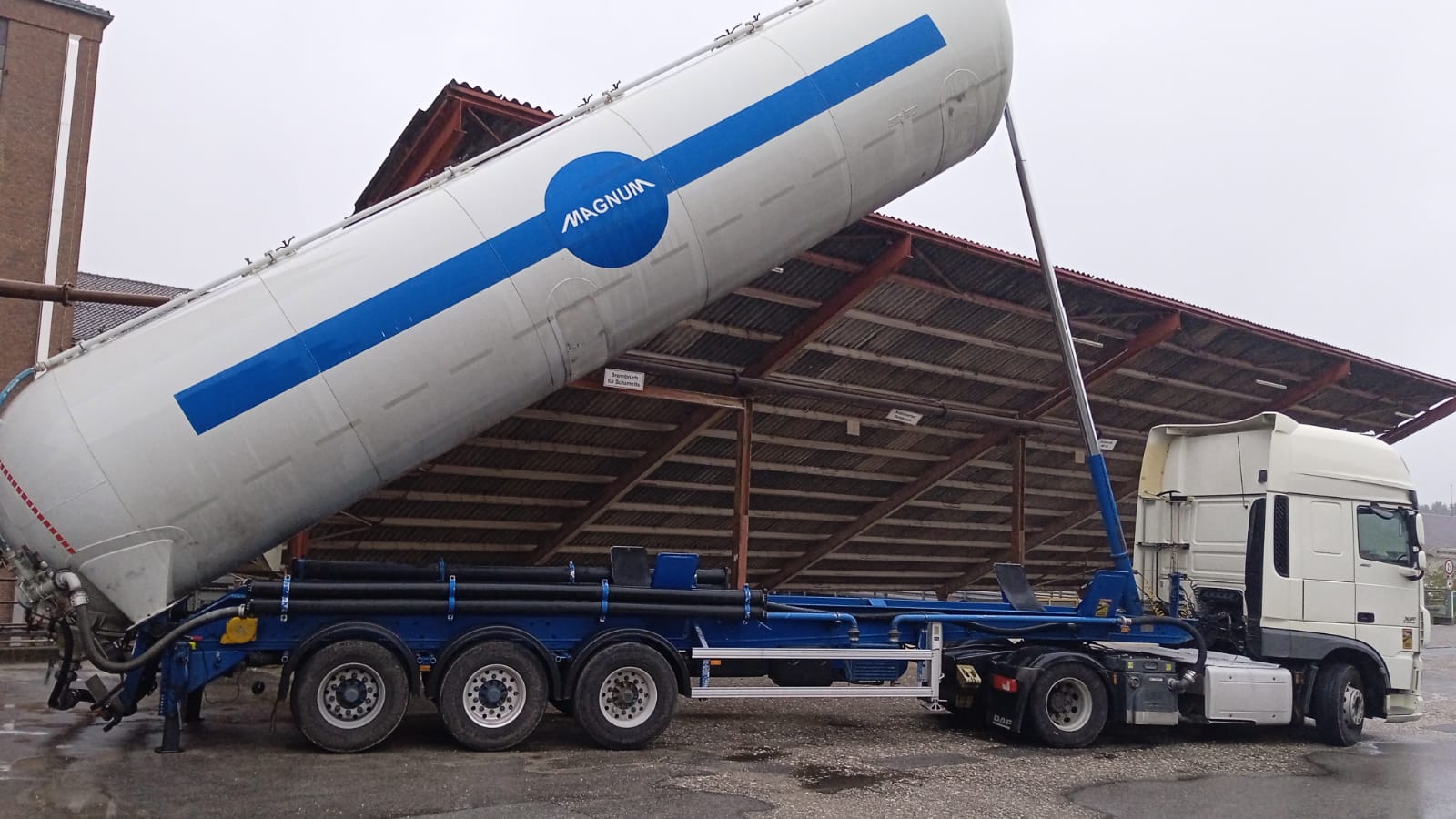
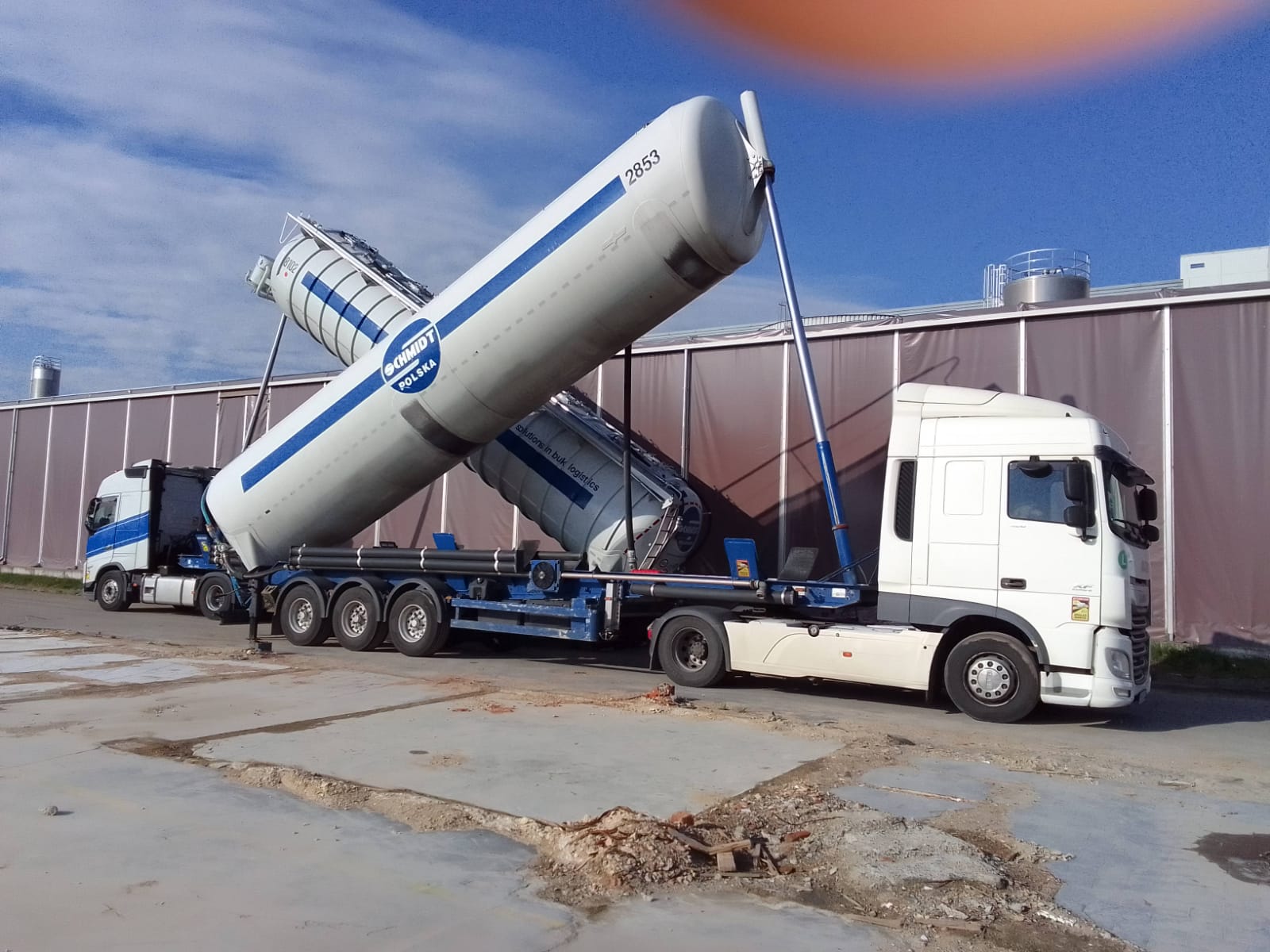
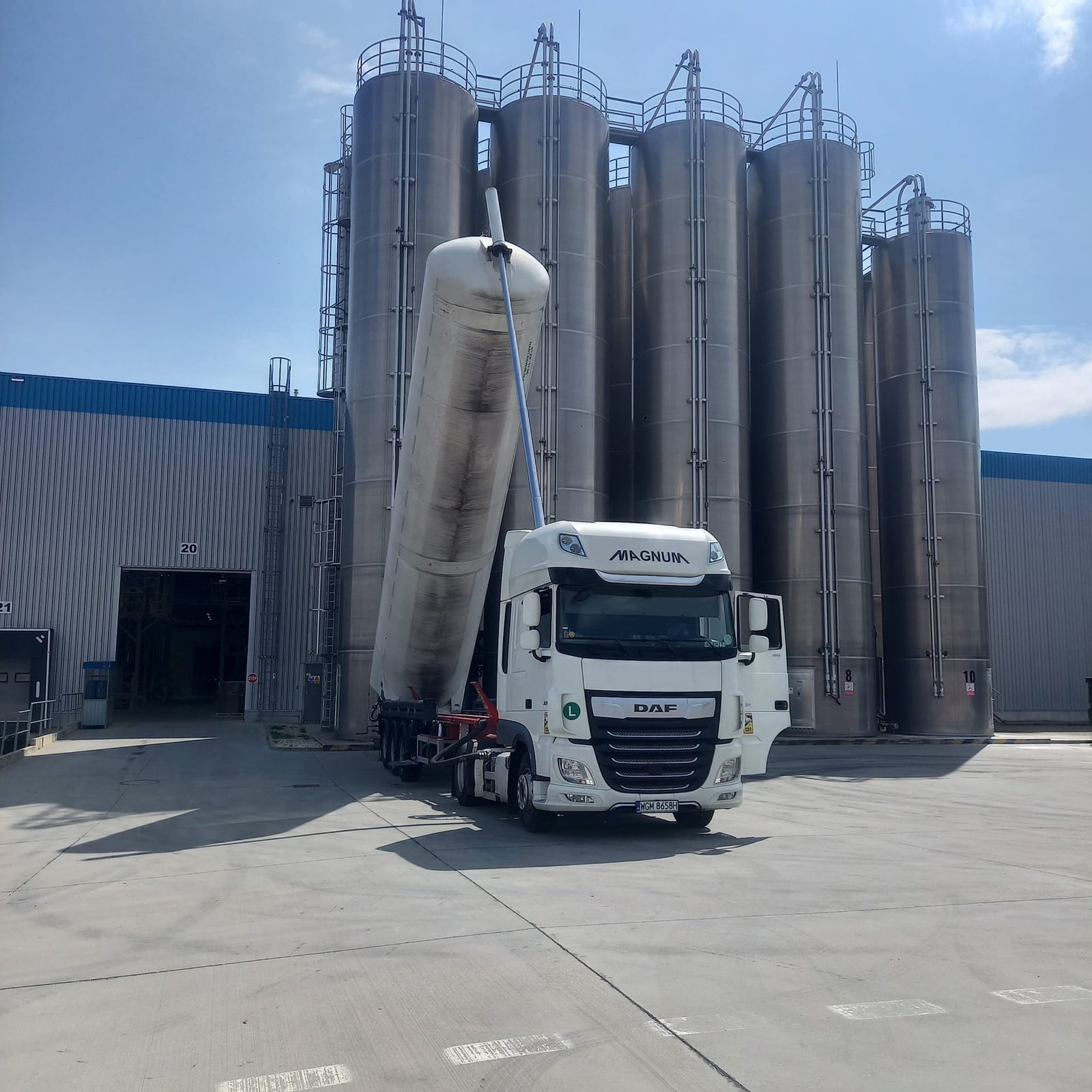
Big-bag transloading to a silo trailer is the logistics operation of transferring bulk material — most commonly PE or PP plastic granulate — from FIBC (Flexible Intermediate Bulk Container) bags directly into the cylindrical tank of a silo trailer.
Two approaches exist:
- Gravity method — the big-bag is raised above the trailer’s filling inlet and emptied by gravity. No pneumatics involved.
- Pneumatic method — material is conveyed pneumatically from the big-bag into the trailer. Used for materials with poor flow characteristics.
The SMIALA terminal uses exclusively the gravity method — driven by the quality requirements of clients LG Chem and HTNS for PE/PP granulates.
Why does avoiding pneumatics matter?
PE and PP granulate is traded against strict specification documents — melt flow index, ash content, particle size. Pneumatic conveying can alter these properties in three ways:
Fractionation — pipeline flow separates particles by weight. Heavier granules settle faster; fine dust floats longer. The result is a non-uniform mix in the trailer tank.
Electrostatic charging — friction in the pipeline builds up static charge on the granulate. Fine particles stick to tank walls and may not discharge cleanly, leaving material residue in the trailer.
Contamination — the pneumatic system includes a compressor, air dryer and filters. Each is a potential source of contamination: compressor oil, moisture or filter particles. For demanding applications (food-contact packaging, water pipes) this is disqualifying.
Gravity transloading eliminates all three risks. The granulate arrives in the trailer tank in exactly the same condition as in the big-bag.
Step-by-step procedure at SMIALA
Step 1 — Delivery acceptance
The truck or container arrives at the terminal gate. The driver checks in at the office; the operator verifies transport documents (CMR, delivery note). The vehicle is weighed on the truck scales.
Step 2 — Big-bag unloading
A forklift unloads big-bags from the container either to the loading station (if a trailer is waiting) or to the warehouse zone.
Step 3 — Silo trailer loading
The silo trailer positions under the filling station. The operator opens the top filling hatch. A gantry crane or forklift with bale clamps raises the big-bag to inlet height (approx. 3.5–4.5 m). The bag’s bottom outlet valve is opened and the granulate flows by gravity into the tank. A standard silo trailer (60–65 m³ tank) holds approximately 22–27 tonnes of PE granulate — that is 22–27 big-bags.
Step 4 — Net weighing and documentation
After loading, the trailer is weighed on the truck scales. The difference between pre- and post-loading weights is the net cargo. The operator issues a transloading protocol.
Transloading for LG Chem and HTNS
PHS Magnum / SMIALA handles transloading of PE and PP granulates for suppliers and recipients of LG Chem and HTNS. These clients require strict batch traceability, quality preservation and reliable communication on cargo status. ISO 9001:2015 ensures these requirements are met consistently.
How to book transloading
- Phone: +48 664 135 005 (Mon–Fri 06:00–20:00, Sat 07:00–15:00)
- Email: biuro@magnumchorula.pl
Provide: number of big-bags (or tonnes), material type, preferred date. We confirm within 2 business hours.
Related: Transloading service · Packaging & conditioning · Warehousing