In Brief
PE/PP polymer granulate travels from Asian factories to European processing plants in a 4–6 week supply chain: factory loading → sea container → European port → customs → inland transport → transloading terminal → silo trailer → factory silo. Poland’s central location on the A4/A1 corridor makes the SMIALA terminal (PHS Magnum Chorula) an efficient hub for distribution to Germany, Czechia, Austria and Slovakia. Transit from Chorula to key markets: DE 8–14 h, CZ 3–5 h, AT 5–8 h. Contact: smiala.com or +48 664 135 005 .
The full supply chain: from Asian factory to European production line
The journey of a polymer granulate particle from a petrochemical complex in Ulsan, Korea to a pipe manufacturer’s extruder in Bavaria takes several weeks and passes through multiple hands. Understanding each link in this chain helps importers optimise cost, timing and quality.
Link 1: Factory loading in Asia
PE and PP granulate is produced in large petrochemical complexes — LG Chem, Lotte Chemical and Hanwha in Korea; Sinopec, PetroChina in China; SABIC and Borouge in the Middle East. The granulate is packed in big-bags of 1000–1250 kg and loaded into 20’ or 40’HC sea containers (typically 18–22 big-bags per 40’HC container).
Container loading takes place at the factory or a nearby container freight station (CFS). The packing list, certificate of analysis, and container seal number are issued at this point.
Link 2: Sea transit
Transit times from major Asian origins to European ports:
| Origin | Hamburg | Rotterdam | Gdańsk |
|---|---|---|---|
| Korea (Busan) | 25–32 days | 26–33 days | 26–33 days |
| China (Shanghai) | 25–30 days | 25–30 days | 26–31 days |
| Saudi Arabia (Jubail) | 18–24 days | 18–24 days | 19–25 days |
| UAE (Jebel Ali) | 20–26 days | 20–26 days | 21–27 days |
Shipping lines typically used: Maersk, MSC, CMA CGM, Evergreen, Yang Ming. Transit time reliability varies: 5–10 days deviation is common on Asia–Europe lanes.
Link 3: Port arrival and customs clearance
Container arrives at port. If the importer has an established customs relationship, the SAD (customs declaration) is filed electronically by the customs agent on the day of arrival or the day before. Standard clearance time: 1–3 working days. Customs examination (physical inspection) is rare for polymer granulate under standard HS codes (3901.xx for PE, 3902.xx for PP).
Port fees vary significantly:
| Port | Relative cost for Polish destination | Strengths |
|---|---|---|
| Hamburg | Medium | Largest throughput, best liner services |
| Rotterdam | High | Best Western European connections |
| Gdańsk (DCT) | Low | Closest to Poland, direct feeder from Hamburg/Rotterdam |
| Szczecin | Low | Good for Northern Poland, limited liner services |
Link 4: Inland transport to the transloading terminal
From the port, the container is transported by road (standard container truck / skeletal trailer) to the transloading terminal. Distance and cost comparisons for transport to SMIALA in Chorula:
- Hamburg → Chorula: ~650 km, 1 transit day, A2/A4 route
- Rotterdam → Chorula: ~900 km, 1–2 transit days, A2/A4 route
- Gdańsk → Chorula: ~450 km, 1 transit day, A1/A4 route
- Szczecin → Chorula: ~400 km, 1 transit day, A4 route
Chorula’s location — 4 km from A4 junction Gogolin — means that access from any of these ports is direct motorway routing with minimal urban driving.
Poland as a dry bulk logistics hub for Central Europe
Poland has invested heavily in motorway infrastructure over the past two decades. The A4 (Gdańsk–Katowice–Wrocław–Germany) and A1 (Gdańsk–Łódź–Katowice–Czech border) motorway system puts central Poland within one day’s drive of every major industrial region in Central Europe.
Why this matters for polymer importers:
A bulk polymer imported from Korea through Gdańsk and processed at SMIALA in Chorula can be delivered:
- To a pipe manufacturer in Bavaria: ~550 km, 7–9 hours
- To a packaging factory in Prague: ~340 km, 4–5 hours
- To a film producer in Vienna: ~550 km, 6–8 hours
- To a compounder in Bratislava: ~450 km, 5–6 hours
- To a factory in Warsaw: ~350 km, 3–4 hours
This makes Chorula competitive with equivalent transloading facilities in the Netherlands or Northern Germany for any destination east of the German industrial heartland.
Comparison with hubs in Germany and Czechia:
| Hub location | Distance to Munich | Distance to Prague | Distance to Warsaw |
|---|---|---|---|
| Chorula, Poland (SMIALA) | 630 km | 340 km | 350 km |
| Duisburg, Germany | 580 km | 490 km | 900 km |
| Bremen, Germany | 770 km | 680 km | 1000 km |
| Lovosice, Czechia | 640 km | 70 km | 560 km |
For Germany-focused distribution, Duisburg is slightly closer to Munich. For Czech, Slovak, Polish, or Austrian distribution, Chorula is competitive or superior.
Polymer cleanliness requirements in silo trailer transport
Polymer granulate is sensitive to contamination. Even small quantities of a different polymer or foreign material can cause quality issues at the processing factory: colour defects, inclusion marks, reduced impact strength, or melt flow deviation.
The European Chemical Transport Association (ECTA) publishes guidelines on silo trailer cleaning between different cargo types. The key principle: any change in cargo type requires documented cleaning. The level of cleaning depends on the compatibility of the previous and next cargo.
ECTA/CEFIC cleaning categories for polymer transport tanks (Polymer Industry Cleaning Specification):
- Same material, same grade: Visual inspection (T01) + tank water spin (P01/P10) + drying (P30/E35). Cleaning document with previous load stated.
- Same material family, different grade (e.g., HDPE grade A to HDPE grade B): Full Polymer Industry Cleaning Specification: water spin, drying, visual inspection, all ancillaries (airlines, valves, hoses) cleaned. EFTCO Cleaning Document (ECD) recommended.
- Different polymer family (e.g., PE to PP): Full Polymer Industry Cleaning Specification with EFTCO Cleaning Document — certificate stating the previous cargo and cleaning method required before loading.
- Polymer after mineral material (e.g., after gypsum or lime): Full wet cleaning of tank and all components, complete drying, EFTCO Cleaning Document with inspection confirmation required.
At SMIALA, we verify cleaning certificates before accepting any trailer that is changing cargo type. For our own PHS Magnum fleet, cleaning protocols follow ECTA recommendations and are documented under ISO 9001:2015.
More on this topic: Silo Cleaning Standards for Polymer Granules
From terminal to factory: the last mile
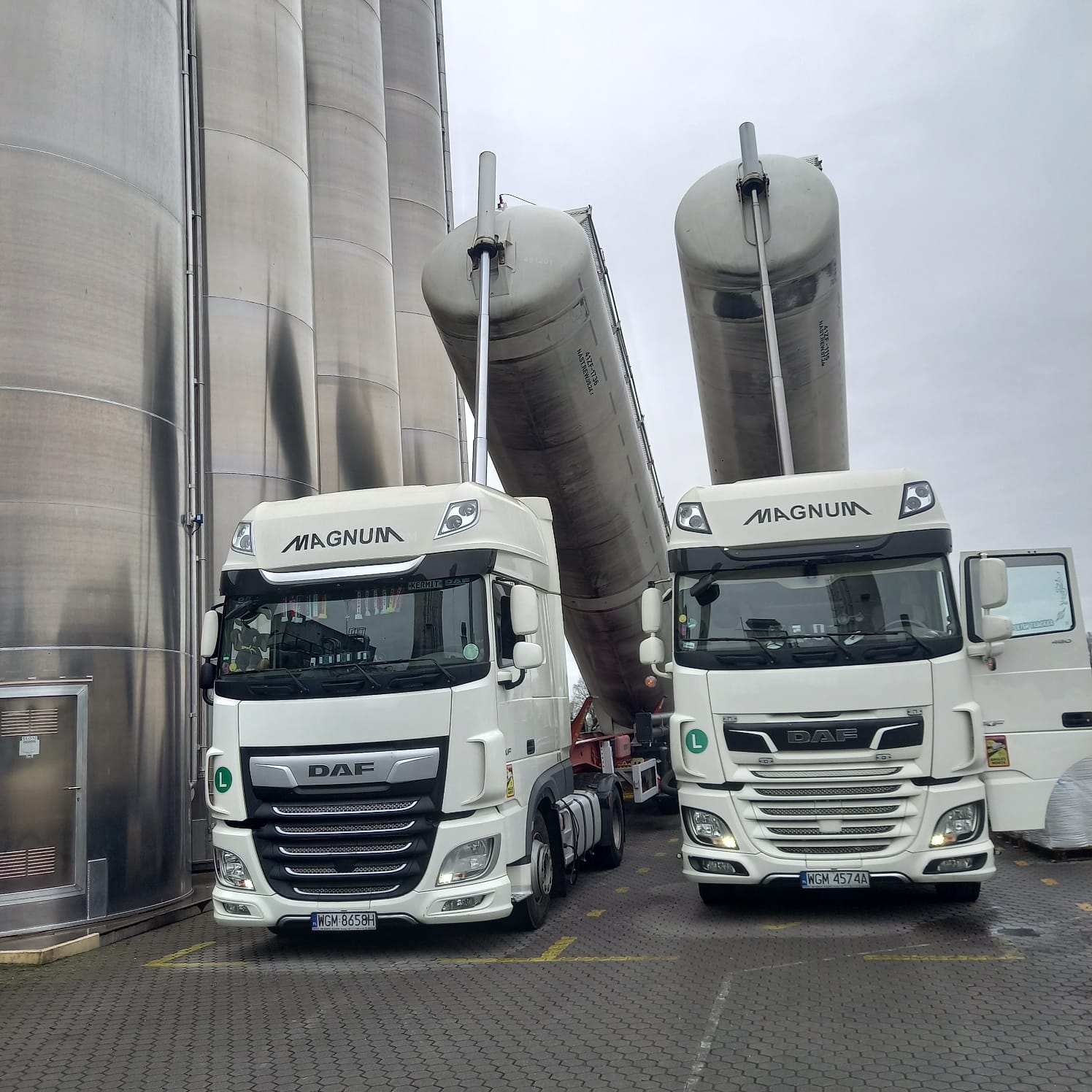
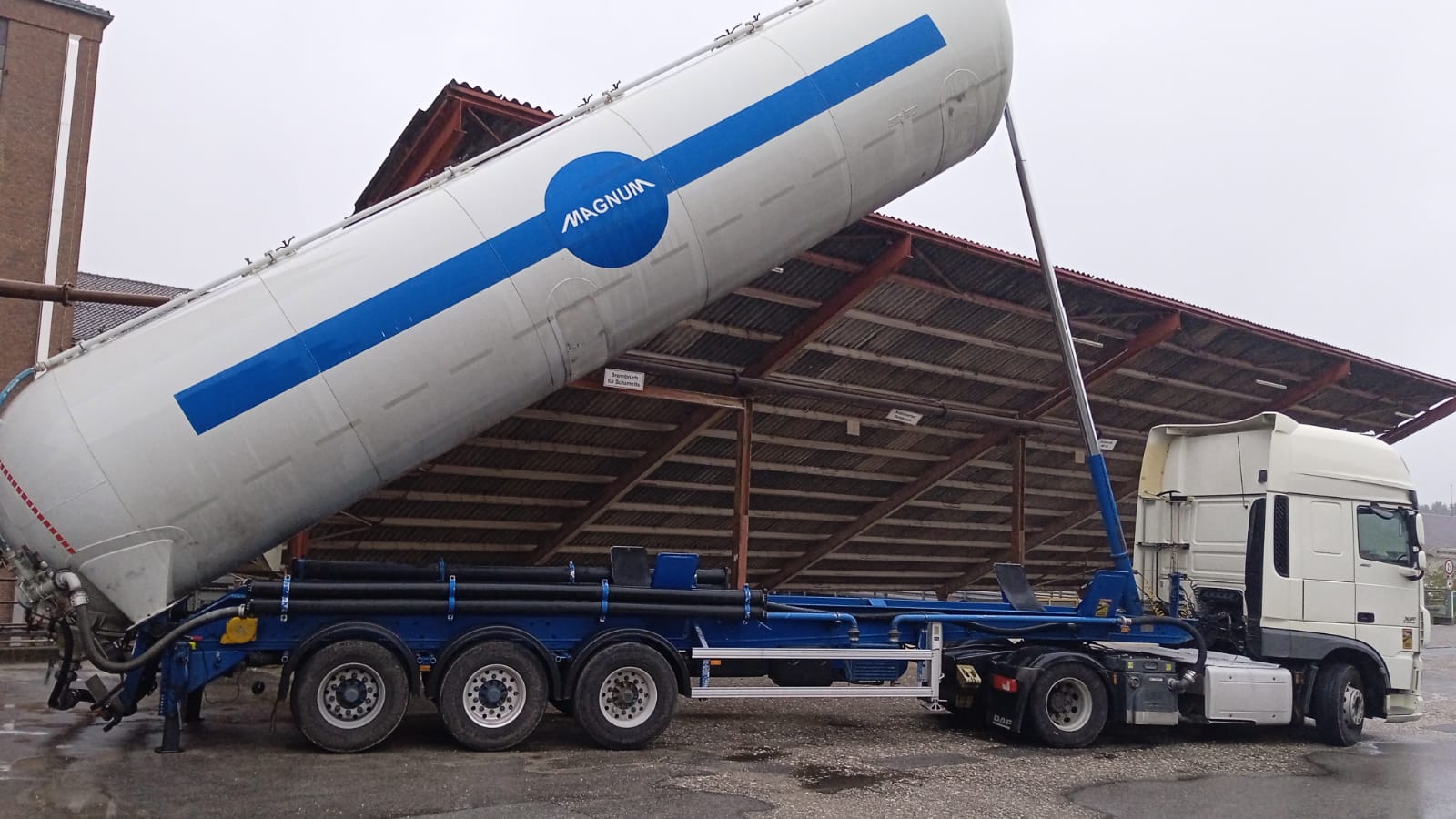
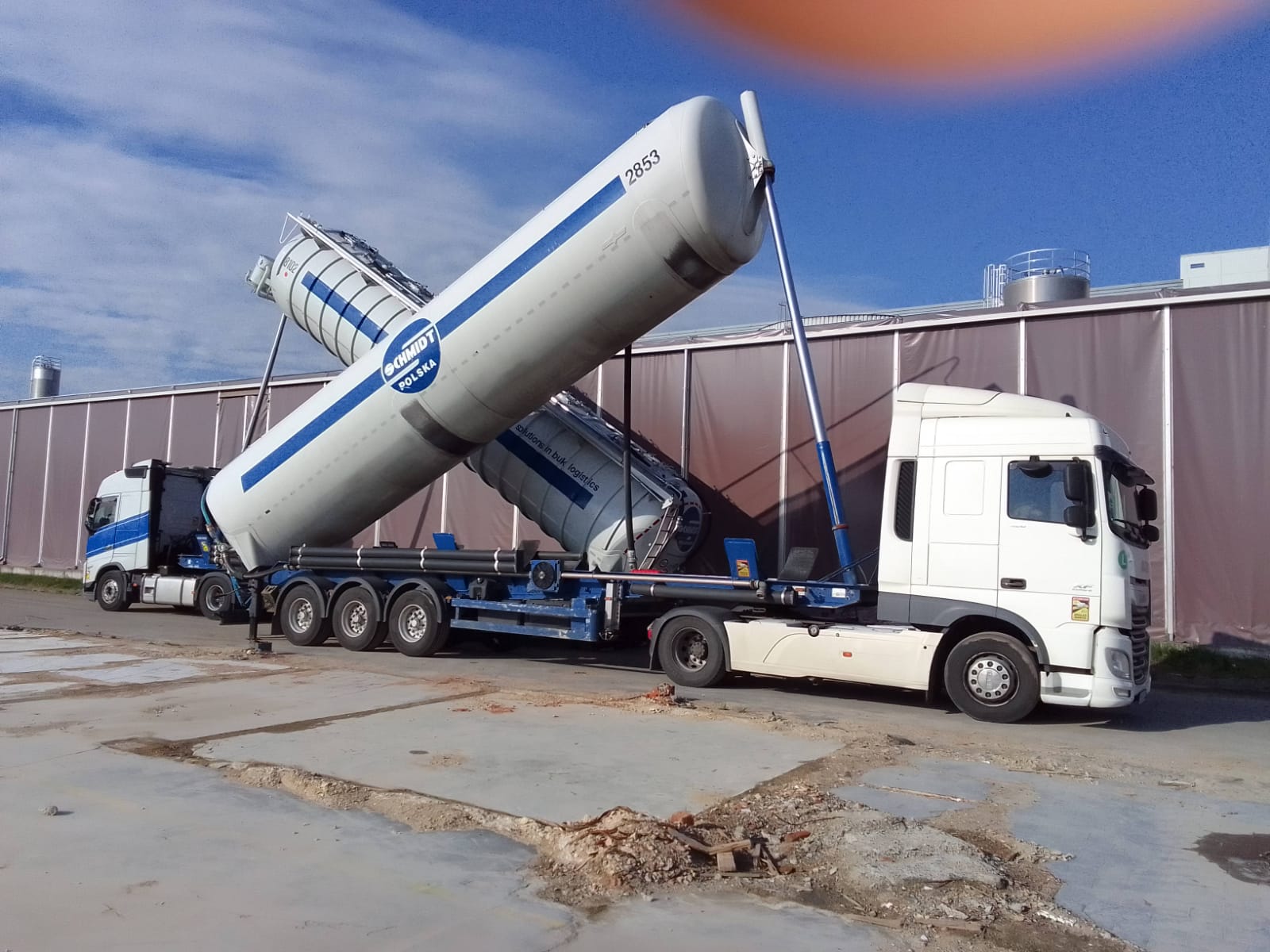
After transloading at SMIALA, the silo trailer proceeds to the customer’s factory. The driver has the weighing protocol (net weight per trailer) and the batch number. At the factory, the trailer pulls up under the factory silo and discharges pneumatically into the overhead storage.
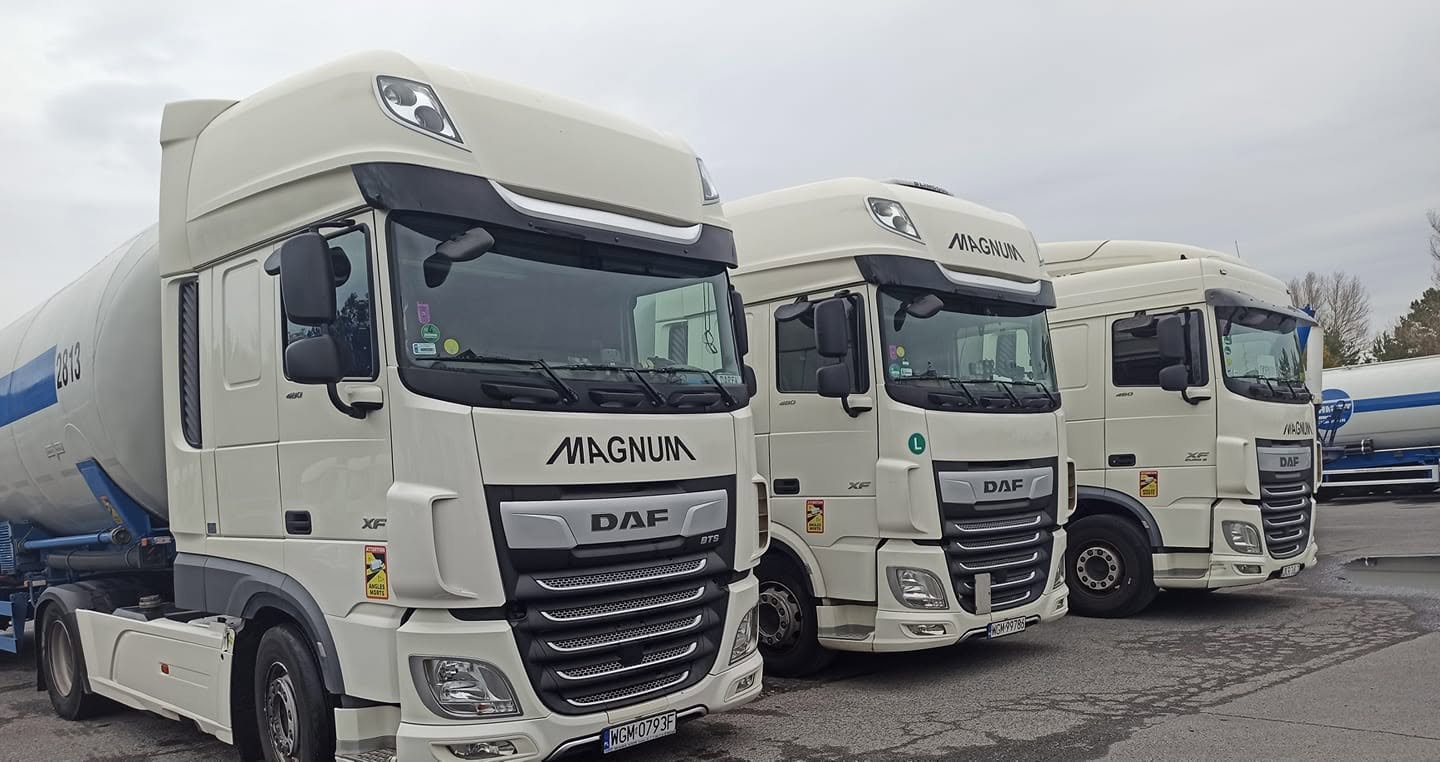
PHS Magnum Chorula operates 31 silo trailers (~60 m³ capacity, 27 t payload) for this final delivery leg. The same operator handles transloading and transport, which means documentation is continuous from terminal receipt to factory delivery — no handover gap.
Alternatively, the customer’s own transport contractor can collect from SMIALA directly after loading.
Summary: key decision points for the polymer importer
| Decision | Recommendation |
|---|---|
| Port selection (from Asia) | Gdańsk for Polish/Central EU destinations; Hamburg for broad EU coverage |
| Terminal location | Central Poland (Chorula) for reach to DE, CZ, AT, SK, PL within one day |
| Transloading method | Gravity (big-bag to silo) — no pneumatics, no fractionation |
| Documentation | ISO 9001:2015 weighing protocol + cleaning certificate per load |
| Transport | Dedicated silo trailer fleet with traceable documentation |
Contact SMIALA:
+48 664 135 005
· biuro@magnumchorula.pl
Terminal: ul. Kościelna 9, 47-316 Chorula, Poland
Logistics operator: magnumchorula.pl
Trailer service: spitzer.pl
· feldbinder.pl