Definicja
Worek 25 kg na granulat to detaliczne opakowanie jednostkowe o standardowej masie 25 kg, najczęściej z folii polietylenowej (PE) lub tkaniny polipropylenowej (PP), służące do pakowania, paletyzacji i dystrybucji granulatów oraz innych materiałów sypkich do mniejszych odbiorców. To ostatnie ogniwo łańcucha opakowaniowego tworzyw: tam, gdzie big-bag i silonaczepa obsługują strumień masowy liczony w tonach, worek 25 kg odmierza porcję, którą bez problemu uniesie i przeniesie jeden pracownik.
To opakowanie najbardziej niedoceniane i jednocześnie najczęściej źle dobierane. Wydaje się banalne — „zwykły worek" — a w rzeczywistości od jego konstrukcji, materiału i sposobu zamknięcia zależy, czy granulat dotrze do odbiorcy suchy, czysty i sypki, czy zbryli się, zawilgotnieje albo wyleje na rampie. Standard 25 kg nie jest przypadkowy: to masa, którą można pakować na palecie po 40 sztuk (1000 kg = jedna tona = jeden big-bag), wygodna w obsłudze ręcznej i zgodna z ergonomicznymi limitami podnoszenia.
W łańcuchu logistyki tworzyw worek 25 kg pełni rolę opakowania detalicznego: mieści mniej niż oktabin czy big-bag, ale za to trafia bezpośrednio do warsztatu, przetwórni czy linii wtryskowej, która zużywa kilkaset kilogramów materiału dziennie i nie potrzebuje całej tony naraz.
Typy worków 25 kg
Pod jedną nazwą „worek 25 kg" kryje się kilka zupełnie różnych konstrukcji. Dobór typu zależy od materiału, wymagań barierowych i sposobu pakowania:
- Worek wentylowy (zaworowy) — fabrycznie zgrzany ze wszystkich czterech stron, napełniany przez boczny lub narożny zawór. Po napełnieniu zawór zamyka się samoczynnie pod naciskiem materiału, dzięki czemu nie trzeba dodatkowo zgrzewać górnej krawędzi. To klasyk pakowania półautomatycznego i ręcznego — szybki, prosty, bez osobnej operacji zamykania.
- Worek z otwartym ustnikiem (zgrzewany lub szyty) — napełniany od góry przez otwarty wlot, a następnie zamykany zgrzewem termicznym (folia PE) albo szwem nitkowym (tkanina PP). Daje pełną kontrolę nad napełnieniem i równe ułożenie materiału, wymaga jednak osobnej stacji zamykania.
- Worek FFS (Form-Fill-Seal) — powstaje w locie na automatycznej linii z folii rękawowej. Maszyna formuje worek, napełnia go i zgrzewa dno oraz górę w jednym cyklu. To najbardziej wydajna i najszczelniejsza technologia, o której piszę szerzej niżej.
- Worek papierowy wielowarstwowy — z kilku warstw papieru workowego (zwykle 2-3), często z wewnętrzną wkładką z folii HDPE jako barierą wilgoci. Sztywny, dobrze się piętruje, stosowany m.in. do materiałów mineralnych i chemicznych.
- Worek polipropylenowy tkany (raszlowy lub laminowany) — z plecionej taśmy PP, bardzo wytrzymały mechanicznie i odporny na rozdarcie. Wersja raszlowa (siatkowa) przepuszcza powietrze, laminowana jest szczelna; do materiałów wrażliwych na wilgoć stosuje się laminat lub wewnętrzny liner PE .
Materiały i konstrukcja
Najważniejszy wybór konstrukcyjny to materiał ściany worka, bo on decyduje o barierze wilgoci, wytrzymałości i zgrzewalności.
Folia polietylenowa (PE) to materiał numer jeden dla granulatów polimerowych. Stosuje się polietylen w wersji jednowarstwowej lub współwytłaczanej (coex) o grubości zwykle 100-180 mikronów. PE jest zgrzewalny termicznie, szczelny, daje czysty i pewny zgrzew oraz dobrze chroni przed wilgocią. Dla materiałów higroskopijnych stosuje się folie wielowarstwowe lub z dodatkową warstwą HDPE, która znacząco poprawia barierę przeciwwilgociową przy zachowaniu giętkości worka.
Wkładka HDPE jako bariera wilgoci to rozwiązanie typowe dla worków papierowych i tkanych PP, które same w sobie nie są szczelne. Polietylen wysokiej gęstości (HDPE) tworzy cienką, ale skuteczną zaporę dla pary wodnej, oddzielając materiał od papieru lub tkaniny. Dzięki temu można połączyć wytrzymałość mechaniczną zewnętrznej warstwy z hermetycznością wnętrza — to ważne dla granulatów, w których nawet niewielka wilgoć powoduje wady wtrysku (smugi, pęcherze).
Tkanina polipropylenowa to materiał worków, w których liczy się przede wszystkim wytrzymałość na rozdarcie i przebicie. Tkaninę plecie się z taśmy polipropylenowej o gramaturze zwykle 60-100 g/m². Worek raszlowy ma strukturę siatkową i oddycha, worek laminowany pokryty jest dodatkową folią PP, co nadaje mu szczelność i pozwala na czysty nadruk fleksograficzny. Ten sam polipropylen, z którego robi się tkaninę worka, jest zresztą jednym z częstszych granulatów, jakie do tych worków pakujemy — domknięcie obiegu, które dobrze ilustruje wszechstronność PP.
Standardowe gramatury i wymiary
Choć nazwa odnosi się do 25 kg, w praktyce funkcjonuje kilka standardowych gramatur opakowań jednostkowych:
| Parametr | Typowa wartość |
|---|---|
| Gramatury standardowe | 15 / 20 / 25 kg (25 kg — standard dla granulatów) |
| Worek PE: szerokość | ok. 40-50 cm |
| Worek PE: grubość folii | 100-180 mikronów |
| Worek PP tkany: gramatura tkaniny | 60-100 g/m² |
| Worek papierowy: liczba warstw | 2-3 (+ wkładka HDPE) |
| Worków na paletę | zwykle 40 szt. = 1000 kg |
| Warstw na palecie | zwykle 8 warstw po 5 worków |
| Paleta | euro 1200×800 mm |
Wymiary nie są dowolne — dobiera się je do gęstości nasypowej materiału. Lekki, „puszysty" granulat o niskiej gęstości wymaga większego worka na te same 25 kg niż ciężki materiał mineralny. Z mojego doświadczenia najczęstszym błędem przy zamawianiu worków jest dobranie ich „na masę" bez uwzględnienia objętości — worek dobrany za ciasno pęcznieje i źle się paletyzuje, za luźny tworzy „uszy", które rozjeżdżają stos.
Technologia FFS
Technologia FFS (Form-Fill-Seal — formuj, napełnij, zgrzej) to dziś standard wydajnego pakowania granulatów w worki 25 kg. Zasada jest prosta: zamiast używać gotowych worków, linia pobiera folię z rolki rękawowej i w jednym ciągłym cyklu formuje worek, napełnia go odmierzoną porcją materiału i zgrzewa dno oraz górną krawędź.
Przewaga FFS nad pakowaniem w gotowe worki jest wymierna. Po pierwsze — niższe straty: nie ma magazynu pustych worków, folia z rolki zajmuje ułamek miejsca, a brak ręcznych operacji ogranicza odrzuty. Po drugie — szczelność: zgrzew maszynowy dna i góry daje hermetyczne, jednolite zamknięcie, lepiej chroniące materiał przed wilgocią niż szew nitkowy. Po trzecie — wydajność: nowoczesna linia FFS pakuje materiał w tempie kilkunastu worków na minutę bez udziału operatora przy samym napełnianiu. Po czwarte — powtarzalność masy: precyzyjne dozowanie wagowe zapewnia, że każdy worek ma dokładnie zadeklarowaną masę, co jest istotne i handlowo, i z punktu widzenia metrologii.
Wadą FFS jest wyższy próg wejścia — linia to inwestycja, która zwraca się dopiero przy odpowiednim wolumenie. Dlatego worki wentylowe i z otwartym ustnikiem wciąż mają sens przy mniejszych, zmiennych partiach, gdzie elastyczność jest ważniejsza niż maksymalna wydajność.
Worki 25 kg a big-bag
Worek detaliczny i big-bag to dwa końce tej samej drogi. Poniżej zestawienie, które porządkuje, kiedy który ma sens:
| Cecha | Worek 25 kg | Big-bag (FIBC) |
|---|---|---|
| Ładowność | 15-25 kg | 500-1250 kg |
| Obsługa | ręczna, jedna osoba | wózek / suwnica |
| Odbiorca | mały / średni (warsztat, przetwórnia) | duży / hurt / przemysł |
| Paletyzacja | 40 worków = 1 t na palecie | 1 big-bag = 1 paleta lub bez |
| Dystrybucja detaliczna | bezpośrednia, gotowa porcja | wymaga przepakowania |
| Bariera wilgoci | bardzo dobra (PE / wkładka HDPE) | dobra (z linerem PE) |
| Koszt opakowania na tonę | wyższy | niższy |
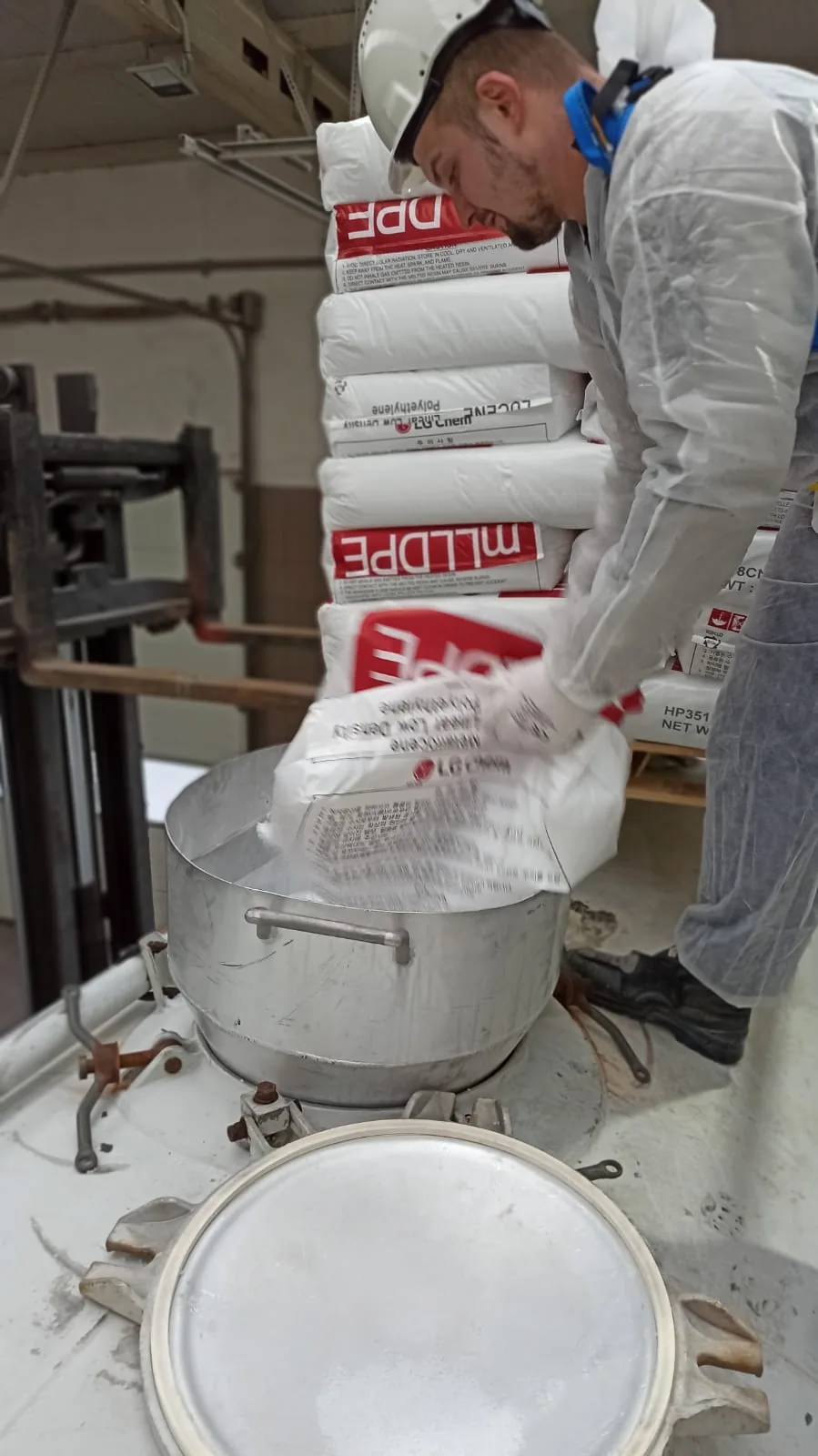
Najczęstszą operacją na terminalu nie jest jednak wybór „worek albo big-bag", lecz przejście z big-baga na worki — czyli konfekcjonowanie. Importowany luzem lub w big-bagach granulat trzeba rozłożyć na porcje handlowe, które trafią do mniejszych odbiorców. To właśnie robimy w Choruli: przyjmujemy materiał w big-bagach lub z silosu i pakujemy go na worki 25 kg, gotowe do dystrybucji.
Konfekcjonowanie na terminalu Chorula
Konfekcjonowanie granulatu z big-baga na worki 25 kg to operacja, w której kluczowa jest czystość i kontrola jakości. Proces na naszym terminalu przebiega następująco:
- Przyjęcie i identyfikacja big-baga — kontrola numeru partii, certyfikatu materiałowego i stanu opakowania. Każda partia zachowuje pełną identyfikalność.
- Grawitacyjny rozładunek big-baga — materiał spływa z big-baga do leja zasypowego stacji pakującej, bez transportu pneumatycznego. Dzięki przeładunkowi bez pneumatyki ziarno nie ulega ścieraniu ani naelektryzowaniu, a partia zachowuje pierwotną jakość.
- Sito czyszczące — strumień granulatu przechodzi przez sito wychwytujące zanieczyszczenia mechaniczne, aglomeraty i ciała obce, zanim trafi do worka.
- Dozowanie wagowe i pakowanie — odmierzona porcja 25 kg trafia do worka (wentylowego, FFS lub innego, zależnie od ustaleń), który zostaje zamknięty zgrzewem lub zaworem.
- Paletyzacja — worki układa się na palecie w stabilny stos, zwykle 40 sztuk (8 warstw po 5).
- Zabezpieczenie palety — kaptur foliowy termokurczliwy lub owinięcie folią stretch, chroniące stos przed wilgocią, pyłem i rozsunięciem w transporcie.
- Dokumentacja jakości — protokół konfekcjonowania z pełną identyfikalnością partii.
Konfekcja detaliczna to tylko jeden koniec naszej pracy — ten sam materiał równie często wychodzi luzem cysterną. W worki 25 kg pakujemy najczęściej poliolefiny i kompaundy trafiające do mniejszych przetwórni, które zużywają kilkaset kilogramów dziennie i nie potrzebują całej tony naraz.
Konfekcjonowanie prowadzimy w Choruli (4 km od węzła A4), korzystając z bufora 2000 big-bagów w magazynie, z którego materiał schodzi na stacje pakujące. Szerszy kontekst usług znajdziesz w portalu PHS Magnum — transport materiałów sypkich , a ofertę przepakowania luzem opisuje strona przeładunku big-bag do silonaczepy .
Paletyzacja i zabezpieczenie
Sam worek to dopiero połowa zadania — równie ważne jest, jak ułoży się go na palecie i czym zabezpieczy. Worki 25 kg paletyzuje się najczęściej po 40 sztuk (1000 kg) na palecie euro, w układzie 8 warstw po 5 worków, z przewiązaniem warstw zapewniającym stabilność stosu. Dobre ułożenie to takie, w którym worki nie tworzą „uszu" wystających poza obrys palety i w którym kolejne warstwy wiążą się ze sobą, a nie układają jedna na drugiej w pionowe kolumny grożące rozsunięciem.
Zabezpieczenie palety pełni dwie funkcje: stabilizuje stos i chroni materiał przed wilgocią oraz pyłem w transporcie i magazynie. Stosuje się dwa główne rozwiązania:
- Kaptur foliowy termokurczliwy — folia naciągana na cały stos i obkurczana ciepłem, dająca szczelną, naprężoną osłonę odporną na zachlapanie i pył. Najlepsza ochrona przed wilgocią z zewnątrz.
- Folia stretch (owijarka) — folia rozciągliwa owijana wokół palety pod naprężeniem, mocno wiążąca worki ze sobą i z paletą. Tańsza i szybsza, znakomicie stabilizuje stos, słabiej chroni górę przed deszczem (stąd często łączy się ją z kapturem górnym).
W praktyce magazynowej dobrze zabezpieczona paleta worków przechowuje się tak samo bezpiecznie jak big-bag, pod warunkiem suchego, krytego składowania. O zasadach przechowywania granulatu piszemy szerzej na stronie magazynowania materiałów sypkich .
Powiązane tematy
Worek 25 kg najlepiej rozumieć jako ostatnie ogniwo łańcucha, który zaczyna się od dostawy luzem. Najbliższym tematem jest big-bag (FIBC) , z którego najczęściej konfekcjonujemy materiał, oraz liner foliowy , pełniący w worku tkanym tę samą rolę bariery wilgoci. Surowce ścian worków opisują hasła o polietylenie i polipropylenie . Pełną usługę pakowania detalicznego przedstawia strona konfekcjonowania .
Źródła
- Rozporządzenie (WE) nr 1935/2004 — materiały i wyroby przeznaczone do kontaktu z żywnością (worki i folie food-grade).
- ISO 21898 — Packaging — Flexible intermediate bulk containers (FIBCs) for non-dangerous goods (kontekst opakowań bulk).
- Wytyczne producentów folii i tkanin workowych dla worków wentylowych, FFS i PP tkanych.
- Praktyka eksploatacyjna terminala SMIALA, Chorula — Aleksy Pasternak .
