What does SMIALA’s ISO 9001:2015 certification mean for your polymer supply chain?
When PE/PP granulate from LG Chem or Borealis passes through a transloading terminal, your quality management team wants one assurance above all others: that the material arriving at the factory silo is identical — in specification, batch identity and purity — to the material that left the producer’s warehouse. ISO 9001:2015 is the documented framework that makes this assurance verifiable.
W skrócie
SMIALA’s ISO 9001:2015 certification covers all terminal operations from container intake to silo trailer dispatch. Every transloading event is documented with full batch traceability — container number, big-bag numbers, producer batch, loaded trailer and dispatch CMR. Non-conformances trigger immediate batch segregation and a written corrective action report. The certificate is renewed annually through surveillance audits and every 3 years through full recertification.
Why quality management certification matters for bulk polymer transloading
Polymer granulate is traded against a Certificate of Analysis (CoA). The CoA states melt flow index (MFI), density, ash content, particle size distribution and application suitability. The factory buys granulate to a specific CoA.
Between the producer’s warehouse and the factory’s silo, the granulate passes through a port, possibly customs, a container truck, a transloading terminal and a silo trailer. Any one of these steps can introduce:
- Contamination — from a dirty container, a previous load in the trailer, compressor oil in a pneumatic system, moisture
- Cross-grade mixing — if batch control fails and two different MFI grades enter the same trailer
- Documentation gaps — if the batch number chain breaks between producer and factory
ISO 9001:2015 at SMIALA addresses all three risks through documented procedures, controls and verifiable records.
What ISO 9001:2015 means in practice at SMIALA
Container intake
When a container arrives at the SMIALA gate:
- The CMR is checked against the expected delivery note
- The material specification is verified against the booking record
- The container seal number is recorded and checked for integrity
- The truck scale records the gross weight
- An intake number is assigned — this number appears on every document for this delivery
If the container shows signs of damage, moisture ingress or seal tampering, the intake procedure stops. The client is notified and the container is quarantined pending inspection. This is a non-negotiable step.
Warehouse batch control
Each big-bag receives a warehouse label with:
- Intake number
- Producer and grade
- Batch number from the CoA
- Big-bag number (if labelled by producer)
- Intake date and storage position
Big-bags are stored in physically separated batch zones. Adjacent zones are marked with dividers. No two different grades occupy the same zone without explicit authorisation.
Transloading documentation
The transloading protocol — issued within 1 hour of loading completion — contains:
- All intake numbers included in this load
- Individual big-bag weights and running total
- Silo trailer registration number
- Gross and net weight (from gate scale)
- Operator name and ISO 9001:2015 quality stamp
- Date, time, bay number
This protocol is the quality handover document between SMIALA and the silo trailer driver. It travels with the CMR to the receiving factory and is the primary quality record for the delivery.
Non-conformance procedure
Any deviation from expected parameters triggers the ISO 9001:2015 non-conformance procedure:
- Immediate segregation — the affected batch or big-bags are physically moved to a quarantine zone
- Client notification — within 1 business hour of detection
- Root cause analysis — written investigation of the cause
- Corrective action — documented action to prevent recurrence
- Written report — issued to the client within 24 hours
Examples that trigger non-conformance: damaged big-bag discharge valve (contamination risk), weight discrepancy greater than 0.5% versus delivery note, visual evidence of moisture or foreign material.
Internal audits
SMIALA conducts internal quality audits on a quarterly schedule. Audit scope covers: document control, batch traceability records, equipment calibration (scales, temperature monitoring), personnel competency records, supplier evaluation (container transport companies, forklift maintenance). Audit findings and corrective actions are documented and available to clients on request.
Client audit rights
Under SMIALA’s quality management policy, clients have the right to:
- Request copies of the ISO 9001:2015 certificate and surveillance audit reports
- Conduct on-site quality audits with advance notice (minimum 5 business days)
- Request batch traceability records for any delivery in the past 5 years
- Submit supplier qualification questionnaires
Companies including Borealis, LG Chem and Synthos have exercised these rights. Contact biuro@magnumchorula.pl to arrange an audit or request documentation.
ISO 9001:2015 and the PHS Magnum group
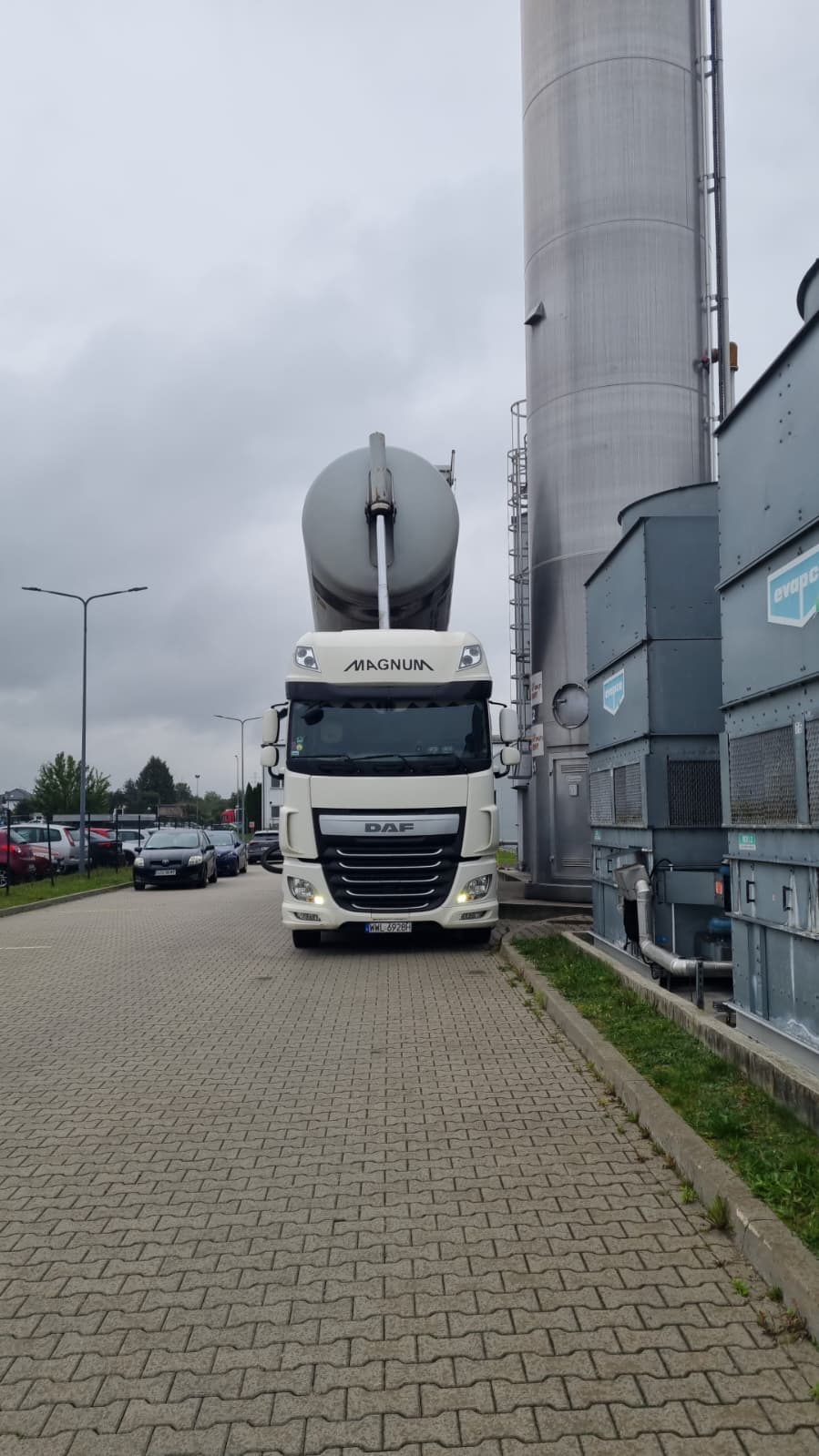
The PHS Magnum group — which operates the SMIALA terminal and a fleet of 26 DAF XF 480 silo trailers — holds ISO 9001:2015 certification across its integrated operations. This means the quality management system extends beyond the terminal gate: the silo trailers dispatched from SMIALA operate under the same quality framework, including driver competency records, trailer cleaning certificates and maintenance documentation.
For a factory receiving granulate, this means the quality chain is unbroken from container intake at SMIALA to discharge into the factory silo. TDT-certified silo trailers operated by PHS Magnum carry the same quality documentation framework.
Request a certificate copy or arrange an audit
Call: +48 664 135 005 (Mon–Fri 06:00–20:00)
Email: biuro@magnumchorula.pl
— subject: “ISO audit request” or “Certificate copy”
Related: Terminal specifications · Reference clients · How to request a quote

