At a glance
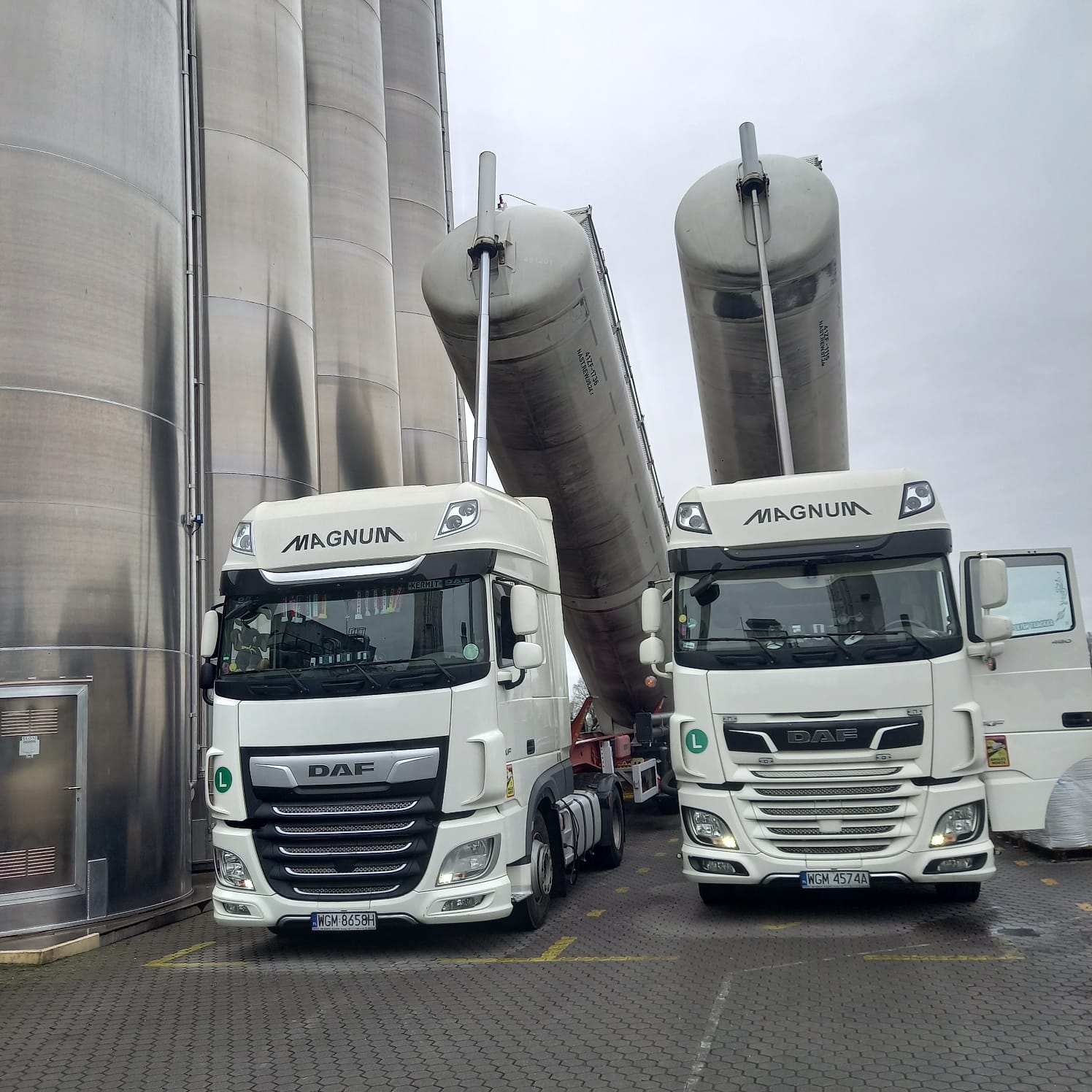
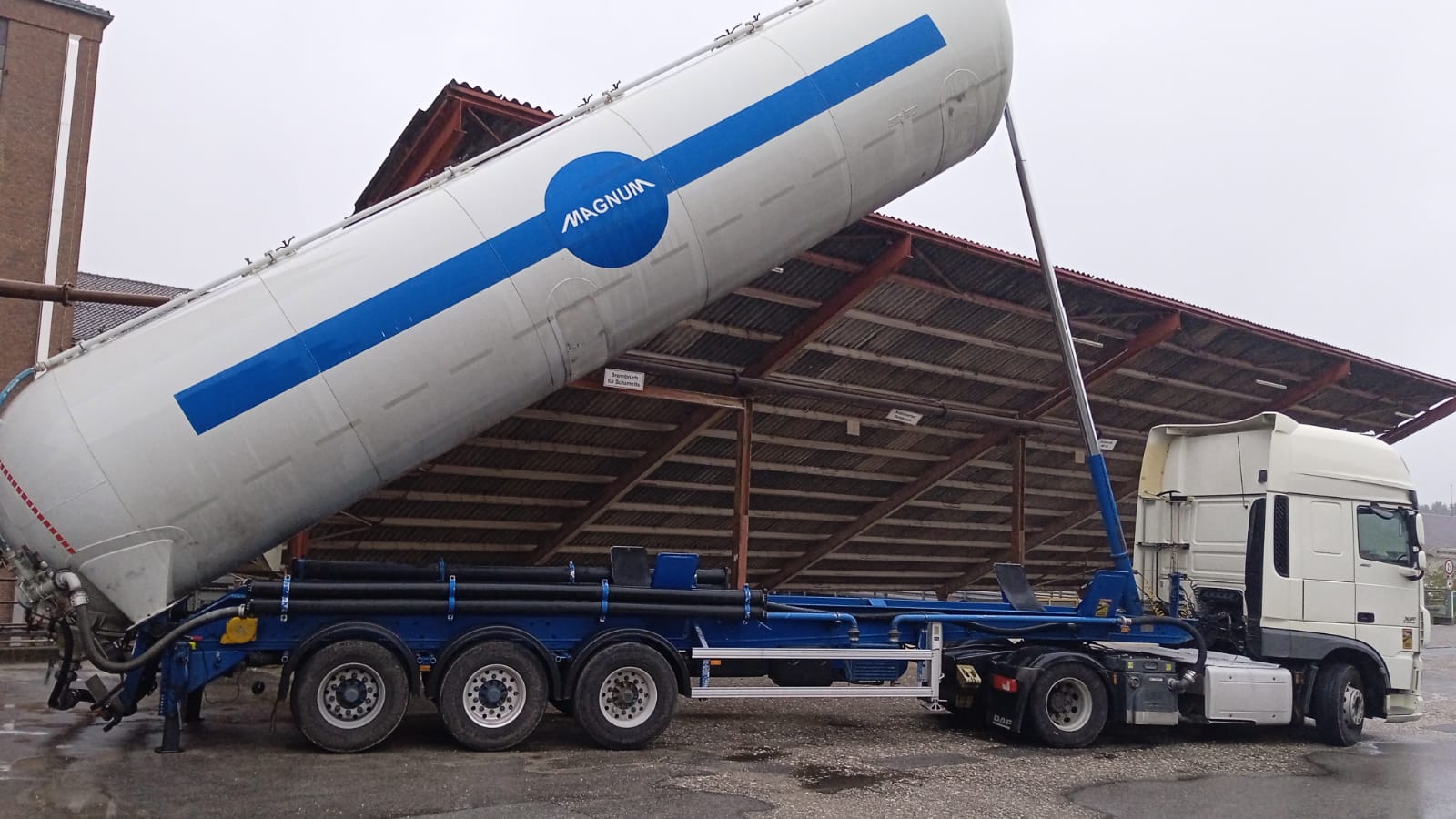
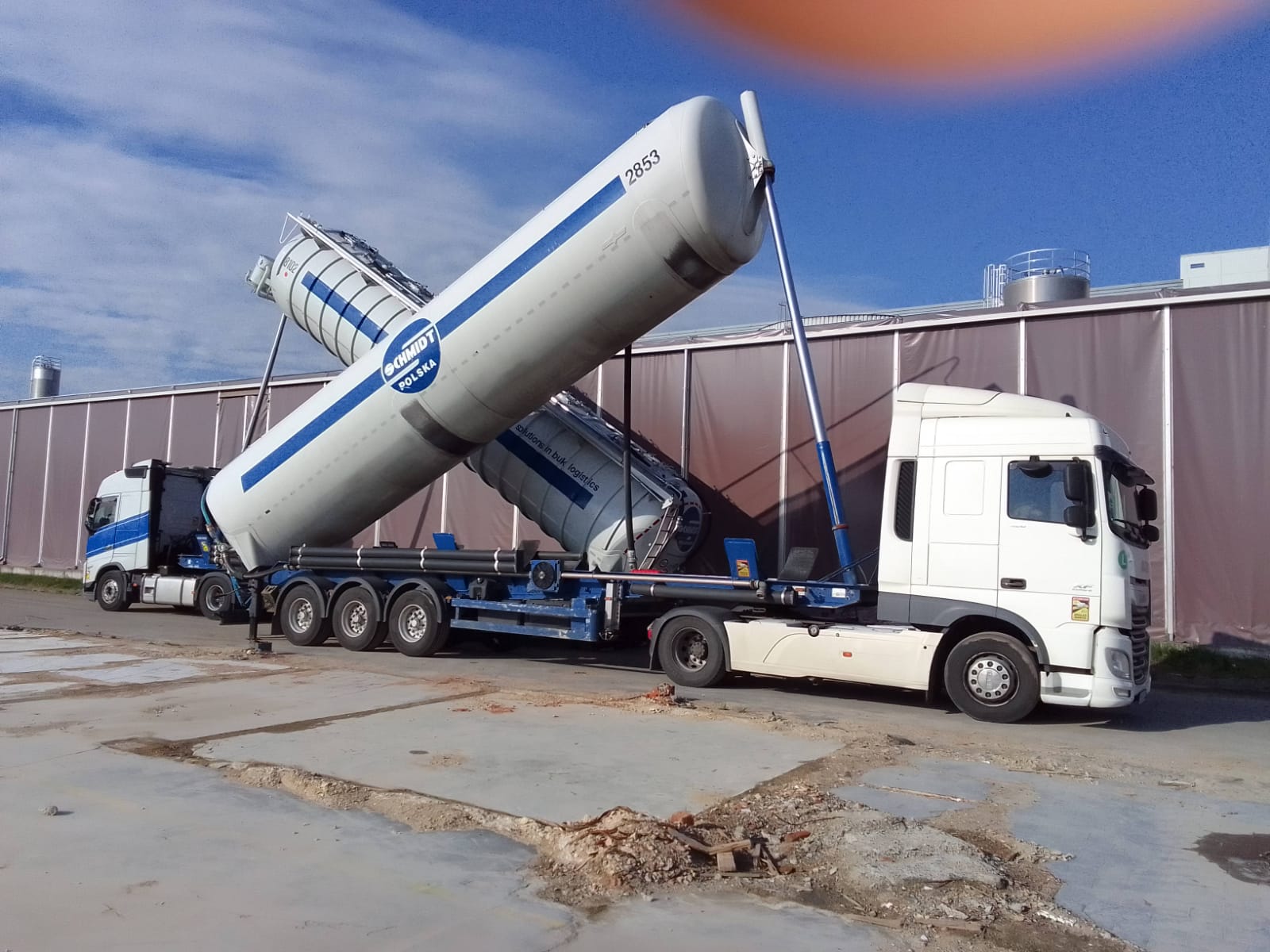
Most silo trailer operators wash their fleet at external industrial washing facilities — an extra trip, an extra subcontractor, an extra documentation chain. PHS Magnum in Chorula has its own silo trailer and cement trailer washing facility on the terminal site. Shorter turnaround (60–90 minutes instead of half a day with transits), full process control under ISO 9001:2015, one batch number covering both transloading and washing. The cleanliness certificate is included in the transloading price as standard.
Why washing is not a minor detail
In PE/PP granulate, talc, bentonite or urea transport — residue from the previous load in the trailer can ruin the entire batch of the next product at the receiver. This is a well-known industry disaster: 25 tonnes of HDPE contaminated with PP, polycarbonate with soot from the previous shipment, PA granulate with residual antistatic agents.
The cost of such contamination is measured in the value of the entire batch, not in the cost of washing. Polymer producers — LG Chem, Borealis, Synthos, Orlen — have unambiguous trailer cleanliness requirements written into their quality specifications. Every supplier must keep documented washing and process certification.
Three silo trailer washing models on the market
In practice the industry uses three organisational models:
1. Subcontracted washing (external industrial facility)
The carrier sends the trailer to a separate washing station — typically 30–80 km from the base. Route: carrier base → washing station → loading terminal. Time: half a day to a full day. Documentation in two systems (carrier + washing operator), liability gaps in case of complaints.
2. Washing at the receiver
Some large receivers operate their own washing facility and require on-site washing before loading. Time: 2–4 hours extra on the receiver’s schedule. Requires coordinating the washing slot with the unloading slot — often a scheduling weak point.
3. Washing at the transloading operator’s premises (PHS Magnum model)
The trailer enters the terminal, is washed, weighed and loaded directly. Everything within a single operation, a single documentation batch, a single hour in the schedule. No external subcontractors.
Why the “on-site” model is the most practical
Turnaround time
External washing typically requires 3–6 hours total (transit + washing + transit back). On-site washing in Chorula — 60–90 minutes, integrated with trailer preparation for loading. Savings: half a day per trailer.
Process control
ISO 9001:2015 requires traceability at every process step. When washing happens at a subcontractor, part of the documentation sits outside our system — for a quality complaint we have to retrieve documents from the subcontractor. When the facility is ours, everything sits under one batch number.
Indirect costs
Transit to an external facility: fuel + driver time + trailer depreciation + delay risk. These costs are not always visible on the carrier’s invoice but appear in the transloading service price. On-site washing means lower operational costs for the whole chain.
Availability
External washing stations have their own schedules, slots and queues. An urgent delivery requiring immediate washing on a Friday afternoon may wait until Monday. On-site washing — it is available when our trailer is ready.
How the PHS Magnum washing procedure works
Standard process for a silo trailer between two granulate loads:
- Trailer arrival after unloading at the previous receiver — visual inspection of tank interior, work card entry
- Internal washing with pressurised hot water — with a technical agent suited to the previous load if needed
- Drying — final humidity check (critical for hygroscopic materials like talc, bentonite, some regrinds)
- Visual inspection by operator — result recorded in the work card
- Cleanliness certificate issued — with batch number, date, time, operator identification
- Trailer moved to the transloading station — no exit from the site
The whole process is covered by one ISO 9001:2015 document — transloading + washing + certification are documented under the same number.
Who benefits most
Technical polymer producers
LG Chem, Borealis, Synthos, Orlen — technical granulate suppliers require washing + cleanliness certificate before every load. Our track record with these customers is our quality reference.
Hygroscopic and speciality materials
Talc, bentonite, some PE/PP regrinds. Residual moisture after washing risks caking in transit. On-site washing + drying control is a guarantee of final moisture parameters.
Short delivery cycles (just-in-time)
Producers running on 1–3-day inventory need predictability on delivery hour. On-site washing eliminates variability from external washing station schedules.
Food/pharma-control materials
Some granulates serve food-contact packaging production, where quality requirements are stricter. Full traceability of the washing process matters here especially.
What our facility does not cover
For full transparency — the boundaries of our offer:
- No formal PICS certification (Polymer Industry Cleaning Specification). Customers needing formal PICS compliance are referred to certified washing stations. For typical deliveries to the producers we work with regularly, our ISO 9001 procedure is accepted.
- No washing of high-hazard chemicals requiring full decontamination (e.g. after some pesticides, chemicals with special requirements). These are niche procedures requiring dedicated facilities.
- No ATEX-safe washing for explosive materials — our facility does not hold ATEX certification.
For 95% of deliveries of technical granulates, cement, lime, talc, bentonite and engineering materials — the on-site facility covers the full scope of needs.
Technical questions about washing procedures and cleanliness certificates: biuro@magnumchorula.pl or +48 664 135 005.
Related: Big-bag to silo trailer transloading · Big-bag warehousing · About — SMIALA terminal · Silo trailer service