At a Glance
Choosing the right big-bag to silo trailer transloading terminal is a logistics decision that affects raw material quality, delivery reliability and total supply chain cost. Five criteria — location relative to motorways and ports, gravity versus pneumatic method, ISO 9001 certification, throughput capacity, and silo trailer fleet ownership — allow an objective comparison of any candidate terminal.
Criterion 1: Location – proximity to motorways and ports
A transloading terminal is always a link between point A (port or bonded warehouse) and point B (converter’s plant). The closer the terminal is to a motorway network and major ports, the lower the inbound transport cost and the lower the risk of delays.
What to check:
- Distance from a motorway junction (A4, A2, A1 in Poland; BAB network in Germany) — ideally under 10 km
- Drive time to Hamburg and Gdańsk — critical for Asian and American imports arriving by sea
- Same-day delivery radius to converters in Poland, Germany, Czechia and Austria
A terminal positioned on the east–west axis (A4), with good access to the north–south axis (A1), sits close to the centre of gravity for Central European manufacturing. The Opole / Silesia region is one of the densest industrial corridors on the continent.
Example: SMIALA terminal in Chorula near Opole is 4 km from motorway A4 and 180 km from the German border. Drive times: Wrocław ~1 h, Dresden ~2.5 h, Prague ~3 h, Vienna ~4.5 h.
Criterion 2: Transloading method – gravity or pneumatic
This criterion is most frequently overlooked by procurement teams, yet it can be the most consequential for material quality.
Gravity transloading
The big-bag is raised above the silo trailer’s top filling hatch — bottom discharge valve opened — granulate falls under gravity. No mechanical components touch the product; no compressed air is involved.
Benefits for PE/PP granulate:
- No fractionation (no particle size separation)
- No electrostatic charge build-up
- Zero risk of compressor oil contamination
- Granulate arrives at the converter in exactly the same condition as it left the big-bag
Pneumatic transloading
Compressed air is introduced into the big-bag or draws material through a pipeline into the trailer.
Risks:
- Fractionation — heavier granules settle faster in the pipeline; fine dust travels further — resulting in a stratified, non-homogeneous load in the tank
- Electrostatic charging — pipeline friction charges the particles; fine material adheres to tank walls and may not discharge cleanly at the receiver
- Contamination — compressor systems contain oil; even properly maintained filters may allow trace contamination to reach the granulate
For standard PE/PP grades used in food-contact film, water distribution pipes or demanding technical extrusions, pneumatic transloading carries measurable quality risk. Quality auditors from LG Chem and Borealis actively screen for this during logistics partner qualification.
Screening question to ask any terminal: “Is your transloading process gravity-based or pneumatic?” — the answer immediately places the terminal in one category.
Criterion 3: Documentation and ISO 9001 certification
PE/PP granulate is traded against a specification — MFI (Melt Flow Index), density, ash content, particle distribution. Every batch has a Certificate of Analysis (CoA). The transloading terminal must guarantee it has not altered the material specification and that every batch is fully traceable.
What to require from a terminal:
- ISO 9001:2015 certificate — quality management system; required by most corporate clients in the polymer supply chain
- Transloading protocol — with gross and net weights, individual big-bag ID numbers, date, time, operator name and trailer registration
- Batch traceability — each big-bag individually weighed and linked to a CMR or loading document
- Document retention — minimum 5 years; essential when quality complaints arise months after delivery
A terminal without ISO 9001 cannot demonstrate systematic quality control. It may operate correctly for a period, then change staff or procedures with no external oversight.
Verification: Request the current ISO 9001:2015 certificate with expiry date and the name of the certifying body. ISO certificates are public — you can verify their status directly in the certifying body’s online register.
Criterion 4: Throughput – can the terminal handle your volume?
Polymer logistics often requires handling multiple containers per day or loading several silo trailers simultaneously. A terminal with 20 t/day throughput cannot support a contract calling for 1,000 tonnes per month.
Questions to ask:
- What is the terminal’s daily throughput (in tonnes)?
- How many transloading stations operate simultaneously?
- What is the maximum waiting time from container arrival to start of transloading?
- Does the terminal operate 6 or 7 days per week?
Quick calculation: If you import 2,000 tonnes per month (~100 twenty-foot containers), you need a terminal capable of handling ~5 containers per day, requiring a minimum throughput of 90–110 t/day with appropriate staffing.
Warehouse buffer: The terminal should have a warehouse for big-bags acting as a buffer between irregular container arrivals and the silo trailer dispatch schedule. A 1,000–2,000 big-bag warehouse capacity smooths scheduling irregularities and protects against detention and demurrage charges on your containers.
SMIALA terminal handles up to 200 tonnes per day and operates a warehouse for 2,000 big-bags, providing the buffer flexibility required for large import contracts.
Criterion 5: Silo trailer fleet ownership
A big-bag transloading terminal can operate under two business models:
Model A – pure service terminal: The client brings their own silo trailers (or arranges a haulier). The terminal only transfers the big-bags into those trailers. Cheaper for clients with their own fleet, but dependent on the client’s transport availability.
Model B – terminal with owned fleet: The terminal owns silo trailers and offers a complete service: transloading plus delivery to the converter. The client does not need to separately arrange a silo trailer haulier. Preferred option for import flows where the vessel ETA is known weeks in advance.
What to check:
- Number of trailers in the fleet (fewer than 10 is often insufficient for high-volume contracts)
- Age and technical condition of the fleet (older trailers may have contaminated tanks)
- Whether trailers are inspected and cleaned before each product or grade changeover
- Whether the terminal has a formal product changeover procedure documented in their QMS
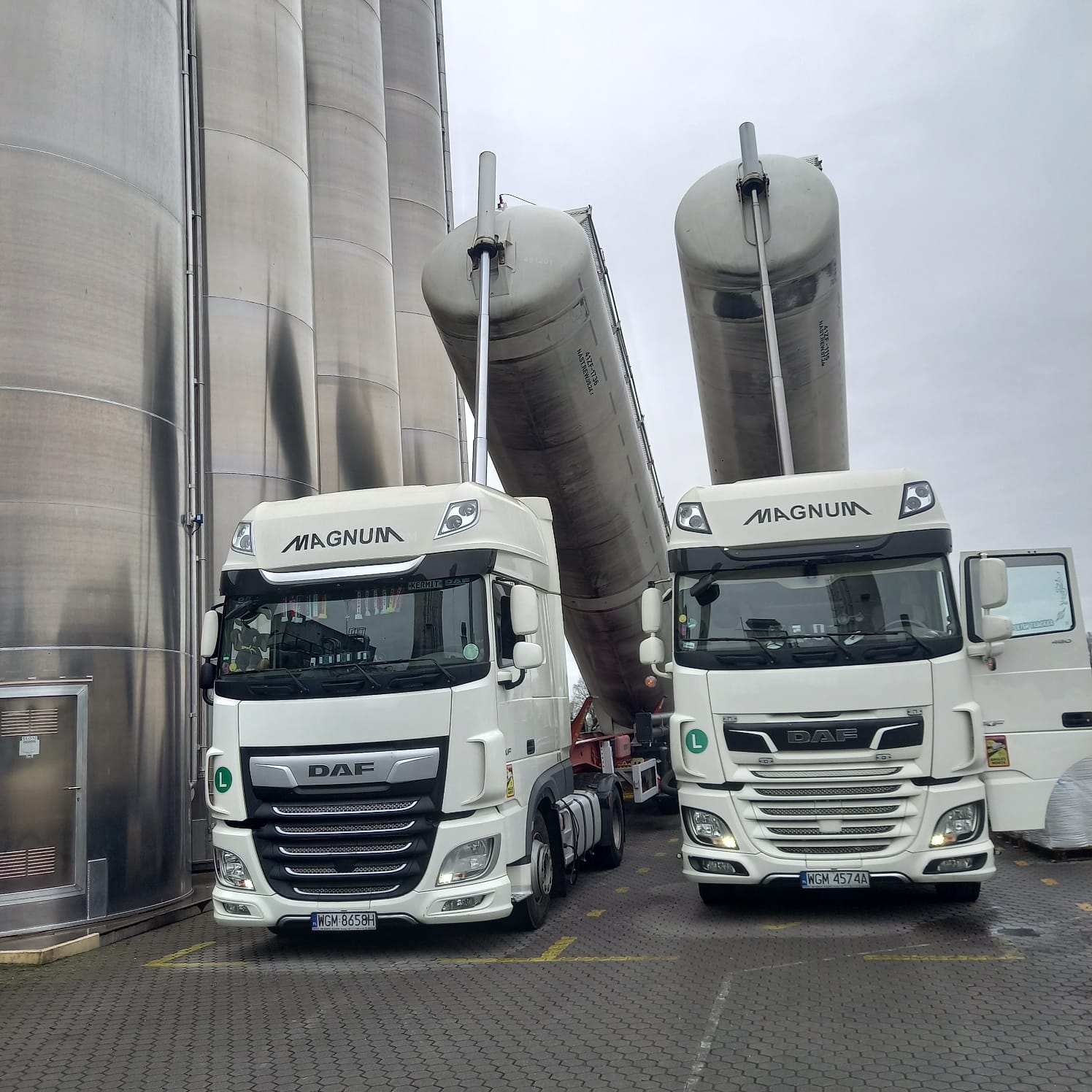
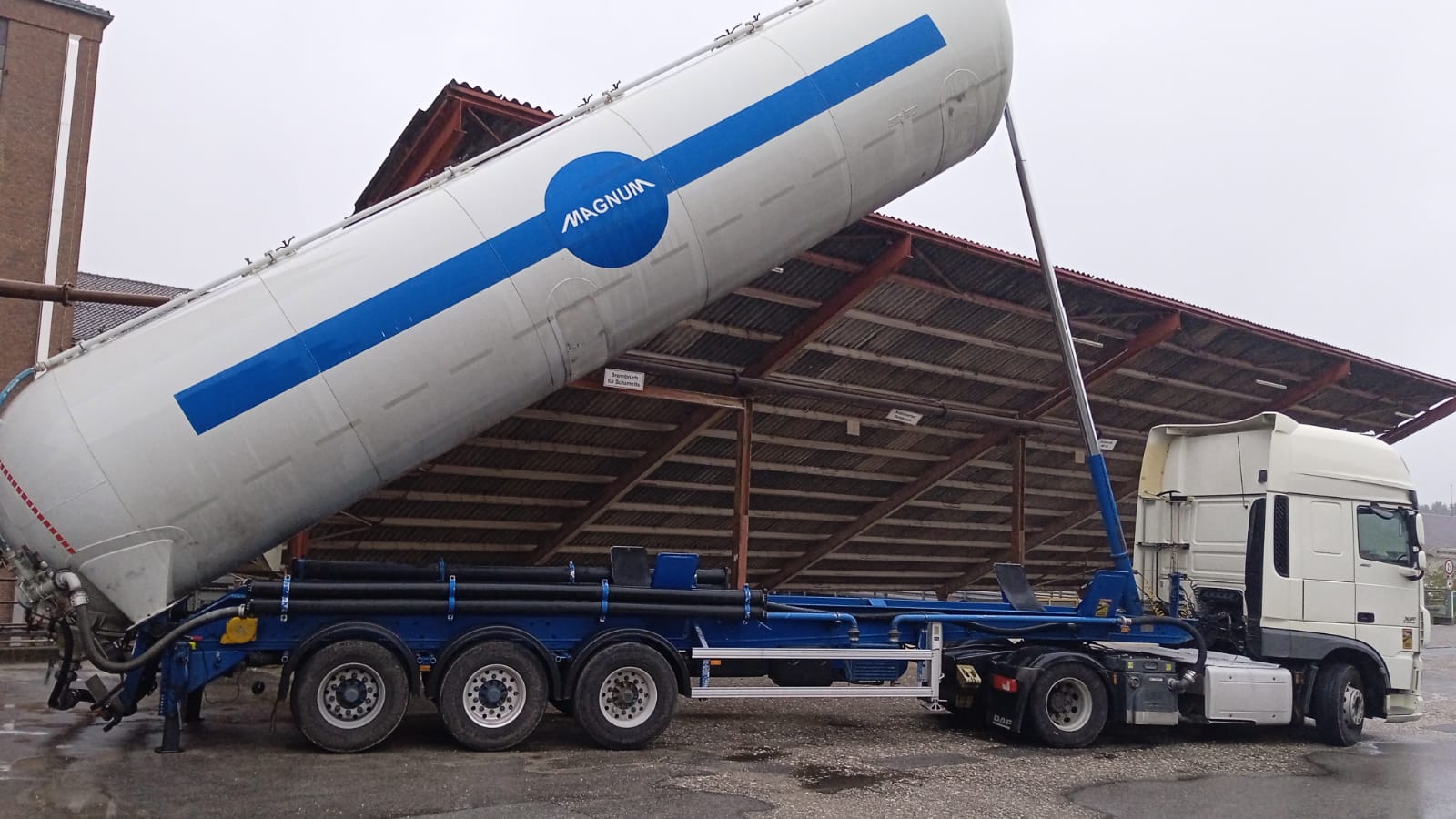
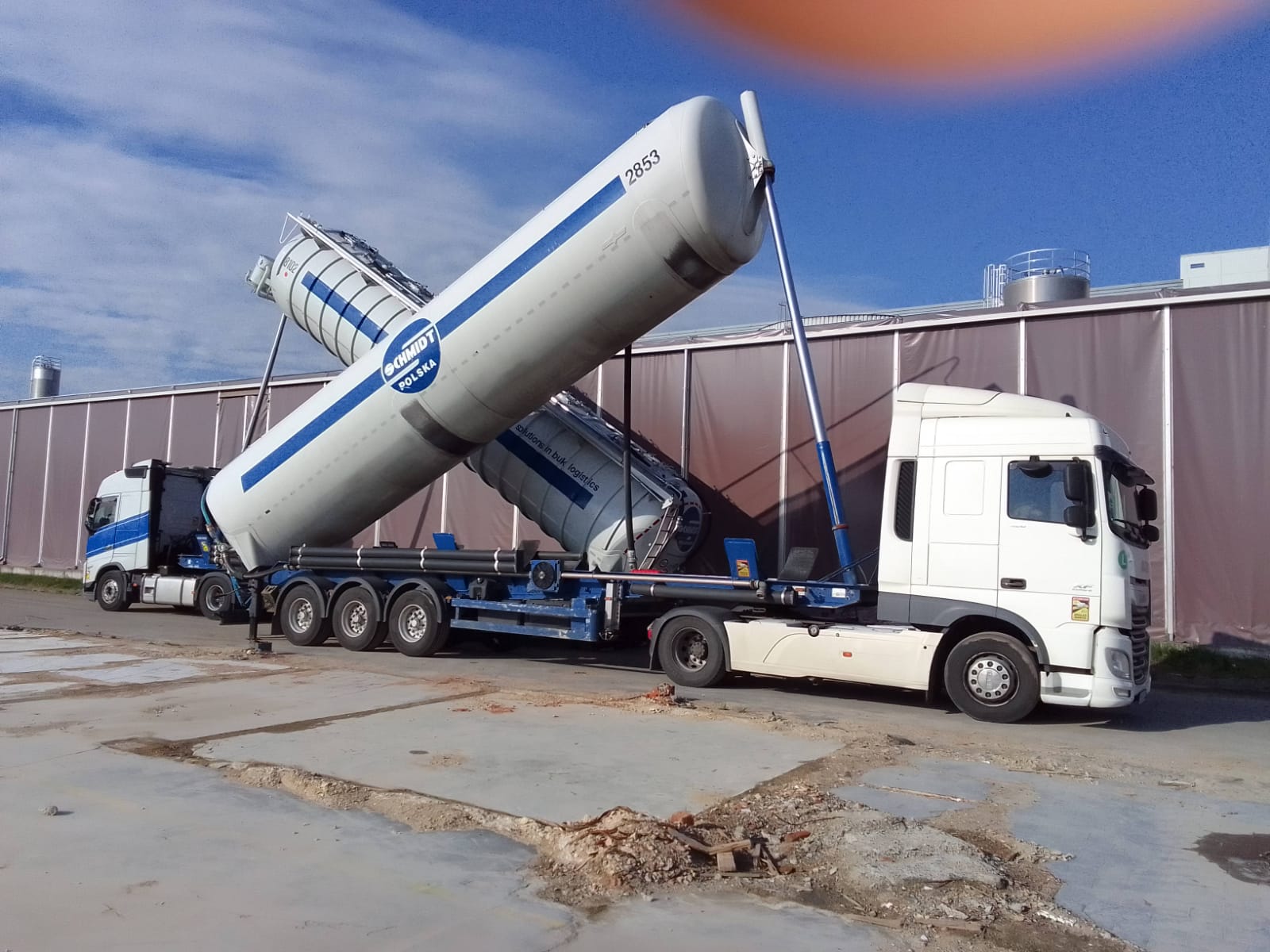
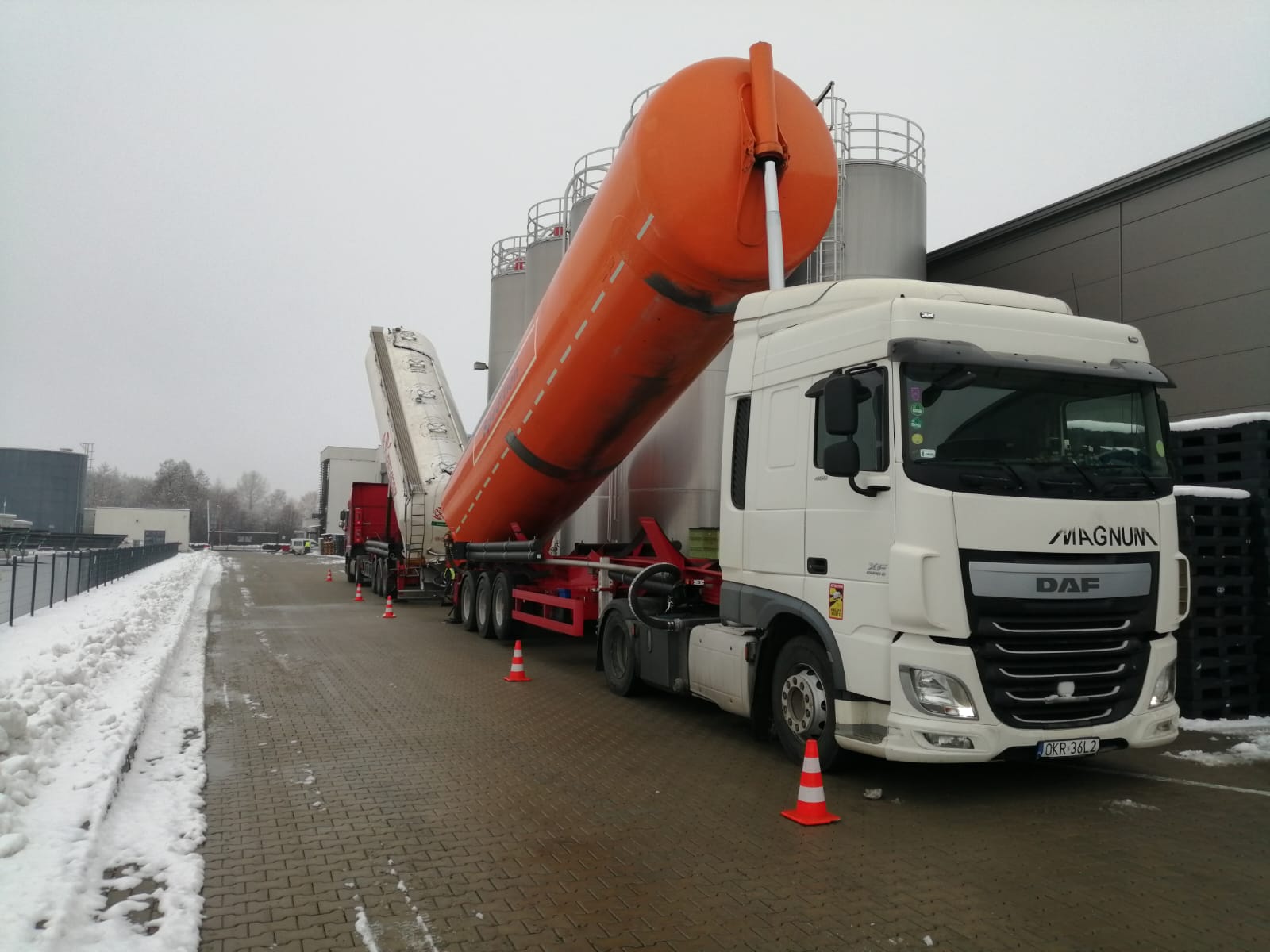
SMIALA terminal operates more than 30 owned silo trailers, eliminating dependence on the spot transport market. See our full service range
What to check during a site inspection
Before signing a contract, visit the terminal and verify:
- Is the yard and warehouse clean and organised?
- Does the staff understand quality procedures (ask about ISO, cleanout procedure, grade changeover)?
- Is the truck scale legally certified (check for a current verification sticker)?
- Does the transloading station have a gantry crane or forklift with bale clamps — essential for gravity big-bag transloading?
- Are the silo trailer tanks clean, dry and free of residues from previous cargo?
A professional terminal will have ready answers to all these questions. Also ask for references — which clients they currently serve and whether you may contact them for a verification call.
Criteria comparison at a glance
| Criterion | What to check | SMIALA |
|---|---|---|
| Location | Close to A4/A2/A1, port access | 4 km from A4, 180 km to DE border |
| Transloading method | Gravity instead of pneumatic | Exclusively gravity |
| Certification | ISO 9001:2015, protocols, archiving | ISO 9001:2015 |
| Throughput | Capacity covering your volume | 200 t/day, 2,000 big-bag warehouse |
| Silo trailer fleet | Own trailers, fleet size and condition | 30+ owned trailers |
Contact us
If you are looking for a big-bag to silo trailer transloading terminal for PE or PP granulates and would like to discuss cooperation terms or arrange a site visit:
- Phone: +48 664 135 005 (Mon–Fri 06:00–20:00, Sat 07:00–15:00)
- Email: biuro@magnumchorula.pl
SMIALA terminal / PHS Magnum – Chorula near Opole, 4 km from motorway A4
Related: Big-bag transloading to silo trailer | Bulk storage | Services