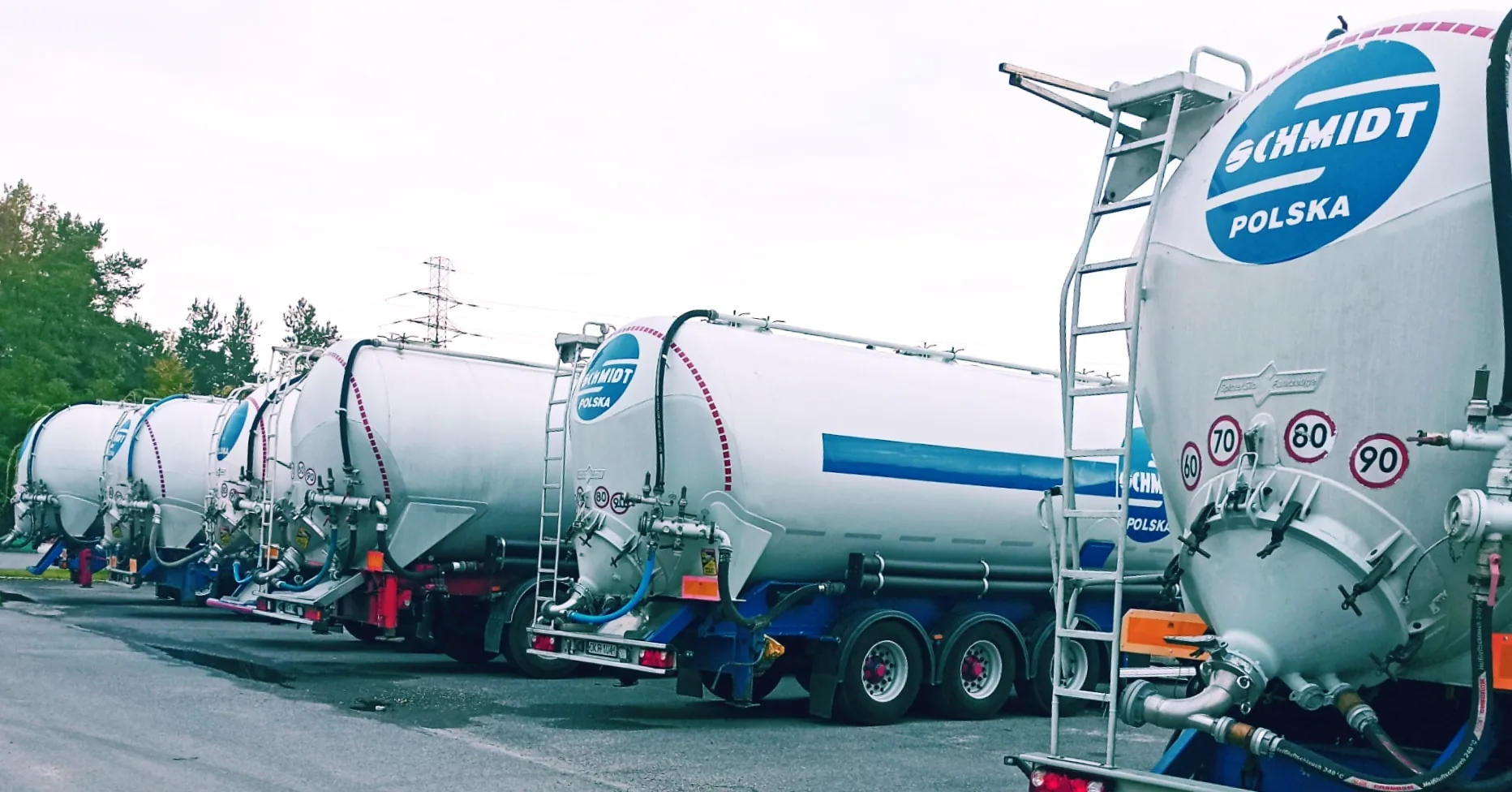
Definition
Pneumatische Entladung ist eine Methode zur Entleerung eines Silofahrzeugs oder Tankfahrzeugs, bei der Druckluft zunächst die Materialschicht belüftet (Fluidisierung) und anschließend ein Überdruck in der Größenordnung von 2 bar das Material durch die Rohrleitung in den Behälter des Abnehmers drückt. Das Material rieselt nicht gravitativ herab — es fließt mit einem Luftstrom, von den Konen des Aufliegers bis zum Silo über zehn Meter über dem Boden.
In dreißig Jahren am Terminal in Chorula habe ich beide Welten gesehen: die Pneumatik bei Zement, Kalk und Ruß sowie eine völlig andere Philosophie bei Kunststoffgranulaten. Die Pneumatik ist genial dort, wo man feines Pulver schnell hoch in ein Silo fördern muss, und fatal dort, wo das unversehrte Korn zählt. Dieser Artikel erklärt, wie diese Entladung tatsächlich funktioniert, welche Elemente und Parameter sie hat und wann wir bewusst auf sie verzichten.
Wie das Ausblasen funktioniert — Schritt für Schritt
Die ganze Kunst der pneumatischen Entladung lässt sich auf ein Prinzip reduzieren: Luft plus Druck verwandeln das Schüttgut in etwas, das wie eine Flüssigkeit fließt, und drücken es durch ein Rohr. In der Praxis sieht das so aus:
- Anschluss. Der Fahrer verbindet den Entladeschlauch des Aufliegers mit der Rohrleitung, die zum Silo des Abnehmers führt, und schließt die Druckluftquelle an. Die Kupplungen sind genormt — in der Branche dominiert der Storz-Standard, bei spezifischen Anlagen des Abnehmers trifft man auch PERROT oder Camlock an.
- Druckaufbau. Der Silokompressor oder das Gebläse beginnt, Luft in den hermetisch verschlossenen Behälter zu fördern. Das Manometer zeigt den ansteigenden Überdruck. Das ist die Phase, in der man sich nicht beeilen darf — der Behälter muss einen stabilen Arbeitsdruck erreichen.
- Belüftung der Konen. Die Luft tritt unter die porösen Belüftungsplatten (Fluidisierungsmatten) ein, die in den Boden jedes Konus eingebaut sind. Durch sie treten Millionen feiner Bläschen, die die Materialschicht anheben und trennen.
- Öffnen der Ventile. Der Bediener öffnet die Drosselklappen an den Auslässen der Konen. Das fluidisierte Material, vom Druckunterschied angetrieben, bewegt sich zum zentralen Kollektor und weiter durch den Schlauch ins Rohr.
- Förderung ins Silo. Der Luftstrom trägt das Material durch die Rohrleitung, oft senkrecht nach oben, bis zum Behälter des Abnehmers. Auf der Siloseite entweicht die Luft durch einen Entstaubungsfilter, und das Material setzt sich ab.
- Abschließendes Durchblasen. Wenn der Auflieger leer ist, wird die Anlage mit reiner Luft durchgeblasen, um Materialreste aus Rohren und Schlauch zu entfernen — das ist auch für die Sauberkeit bei der nächsten Ladung wichtig.
Das Herzstück des Vorgangs sind also vier Elemente: die Druckluftquelle (Silokompressor oder Gebläse), die Belüftungsplatten/-matten am Boden der Konen, die Drosselklappen zur Steuerung des Auslasses sowie der Entladeschlauch. Die Konstruktion des Aufliegers selbst beschreibe ich ausführlicher im Artikel über Silofahrzeuge .
Es klingt einfach, aber in der Praxis hat jedes dieser Elemente seine Tücken. Die Belüftungsmatte verstopft mit der Zeit — Materialteilchen dringen in die Poren des Gewebes ein, und die Luft tritt nicht mehr gleichmäßig durch. Die Drosselklappe muss dicht schließen, sonst geht Druck verloren. Der Entladeschlauch ist oft das schwächste Glied: Bei Granulat reibt er sich von innen ab, bei Pulvern sammelt er Ablagerungen. Deshalb ist der Zustand dieser Komponenten kein Detail, sondern der Unterschied zwischen einer Entladung in einer Stunde und einem Ärger an der Rampe des Abnehmers.
Elemente der Entladeanlage
Schauen wir uns jede der Schlüsselkomponenten genauer an, denn erst ihr Zusammenspiel entscheidet über ein reibungsloses Ausblasen:
- Silokompressor / Gebläse. Die Druckluftquelle. Bei Straßenfahrzeugen kommt der Antrieb meist vom Motor der Zugmaschine über einen Nebenabtrieb, seltener von einem separaten Aggregat. Das Gebläse liefert einen hohen Luftdurchsatz bei moderatem Druck — und genau dieses Profil passt zur Entladung eines Silofahrzeugs.
- Belüftungsmatten / -platten. In den Boden jedes Konus eingebaute Elemente aus porösem Gewebe oder Sintermaterial. Sie lassen die Luft nur in eine Richtung durch und belüften das Material gleichmäßig von unten. Sie entscheiden darüber, ob sich das Pulver fluidisiert oder unbewegliche Brücken bildet.
- Drosselklappen. Sie steuern den Materialaustritt aus den einzelnen Konen. Der Bediener öffnet sie schrittweise und kontrolliert, dass der Strom nicht zu heftig ist — ein plötzliches Öffnen kann die Rohrleitung „verstopfen".
- Manometer und Sicherheitsventil. Sie zeigen und begrenzen den Druck im Behälter. Das Überschreiten des zulässigen Überdrucks ist gefährlich, daher ist das Sicherheitsventil ein Pflichtelement, dessen Funktion bei den periodischen Prüfungen kontrolliert wird.
- Schlauch und Entladekupplungen. Sie verbinden den Auflieger mit der Rohrleitung des Abnehmers. Der Kupplungsstandard ist meist Storz, man trifft auch PERROT und Camlock an — die Auswahl hängt von der Anlage des konkreten Silos ab.
Fluidisierung — warum das Material fließt
Fluidisierung (Belüftung) ist das Durchlüften der Materialschicht, sodass sie sich wie eine Flüssigkeit verhält. Feine Luftbläschen drängen sich zwischen die Körner, schieben sie auseinander und verringern drastisch die innere Reibung. Pulver, das einen Moment zuvor verdichtet und an den Wänden des Konus haftend lag, beginnt plötzlich, zum Auslass zu „fließen".
Dieses Phänomen ist entscheidend für feinkörnige Materialien: Zement, Flugasche, Kalk, mineralische Mehle, technischen Ruß. Ohne Belüftung würden solche Pulver im Konus Brücken und Kamine bilden (Rathole-Effekt) und der Auflieger würde sich schlicht nicht entleeren. Die Fluidisierungsmatten sorgen dafür, dass das Material gleichmäßig, ohne Rucke, abgeht.
Für grobes Granulat hat die Fluidisierung eine deutlich geringere Bedeutung — Körner von einigen Millimetern rieseln ohnehin frei, und das Einpressen von Druckluft bringt mehr Schaden als Nutzen. Das ist einer der grundlegenden Gründe, warum wir Kunststoffe völlig anders behandeln als Zement.
Arbeitsdruck und Parameter
Die pneumatische Entladung ist ein Spiel mit moderatem Überdruck — nicht zu verwechseln mit industriellen Hochdruckanlagen. Die folgende Tabelle fasst die typischen Arbeitsparameter zusammen:
| Parameter | Typischer Wert | Anmerkungen |
|---|---|---|
| Arbeitsdruck | 1,2–2 bar | je nach Material und Förderhöhe |
| Max. Behälterdruck | Größenordnung 2 bar | konstruktiv zulässiger Wert |
| Luftquelle | Silokompressor / Gebläse | Antrieb vom Motor der Zugmaschine oder eigen |
| Entladezeit | ~30–60 min | für einen Auflieger ~60 m³ |
| Förderhöhe | über zehn Meter | bis zu Silos über der Produktionshalle |
Der Druck wird auf die Aufgabe abgestimmt. Je höher und weiter das Material gefördert werden muss, desto höher der Arbeitsdruck — denn es gilt, die Widerstände der Rohrleitung und die Materialsäule in der Senkrechten zu überwinden. Je leichter und besser fluidisierend das Pulver, desto leichter lässt es sich mit geringerem Druck fördern. Deshalb können sich zwei scheinbar identische Lieferungen bei unterschiedlichen Einstellungen entladen.
Eine Entladezeit in der Größenordnung von 30–60 Minuten betrifft ein volles Silofahrzeug mit einem Fassungsvermögen von etwa 60 Kubikmetern. Hinzu kommt die Zeit für Anschluss, Druckaufbau und abschließendes Durchblasen. In der Praxis kalkuliere ich beim Planen eines Zeitfensters an der Rampe immer realistische 60–90 Minuten von der Anfahrt bis zur Abfahrt. Wie das Material zum Terminal des Abnehmers gelangt, beschreibe ich im Artikel über den Transport mit Silofahrzeugen .
Druckentladung und Unterdruckentladung
Es lohnt sich, zwei Schemata zu unterscheiden:
- Druck (Überdruck). Die Luft drückt das Material mit einem Überdruck von etwa 2 bar aus dem Auflieger. Das erlaubt es, das Material hoch und über größere Entfernungen zu fördern. Das ist das dominierende Schema für Terminal-Tankfahrzeuge und die meisten Pulver-Silofahrzeuge.
- Unterdruck (Vakuum). Das Material wird durch einen auf der Abnehmerseite erzeugten Unterdruck angesaugt. Man wendet es in spezifischen Anlagen an, meist auf kurzen Strecken und dort, wo Überdruck im Auflieger unerwünscht ist.
In der Terminalpraxis arbeiten wir entschieden häufiger mit Druck, weil die Silos der Abnehmer hoch stehen und die Rohrleitungen mitunter lang sind. Vakuum ist eine Nischenlösung, die auf eine konkrete Anlage abgestimmt wird.
Sicherheit und typische Fehler
Die pneumatische Entladung arbeitet zwar mit moderatem Druck, aber ein Behälter unter Überdruck erfordert stets Disziplin. Über die Jahre habe ich dem Team einige eiserne Regeln beigebracht, die sowohl Pannen als auch eine Verschlechterung der Materialqualität verhindern:
- Niemals Kupplungen unter Druck öffnen. Vor dem Lösen des Schlauchs muss der Behälter entspannt sein. Ein Luftstrom mit Materialresten unter Druck birgt das Risiko von Verletzungen und verschüttetem Material.
- Das Manometer im Auge behalten. Das Überschreiten des zulässigen Überdrucks belastet die Behälterkonstruktion. Ein funktionierendes Sicherheitsventil ist die letzte Verteidigungslinie, aber der Bediener sollte die Einstellungen trotzdem nicht überschreiten.
- Sich beim Öffnen der Ventile nicht beeilen. Ein heftiger Austritt kann die Rohrleitung mit einem Material-„Pfropfen" verstopfen, den man danach mühsam durchblasen muss.
- Auf das abschließende Durchblasen achten. Materialreste in den Rohren sind nicht nur ein Verlust, sondern auch ein Risiko der Kreuzkontamination der nächsten Lieferung. Die Sauberkeit der Anlage ist hier ebenso wichtig wie die Sauberkeit des Aufliegers selbst.
Es lohnt sich auch, an den Prüfkontext zu denken: Druckbehälter und ihre Ausrüstung unterliegen periodischen Inspektionen. Eine reibungslose pneumatische Entladung beginnt mit einem Auflieger in voller technischer Verfassung — von dichten Ventilen bis zu funktionierenden Belüftungsmatten.
Wann Pneumatik, wann Gravitation
Bringen wir es auf eine einfache Entscheidung, die ich bei jeder Lieferung treffe. Pneumatik ist die richtige Wahl, wenn:
- das Material feinkörnig ist und sich gut fluidisiert (Zement, Kalk, Mehle, Asche, Ruß),
- es hoch gefördert werden muss, in ein Silo über der Halle,
- das Korn abriebbeständig ist oder ohnehin Pulverform hat.
Gravitativer Umschlag gewinnt, wenn:
- das Material ein Hochreinheitspolymergranulat ist,
- das Ausbleiben von Fines, das Ausbleiben von Angel Hair und die vollständige Chargen-Rückverfolgbarkeit kritisch sind,
- der Abnehmer die Lieferung nach der Kornqualität abrechnet, nicht nur nach der Masse.
Diese Grenze ist nicht akademisch. Für die Kunststoffhersteller, mit denen wir zusammenarbeiten, schlägt sich der Unterschied zwischen schonendem und brutalem Umschlag unmittelbar in Reklamationen und der Qualität des Endprodukts nieder. Deshalb hält das Terminalnetz bewusst beide Technologien vor und stimmt sie auf das Material ab und nicht umgekehrt.
Nachteile der Pneumatik für Polymergranulat
Hier kommen wir zum Kern meiner Erfahrung. Für Kunststoffe ist die pneumatische Entladung oft mehr Ärger als Nutzen. Es gibt vier Gründe, und jeder davon kostet den Verarbeiter Geld:
- Abrieb des Korns und Fines. In den Rohren beschleunigtes Granulat reibt an den Wänden und aneinander und bildet Staub (Fines). Die Teilchen verstopfen die Filter des Verarbeiters und verschlechtern die Einheitlichkeit der Charge.
- Angel Hair (Streamers). Aus durch Reibung angeschmolzenen Kornfragmenten entstehen lange, dünne Fäden. Das ist einer der Hauptgründe für Granulatreklamationen — sie verstopfen Anlagen und verderben das Erzeugnis.
- Elektrostatische Aufladung. Die Reibung der Körner an den Wänden lädt das Granulat elektrostatisch auf. Aufgeladene Körner haften an der Anlage, agglomerieren und sind mitunter eine Gefahr. Den Mechanismus und die Norm IEC 61340 beschreibe ich im Artikel über die elektrostatische Aufladung von Granulat .
- Kontaminationsrisiko. Jeder Meter Rohr, durch das zuvor ein anderes Material lief, ist eine potenzielle Kreuzverunreinigung — kritisch bei Hochreinheitsgranulaten.
Deshalb wählen wir am Terminal in Chorula für PE, PP, PVC, PET und Rezyklate bewusst den Umschlag ohne pneumatische Förderung : das gravitative Rieseln aus dem Big-Bag durch ein Reinigungssieb direkt ins Silofahrzeug. Das Material fließt durch sein eigenes Gewicht nach unten, wird nicht in Rohren beschleunigt und behält daher die ursprünglichen Korneigenschaften und die Reinheit. Die Pneumatik ist mitunter schneller, aber bei Granulaten ist das eine scheinbare Ersparnis.
Es gilt auch eine harte Regel des Terminalprofils: Wir verarbeiten ausschließlich Nicht-ADR-Materialien. Zement, Kalk, Mehle, Ruß und Granulate ja; gefährliche Chemie nein.
Verwandte Themen
Die pneumatische Entladung ist ein Glied der Schüttgutkette. Die Konstruktion des Aufliegers beschreibe ich im Stichwort Silofahrzeuge , den Weg des Materials zum Abnehmer im Transport mit Silofahrzeugen und die schonende Alternative für Kunststoffe im Umschlag ohne pneumatische Förderung . Über die Nebenwirkungen der Pneumatik für Granulat lesen Sie in der elektrostatischen Aufladung von Granulat .
Wenn Sie Granulatlieferungen unter Wahrung der Kornqualität planen, sehen Sie sich die Dienstleistung Big-Bag-zu-Silofahrzeug-Umschlag sowie unsere Pufferlagerung von Schüttgütern am Terminal in Chorula an.
Quellen
- Praxis des Terminals SMIALA in Chorula — Umschlag bis 200 t/Tag, Lager für 2000 Big-Bags, Flotte aus 26 DAF XF 480 Euro 6 und 31 Silofahrzeugen (~60 m³).
- Standards der Kupplungen und Entladeanlagen von Silofahrzeugen (Storz, PERROT, Camlock).
- IEC 61340 — Elektrostatik von Schüttgütern (Kontext der elektrostatischen Aufladung von Granulat).
- Expertenkommentar: Aleksy Pasternak, pasternak.me — über 30 Jahre Terminalpraxis.
- Umschlagdienstleistungen des Netzes: magnumchorula.pl/transport/ .
