Definition
Bleicherde (engl. Bleaching Earth, dt. Bleicherde) ist ein mineralisches Adsorbens, das aus Montmorillonit-Tonerde — meist aus bentonitischem Rohstoff — durch saure Aktivierung gewonnen wird. Ihre Aufgabe ist die Reinigung und Entfärbung von Speise- und Industrieölen: Sie entfernt daraus Farbstoffe, Oxidationsprodukte, Phospholipide, Seifen und Metallspuren. Tonsil ist eine der bekanntesten Handelsmarken für Bleicherden; in unserem Fuhrpark taucht regelmäßig die Sorte Tonsil 571 FF auf — ein fein gemahlenes Pulver mit hoher Entfärbungsleistung.
Aus Sicht des Terminals in Chorula ist Bleicherde ein interessanter Fall: chemisch verwandt mit Bentonit , den wir ebenfalls umschlagen, aber so verarbeitet, dass seine natürlichen Sorptionseigenschaften aufs Äußerste geschärft werden. Ein leichtes, feines, staubendes und gierig Feuchtigkeit aufnehmendes Material — also genau eines, das eine sorgfältige, trockene Lieferkette erfordert.
Herkunft und Zusammensetzung
Bleicherden stammen aus denselben Tongesteinen wie Bentonit. Der Rohstoff ist meist Montmorillonit — ein Mineral aus der Gruppe der Smektite mit einem 2:1-Schichtaufbau, bei dem zwischen den Silikat-Aluminium-Paketen austauschbare Kationen und Wasser Platz finden. Genau diese Schichtstruktur mit großer innerer Oberfläche und Ionenaustauschfähigkeit macht die Tonerde zu einem natürlichen Sorbens.
Ein Teil der Bleicherden sind natürliche Tonerden (Fullererden), die eine ausreichende Entfärbungsleistung ohne chemische Behandlung aufweisen. Der weitaus größte Teil der industriellen Adsorbentien sind jedoch sauer aktivierte Tonerden. Der bentonitische Rohstoff wird mit einer Mineralsäure (Schwefel- oder Salzsäure) behandelt, die teilweise Aluminium, Eisen und Magnesium aus der oktaedrischen Schicht herauslöst, die Porosität entwickelt und die spezifische Oberfläche um ein Vielfaches vergrößert — von einigen Dutzend bis zu über 200–300 m²/g. Nach dem Auswaschen, Trocknen und Mahlen entsteht ein feines Pulver mit streng kontrollierter Körnung und Feuchtigkeit.
Diese Verwandtschaft mit Bentonit hat praktische Bedeutung für die Logistik: Diese Materialien verhalten sich beim Umschlag ähnlich — sie sind staubend, leicht und wasserempfindlich — wobei Bleicherde als gezielt „getrocknetes und sorptiv ausgehungertes" Produkt Feuchtigkeit noch bereitwilliger aufnimmt als roher Bentonit.
Natürliche und aktivierte Tonerden
Es lohnt sich, zwei Familien von Adsorbentien zu unterscheiden, die umgangssprachlich in einen Topf der „Bleicherden" geworfen werden, sich aber in Herstellungsweise und Parametern unterscheiden.
| Merkmal | Natürliche Tonerde (Fullererde) | Sauer aktivierte Tonerde |
|---|---|---|
| Behandlung | Trocknen und Mahlen des Rohstoffs | Säurebehandlung, Auswaschen, Trocknen, Mahlen |
| Spezifische Oberfläche | kleiner (einige Dutzend m²/g) | groß (bis 200–300 m²/g) |
| Entfärbungsleistung | mäßig | hoch |
| pH der Suspension | nahezu neutral | oft sauer |
| Typische Anwendung | Vorreinigung, Sorbentien | Raffination von Speise- und Industrieölen |
In der Praxis stützt sich die Speiseölindustrie hauptsächlich auf aktivierte Tonerden, denn ihre hohe Oberfläche und kontrollierte Azidität ergeben einen reproduzierbaren, starken Entfärbungseffekt bei relativ geringer Dosierung. Natürliche Tonerden sind mitunter günstiger und milder, erfordern aber größere Mengen und erzeugen daher mehr verbrauchte Erde zur Entsorgung. Aus Sicht des Terminals verhalten sich beide Familien beim Umschlag ähnlich — der Unterschied liegt in Chemie und Azidität, nicht im Umgang mit dem Pulver.
Mechanismus der Bleichung
Der Begriff „Bleichung" kann irreführend sein — es geht nicht um eine chemische Aufhellung, sondern um Adsorption, also die physikalische und chemische Bindung von Verunreinigungen an der entwickelten Oberfläche der Tonerde. In der Ölraffination gelangt die Bleicherde in die Bleichungsstufe (Bleichung/Farbentfernung), nach der Entschleimung und Neutralisation und vor der Desodorierung. Der Ablauf ist folgender:
- Dem heißen Öl (üblicherweise 90–120 °C, unter vermindertem Druck) wird Bleicherde in einer Menge von einigen Zehntelprozent bis zu mehreren Prozent der Ölmasse zudosiert, je nach Ölqualität und gefordertem Entfärbungsgrad.
- Die Mischung wird einige Dutzend Minuten lang intensiv gerührt. In dieser Zeit binden die aktiven Zentren an den Kanten der Montmorillonit-Pakete Farbstoffe (Chlorophylle, Carotinoide, Oxidationsprodukte), Reste von Phospholipiden, Seifen sowie Metallspuren wie Eisen, Kupfer oder Nickel — Elemente, die das Ranzigwerden des Öls katalysieren.
- Die verbrauchte Erde wird auf Platten- oder Kerzenfiltern abfiltriert. Mit ihr verschwinden die adsorbierten Verunreinigungen aus dem Produkt, und das Öl erhält die gewünschte helle Farbe und Oxidationsstabilität.
Die Wirksamkeit des Prozesses hängt von der spezifischen Oberfläche der Tonerde, ihrer Azidität und ihrer Körnung ab. Feinere Sorten wie Tonsil 571 FF (die Bezeichnung FF deutet auf eine feine Fraktion hin) bieten eine größere Kontaktfläche und schnellere Bleichkinetik, stauben aber zugleich stärker und lassen sich schwerer filtrieren — ein klassischer Kompromiss zwischen Aktivität und Prozessbequemlichkeit.
Aus Sicht der Raffinerie ist die Auswahl der Bleicherde eine Optimierung mehrerer Variablen zugleich: des Entfärbungsgrads des Öls, der Kosten des Adsorbens, der im Filterkuchen zurückgehaltenen Ölmenge (das sogenannte oil retention — Produktverluste, die in die verbrauchte Erde „einsickern") sowie des Volumens des zu entsorgenden Abfalls. Eine zu aktive Sorte kann die Azidität des Öls übermäßig senken oder zu viel davon im Kuchen zurückhalten; eine zu milde Sorte erfordert größere Mengen. Deshalb legen die Betriebe Wert auf die Stabilität der Parameter zwischen den Lieferungen — und deshalb ist es für uns als Umschlagsbetreiber so wichtig, dass das Adsorbens in unversehrtem Zustand ankommt, trocken und frei von Kontamination, denn jede Änderung seiner Feuchtigkeit oder Sauberkeit verschiebt diese gesamte Bilanz.
Anwendungen
Bleicherden sind eines der Fundamente der Öl- und Fettindustrie, doch ihre Rolle reicht weiter.
Raffination von Speiseölen. Das wichtigste Segment: Raps-, Soja-, Sonnenblumen- und Palmöl sowie Öle aus Spezialsaaten durchlaufen die Bleichstufe mit aktivierter Erde, um eine helle Farbe, einen neutralen Geschmack und Oxidationsbeständigkeit zu erreichen. Für Lebensmittelbetriebe zählt hier die Reinheit des Adsorbens selbst — ähnlich wie bei Materialien, die für den Kontakt mit Lebensmitteln bestimmt sind, darf das Reinheitsregime der Lieferkette die Qualität des Endprodukts nicht mindern.
Technische Öle und Fette. Bleicherden reinigen Industrieöle, Wachse, tierische Fette und Rohstoffe für Biokraftstoffe und entfernen polare Verunreinigungen, die die weitere Verarbeitung stören.
Ölregeneration. Aktivierte Tonerden dienen der Aufbereitung verbrauchter Schmier-, Hydraulik- und Isolieröle (Transformatorenöle) — sie fangen Abbauprodukte ab und stellen die Gebrauchsparameter wieder her.
Trägerstoffe, Füllstoffe und Aufbereitung. Ein Teil der Bleicherden und verwandter aktivierter Tonerden erfüllt die Rolle von Trägern aktiver Substanzen, Klärmitteln und Sorbentien in der Flüssigkeitsreinigung. Das sind mengenmäßig kleinere Anwendungen, die jedoch dieselbe Eigenschaft nutzen — die entwickelte Oberfläche und die Affinität zu polaren Molekülen.
Der gemeinsame Nenner all dieser Anwendungen ist die Einmaligkeit: Bleicherde wirkt, solange sie freie Adsorptionsoberfläche hat, und sobald sie diese gefüllt hat, ist sie nicht mehr nützlich und wird zum Abfall. Deshalb ist der Verbrauch an Adsorbentien groß, und die Lieferungen an die Raffinerien sind regelmäßig und wiederkehrend, oft saisonal und mit der Ölverarbeitung synchronisiert. Für das Terminal bedeutet das Ladungen, die zyklisch wiederkehren, und nicht einzelne, einmalige Umschläge — und gerade diese Regelmäßigkeit sorgt dafür, dass sich ein Material wie Tonsil 571 FF dauerhaft in den Arbeitsrhythmus der Plätze einfügt.
Für den Transport wichtige Parameter
Für den Umschlagsbetreiber zählen vor allem jene Eigenschaften der Bleicherde, die über den Umgang mit dem Material und die Auslastung des Transportmittels entscheiden.
| Parameter | Typischer Wert / Charakteristik |
|---|---|
| Handelsform | feines Pulver (Mehl), seltener Granulat |
| Schüttdichte (lose) | ca. 500–800 kg/m³ |
| Körnung | Pulver, oft unter 0,1 mm (FF-Sorten — feiner) |
| Handelsfeuchte | meist einige bis über zehn Prozent (sortenabhängig) |
| Hygroskopizität | hoch — das Material nimmt aktiv Wasser auf |
| Staubentwicklung | stark — erfordert Entstaubung und Atemschutz |
| pH der Suspension | oft sauer (sauer aktivierte Tonerden) |
| ADR-Klassifizierung (frisch) | keine — transporttechnisch inertes Material |
Zwei Werte aus dieser Tabelle sind für uns die wichtigsten. Erstens die niedrige Schüttdichte: Bleicherde ist ein leichtes Material, daher entscheidet über den Füllgrad des Silofahrzeugs häufiger das Behältervolumen als die Achslastgrenze. Zweitens die hohe Hygroskopizität, die eine ausnahmslos trockene Lieferkette erzwingt. Das sind die beiden Eigenschaften, die das gesamte Umschlagsregime prägen.
Es lohnt sich, eine aus Sicht der Sicherheit wichtige Unterscheidung zu ergänzen: Frische Bleicherde ist transporttechnisch inert, doch verbrauchte Bleicherde, die mit Öl getränkt ist, ist bereits ein völlig anderes Material — sie neigt mitunter zur Selbsterhitzung und Selbstentzündung, unterliegt gesonderten Anforderungen und ist nicht das, was als Sorbens zur Bleichung gehandelt wird. Im Terminal haben wir es ausschließlich mit frischem Material zu tun.
Transport und Umschlag
Hier betreten wir den Boden, den ich am besten kenne — denn Tonsil 571 FF ist ein realer Gast unserer Plätze und kein abstraktes Beispiel aus einem Datenblatt. Es ist eines jener Adsorbentien, das regelmäßig durch das Terminal in Chorula läuft, daher kann ich über sein Verhalten aus der Praxis schreiben, nicht aus der Theorie.
Die Hygroskopizität bestimmt das Regime. Bleicherde wurde geschaffen, um aufzunehmen — und sie tut es auch dann, wenn niemand sie darum bittet. Jede Feuchtigkeit, die das Pulver erreicht, belegt die Adsorptionsoberfläche und senkt die Entfärbungsleistung, im Extremfall verklumpt sie das Material. Deshalb müssen Silofahrzeuge für Bleicherde trocken und sauber sein, ohne Kondensat an den Wänden, die Big-Bags dicht und unbeschädigt, und die Lagerung erfolgt unter Dach, fern von Wasserquellen. Über die Grundsätze der trockenen Lagerung von Pulvern schreiben wir ausführlicher anlässlich der Lagerung von Schüttgütern .
Staubentwicklung. Feine Sorten wie FF stauben intensiv. Beim Umschlag bedeutet das obligatorischen Atemschutz für das Personal, Entstaubung des Big-Bag-Entladeorts und eine sorgfältige Führung des Materialstroms, um das Pulver nicht aufzuwirbeln. Das ist eine Routinetätigkeit für das Team, das staubende Materialien handhabt, aber sie darf nicht unterschätzt werden — Bleicherde mit Mehlkörnung verteilt sich blitzschnell in der Luft.
Sauberkeit und Kreuzkontamination. Da ein erheblicher Teil der Bleicherden in die Raffination von Speiseölen gelangt, ist die Sauberkeit des Behälters hier keine Kosmetik, sondern eine Anforderung. Ein Rest von Fremdmaterial aus der vorherigen Ladung ist ein Risiko der Verunreinigung des Adsorbens und in der Folge des Endprodukts. Deshalb halten wir bei Bleicherden dieselbe Disziplin ein wie bei anderen empfindlichen Ladungen — wir beschreiben sie ausführlicher im Artikel über die Kreuzkontamination . Ein sauberes, trockenes, dediziertes Silofahrzeug ist der Ausgangspunkt, keine Option.
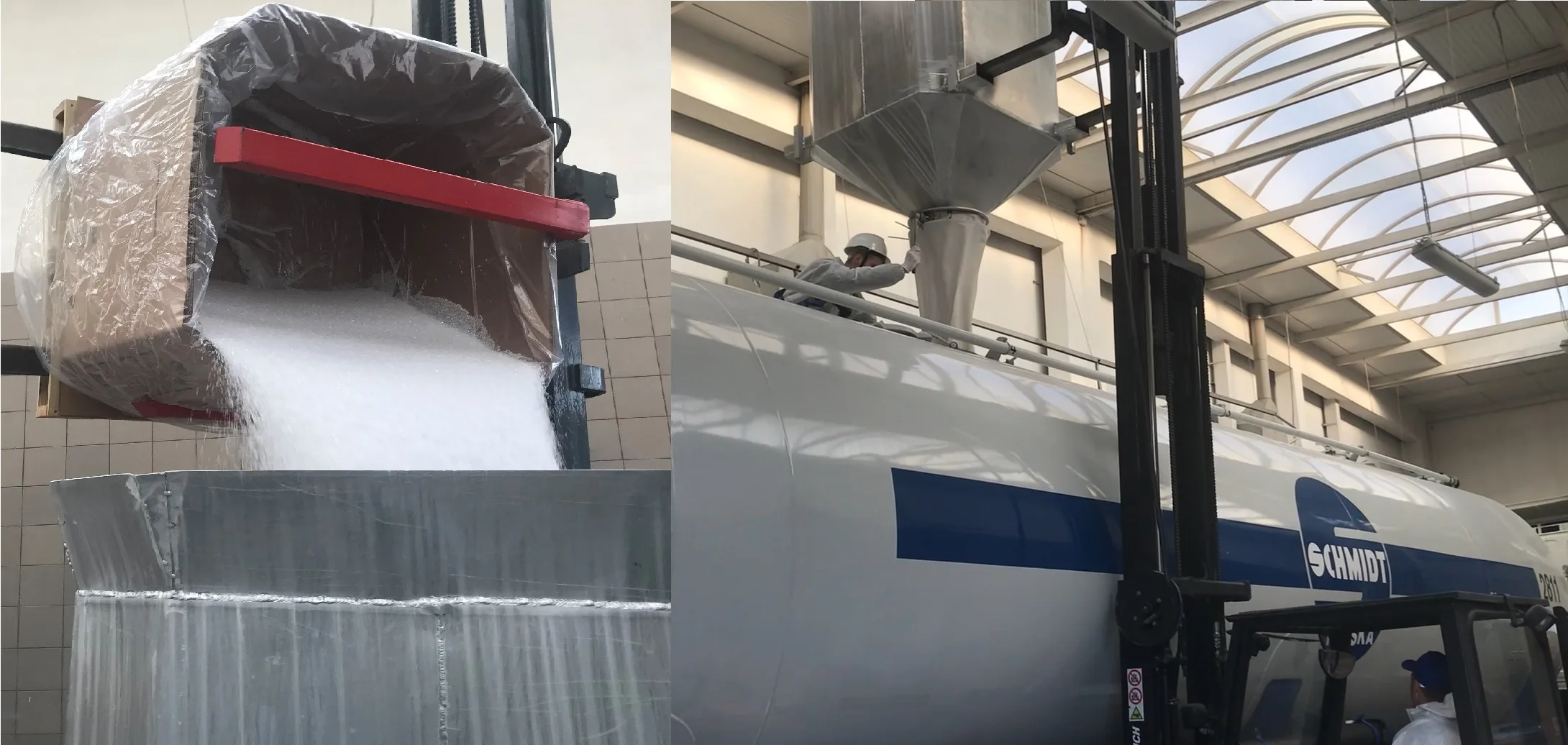
Transportformen und Umschlagsmethode. Bleicherden fahren lose in Silofahrzeugen zu großen Raffinerien sowie in Big-Bags mit einer Tragfähigkeit von 500–1000 kg zu kleineren Abnehmern. In Chorula schlagen wir Tonsil 571 FF von Big-Bags auf Silofahrzeuge gravitativ, ohne Pneumatik um. Für ein so feines und hygroskopisches Material hat das einen doppelten Vorteil: Es erzeugt keine zusätzliche Staubentwicklung im Zusammenhang mit dem pneumatischen Transport und drückt keine Druckluft in den Behälter, die Feuchtigkeit tragen könnte. Die Methode beschreiben wir im Artikel über den Umschlag ohne Pneumatik , und die Dienstleistung selbst — auf der Seite zum Umschlag von Big-Bag auf Silofahrzeug .
Bleicherde zeigt gut, dass „chemisches Material" nicht Gefahrgut bedeuten muss. Frischer Tonsil ist non-ADR, transporttechnisch inert, erfordert aber Disziplin: Trockenheit, Sauberkeit und Schutz vor Staubentwicklung. Diese drei Dinge entscheiden darüber, ob das Adsorbens voll funktionsfähig bei der Raffinerie ankommt. Wenn Sie den Umschlag von Bleicherde oder einem anderen hygroskopischen Pulver planen — lose oder aus Big-Bags — fragen Sie unser Team nach einem Angebot ; wir stimmen Form, Verpackung und Transportregime auf Ihr Material ab.
Verwandte Themen
- Bentonit — Montmorillonit-Gestein, Ausgangsrohstoff aktivierter Bleicherden.
- Industrieruß — ein weiteres feines, staubendes chemisches Material mit anspruchsvollem Umschlag.
- Big-Bag (FIBC) — die grundlegende Verpackung hygroskopischer Pulver.
- Umschlag ohne Pneumatik — gravitatives Verfahren, das das Adsorbens vor Feuchtigkeit und Staubentwicklung schützt.
- Dienstleistung: Umschlag von Big-Bag auf Silofahrzeug sowie Lagerung von Schüttgütern.
- Netzwerk: Schüttguttransport PHS Magnum .
Quellen
- Fachliteratur zur Raffination von Speiseölen — Bleichstufe (Adsorption an aktivierten Erden), Entfernung von Farbstoffen, Phospholipiden und Metallen.
- Mineralogie der Smektite: Montmorillonit, saure Aktivierung von Tonerden, spezifische Oberfläche und Porosität von Adsorbentien.
- Sicherheitsdatenblätter und technische Daten handelsüblicher Bleicherden (u. a. Tonsil-Sorten).
- Betriebspraxis des Terminals SMIALA, Chorula — Aleksy Pasternak .
